How to grow pearl sorghum for high yield? Key points of planting techniques
How can pearl sorghum be grown for high yield? Please provide guidance. Pearl sorghum can be planted by referring to the following methods: 1. Land preparation: for previously cultivated land, one plowing and one harrowing; for wasteland (virgin land), two plowings and two harrowings, harrowing the soil clods during the day to meet the requirements for planting corn. Paddy fields or plots with excessive moisture are not suitable for planting. 2. Apply sufficient base fertilizer: in...
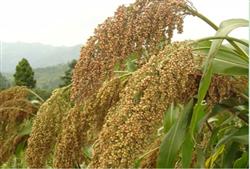
How can pearl sorghum be grown for high yield? Please provide guidance
Pearl sorghum can be planted by referring to the following methods:
1. Land preparation: for previously cultivated land, one plowing and one harrowing; for wasteland (virgin land), two plowings and two harrowings, harrowing the soil clods during the day to meet the requirements for planting corn. Paddy fields or plots with excessive moisture are not suitable for planting.
2. Apply sufficient base fertilizer: on the prepared land, apply 20 kg of compound fertilizer per 667 sq m between the rows, then cover with soil; where conditions permit, apply 2000 kg of organic fertilizer.
3. Sowing: sow when the temperature is stable at 15°C. In Guangxi, sowing can be done from February 15 to August 20, with 6000-7000 hills per 667 sq m, a plant-row spacing of 20×50 cm, 3 seeds per hill, and 750 g of seed per 667 sq m. Before sowing, soak the seeds in warm water for 10 hours so that seedlings emerge uniformly. The sowing depth is 2-3 cm. If the soil cover is too deep, the seedling emergence time will be prolonged, affecting management and harvest.
4. Field management: prevent drought before seedling emergence. When the seedlings grow to the leaf stage, thin them, leaving 1 vigorous seedling per hill, ensuring 6000-7000 plants per 667 sq m. After thinning, apply 8 kg-10 kg of urea per 667 sq m as topdressing, and earth up at the same time.
5. Pest and disease control: the main diseases of pearl sorghum are sorghum bacterial stripe disease and sorghum penicillium disease. Sorghum bacterial stripe disease occurs at the seedling stage, and penicillium disease occurs at the heading stage; they can be controlled by spraying carbendazim or zineb. The main pests are aphids, tobacco cutworms, stem borers, and scarab beetles. Aphids and scarab beetles occur at the seedling stage; tobacco cutworms and stem borers cause damage at the heading and dough stages, and can be controlled by mixed spraying of bisultap and Kuailing. Sorghum is extremely sensitive to organophosphorus pesticides and they must not be used. During the growing period, it is also very sensitive to trichlorfon, dichlorvos, fenitrothion, dimethoate and other pesticides, and is relatively sensitive to phosphamidon, phoxim, methamidophos and other pesticides, which also must not be used. Based on the patterns of pest and disease occurrence, pesticides should be prepared strictly according to the proportions in the instructions, used correctly, applied at the appropriate time, and actively controlled.
6. Harvest: when planted in Guangxi, it can be harvested after a growth period of 95-120 days. The compact-panicle type matures earlier than the loose-panicle type and can be harvested first. Harvest should be done on sunny days so that it can be dried and stored.
7. Ratoon cultivation: in places with a long frost-free period and more accumulated temperature, ratoon cultivation can be carried out. The axillary buds of pearl sorghum have a strong sprouting ability. After harvesting or snapping off the panicles, the dormant axillary buds at the base of the stem will quickly sprout, grow into new plants, and under suitable conditions develop, head, and mature, allowing one or two more harvests. The yield can reach 300-400 kg per 667 sq m. For pearl sorghum to be retained for ratooning, 10 kg of compound fertilizer should be applied 15 days before maturity; after maturity, it should be harvested in time and cut as soon as it is harvested. After harvest, when cutting the stalks, the stubble should not be left too high, so as to avoid consuming nutrients, and 2-3 axillary buds above the ground should be left. After sprouting, keep 2-3 strong buds. For ratoon sorghum, attention should be paid to adding soil and topdressing. Apply 10 kg of compound fertilizer per 667 sq m.
8. Seed retention method: the semi-compact-panicle type should be selected for seed retention; the compact-panicle type and loose-panicle type are not suitable for seed retention. This is because the grains of the compact-panicle type are prone to mildew, and the yield of the loose-panicle type is not high.
Click to get more sorghum planting techniques
Click to get more grain planting techniques