What are the cultivation methods for sweet peppers? A detailed explanation of the key growing techniques
What cultivation methods are there for sweet peppers? Please explain that sweet pepper cultivation is divided into the early spring crop and the winter crop, with the methods as follows: Early spring crop: 1. Raising strong seedlings: Large arch shed: raise seedlings in a hotbed in late December, transplant in early March; solar greenhouse: sow from late November to early December, transplant in mid-to-late February. Most vegetable growers now...
What cultivation methods are there for sweet peppers? Please explain
Sweet pepper cultivation is divided into the early spring crop and the winter crop, with the methods as follows:
Early spring crop:
1. Raising strong seedlings: Large arch shed: raise seedlings in a hotbed in late December, transplant in early March; solar greenhouse: sow from late November to early December, transplant in mid-to-late February. Most vegetable growers now order seedlings, and it is recommended to place orders for strong seedlings from nurseries with a high reputation and good standing.
2. Transplanting:
1. Applying base fertilizer: The safe transplanting period for sweet peppers is when the 10 cm soil temperature inside the shed is stably above 12°C. Apply 8-10 cubic m of thoroughly decomposed high-quality organic fertilizer per mu in advance, together with 50-100 kg of superphosphate, 40-50 kg of potassium sulfate and 3-5 kg of trace elements such as boron, iron, zinc and molybdenum, then prepare the soil into beds or ridges after application.
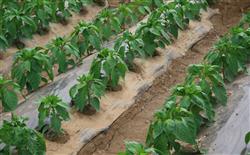
2. High-ridge cultivation and rational close planting: ridge height about 20 cm, large row spacing 85-90 cm, small row spacing 60 cm, plant spacing 45-50 cm, planting about 2,000 plants per mu.
3. Transplanting: transplant into holes, preferably on a sunny morning; open a furrow and water, then transplant with the water settling the seedlings. Immediately level the soil ball with the ground surface.
4. Management after transplanting:
1. Temperature management: Do not ventilate for 10 days after transplanting sweet peppers; maintain the daytime temperature at 22-32°C and the nighttime temperature above 15°C. As the outside temperature rises, begin ventilating after the seedlings have recovered; on sunny days, ventilate when the temperature inside the shed reaches 30°C at noon, and close the vents when it drops to 26°C in the afternoon. Maintain the daytime temperature at 25-30°C and the nighttime temperature at 15-18°C. When the outside temperature is stably above 15°C, ventilate day and night. In the hot summer season, further increase ventilation; the film around the arch shed and the film at the front bottom edge of the winter warm shed can be rolled up, keeping the top film to provide shade and rain protection. Wheat straw or rice straw can also be spread between rows to lower the temperature.
2. Fertilizer and water management: Begin intertillage 3-4 days after transplanting to raise the soil temperature. Water as little as possible in the early stage; if watering, it is best to water underground to help raise the soil temperature and help the seedlings recover. Starting from fruit set on the first pepper, water once every 7-10 days; during the full fruiting period, water once every 2-3 days, and avoid flood irrigation. In early spring cultivation, in addition to the base fertilizer, apply one top dressing each after fruit set on the first pepper, the opposite pepper and the fourth-level pepper, alternating organic fertilizer and chemical fertilizer.
3. Plant adjustment: Promptly remove the side branches below the first pepper, select and keep 3-4 evenly growing main branches to grow upward, leave 1-2 fruits on the other side branches and pinch off the tips, and promptly remove the leaf buds that appear in the leaf axils; retain as many flowers and fruits as possible, and use hanging strings to prevent lodging and improve air and light penetration. In the middle and late growth stages, some overlapping branches, crowded branches and leggy branches can be removed, and the old leaves, diseased leaves and deformed fruits on the lower part of the plant should be promptly removed.
4. Adding shade netting: In the middle and late growth stages of sweet peppers, when the temperature is high and light is strong, peppers are prone to viral diseases, sunscald and so on; shade netting can be used to provide shade, lowering the temperature by 1-2°C, and the degree of light reduction depends on the type of shade net. The covering effect also includes reducing diseases, improving late-stage yield and quality, and extending the growth period.
5. Timely harvesting: Use the first pepper to regulate plant vigor; if the plant is too vigorous, harvest later, and if not, harvest earlier. Generally 35-40 days after flowering. The best time to harvest is when the fruit has reached full size, the flesh has thickened, the skin has hardened and become glossy, and the fruit color has deepened but before it turns red; at this time the fruit is heavy and tolerant of storage and transport.
6. Pest and disease control:
Phytophthora blight: For prevention, spray with Jinlei Duomier at 600-800 times dilution, Amistar at 1500-2000 times dilution, or Daconil at 600 times dilution; if phytophthora blight has already occurred, use Jinlei Duomier or Shadufan at 600-800 times dilution as a root drench, with 100-150 ml of solution per plant; generally 1-2 applications can fully control the development of the disease.
Root rot: The preventive measures are the same as for phytophthora blight; if already affected, use Shileshi or Score at 600 times dilution as a root drench, with 100-150 ml of solution per plant.
Viral disease: Prevention is primary; during the seedling stage, pay attention to controlling piercing-sucking pests such as whiteflies and aphids, seal the vents with insect-proof netting, or fumigate the shed with DDV before transplanting. If viral disease has occurred, Virus A, Zhibingling, Bingduqing, 83-Zengkangji and others can be used to alleviate the development of the disease.
Gray mold: Alternately spray with Daconil at 600 times dilution, Shileshi at 1000-1500 times dilution, Amistar at 1500 times dilution, or Wanmeiling at 800-1000 times dilution; if the stems are affected, applying Shileshi stock solution or a 5-fold dilution to the diseased spots has the effect of curing the disease upon application.
Aphids and whiteflies: Spray with Actara at 5000-7000 times dilution plus Kongfu at 2000 times dilution, or imidacloprid + beta-cypermethrin; this method can also control thrips, mites, leafminers and so on at the same time.
Overwintering crop:
1. Temperature management: Before deep winter (that is, before late December), focus on regulating temperature to strengthen the plants; uncover and cover the straw mats based on temperature, maintaining 25-30°C during the day and 15-17°C at night; during deep winter (late December to early February), focus on heat preservation, 25-28°C during the day, and preserve heat as much as possible at night so that the minimum temperature stays above 8-10°C. Thicken the covering materials, and on rainy days cover the straw mats with old film to prevent rain from soaking them; after deep winter (after mid-February), the temperature rises, so manage according to suitable temperatures and gradually increase ventilation.
2. Light: Before deep winter, within the range of maintaining the lower temperature limit, uncover the straw mats early and cover them late; during deep winter, the straw mats can be uncovered appropriately later and covered earlier; keep the shed film clean; hang reflective screens, which can raise the air temperature and soil temperature in the shed, and increase light within 1-2 m of the reflective screen; the plants appear robust and disease-resistant, and compared with not hanging reflective screens, sweet pepper yield increases by about 10%.
3. Fertilizer and water management: After the first pepper has set, water once according to soil conditions and apply 10 kg of potassium treasure and 20 kg of compound fertilizer with the water; the fertilizer must be completely dissolved in advance before use; thereafter, follow the principle of watering when dry and stopping when wet, and after each harvest apply 20 kg of compound fertilizer or potassium fertilizer per mu with the water. In the deep winter season, water lightly under the film, and do not flood irrigate. Top dressing should be applied in small amounts many times, mainly with biological fertilizer. After late January, water once every 10-15 days on average, and at the same time apply 30-40 kg of compound fertilizer per mu. After mid-February, the temperature rises and the plants transpire heavily, so the number of waterings can be increased.
4. Other management: Especially late-stage management, can refer to early spring crop cultivation.
Note: The above cultivation measures are for reference only; the specific operation methods should be determined according to local planting habits and climatic conditions.
Click to get more sweet pepper growing techniques
Click to get more vegetable growing techniques