-

Boxwood Tree Planting Methods and Cultivation Techniques Explained in Detail
Boxwood is not strict about soil requirements; it can be grown in sandy soil, loam, or brown earth, but loam rich in organic matter is best. When preparing the land, the ground should be level. Along with deep plowing, apply organic fertilizer at about 2000 kg per mu. When applying base fertilizer, note that the organic fertilizer must be fully decomposed and applied deep in the planting holes.
-
A Detailed Guide to the Growing Conditions and Cultivation Techniques of Hyacinths
Hyacinth flowers come in a rich variety of colors. Through long periods of hybridization and propagation, hyacinths have gradually produced some special double-flowered varieties. The hyacinth is said to bury its heart, and its flower language includes: sorrowful love, eternal remembrance, and so on. It is a common variety for hydroponic flowers and plants. The cultivation methods for hyacinths are introduced below.
-
A Detailed Guide to Field Planting Techniques and Potted Cultivation Methods for Crabapple
Crabapple is a plant native to China. It mostly grows in plains and mountains at altitudes of 50 m to 2000 m, and can be introduced and cultivated artificially. It is a small deciduous tree. Crabapple likes light, is cold-resistant, dislikes waterlogging, dislikes excessively humid air, is relatively drought-tolerant, and is not demanding about soil and water.
-
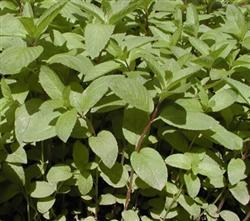
Detailed Explanation of Key Techniques for Summer Propagation and Breeding of Mint
1. Select good varieties. For summer propagation and breeding of mint, choose varieties with vigorous growth, strong disease resistance, high menthol content, and pure aroma; generally, Asia 39 and Fuyou No. 1 are selected. 2. Propagation time. It is generally carried out when the first crop of mint enters the bud stage. In the south, around June; in the north, around July. 3. Land preparation. Choose...
-
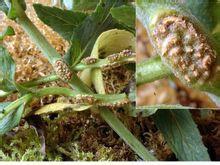
What to Do When Mint Gets Rust Disease? A Detailed Guide to Integrated Control Techniques
Mint is a medicinal plant renowned both in China and abroad, with the whole herb used as medicine. It is produced in Jiangsu. In recent years, with the adjustment of the rural planting structure and market demand, the planting area of mint in various parts of Jiangsu has expanded somewhat, but during its growth and development, it often suffers severe damage from rust disease, which not only causes serious yield reduction but also affects...
-
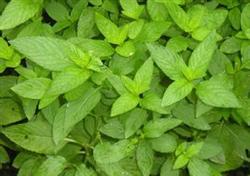
Key Techniques for Three-Dimensional Cultivation of Soybean and Gastrodia elata
In order to develop the local economy and increase farmers' income, the introduction of the aromatic crop mint for demonstration planting has achieved success, the key techniques for mint cultivation have been clearly understood, and experience has been accumulated for large-scale promotion. 1. Seedling raising. 1. Rhizome propagation. Cultivate seed rhizomes in late April or late August. In the field, select robust-growing...
-
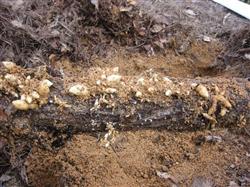
How to manage bottle-cultivated Gastrodia elata? Detailed explanation of key cultivation techniques
During the growing period of Gastrodia elata, prevent mold infection. Once the soil layer or the box is infected by green mold, red mold or other miscellaneous fungi, you can lightly spray a layer of Bordeaux mixture (copper sulfate, quicklime and water in a ratio of 1:1:140; dissolve 1 part copper sulfate and 1 part quicklime separately in water, then pour the copper sulfate solution into the lime milk...
-
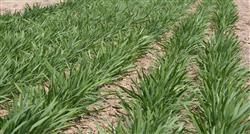
What are the key management techniques for chives during the summer?
How to manage chives well during the summer? Please give an introduction. In summer, high temperatures and frequent rain, to promote robust growth of chives, attention should be paid to key management points. First, do not harvest in summer. High summer temperatures lead to low nutrient accumulation and high consumption in chives, affecting plant growth, and leaf tissue fibers increase, making the texture coarse and the commodity...
-
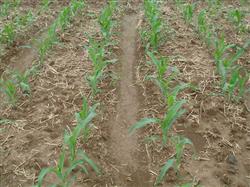
Detailed Explanation of Key Management Techniques for Summer Corn at the Seedling Stage
How should summer corn seedlings be managed? Please provide detailed guidance. Summer corn seedling management mainly includes the following aspects: 1. Checking seedlings and replanting missing ones. After emergence, frequently check the field for seedlings, and promptly replant or transplant where gaps are found. If few seedlings are missing, leave double seedlings on both sides of the gap; if many are missing, when the corn has 2 to 3 leaves, transplant healthy seedlings with soil balls and water them thoroughly...
-
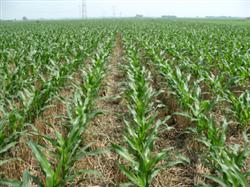
Key Field Management Techniques for Summer Corn in July
How should summer corn be managed in July? Please give guidance. Summer corn can be managed in July as follows: on the premise of ensuring suitable soil moisture, sow at the right time as much as possible to ensure a full stand. Before sowing, the seeds should be sun-dried and treated with seed coating agents or chemical seed dressing to improve seed vigor. An appropriate amount of phoxim, ...
条件筛选