Detailed Explanation of Key Management Techniques for Summer Corn at the Seedling Stage
How should summer corn seedlings be managed? Please provide detailed guidance. Summer corn seedling management mainly includes the following aspects: 1. Checking seedlings and replanting missing ones. After emergence, frequently check the field for seedlings, and promptly replant or transplant where gaps are found. If few seedlings are missing, leave double seedlings on both sides of the gap; if many are missing, when the corn has 2 to 3 leaves, transplant healthy seedlings with soil balls and water them thoroughly...
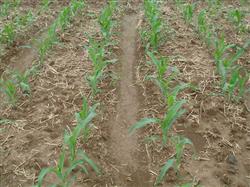
How should summer corn seedlings be managed? Please provide detailed guidance.
Summer corn seedling management mainly includes the following aspects:
1. Checking seedlings and replanting missing ones. After emergence, frequently check the field for seedlings, and promptly replant or transplant where gaps are found. If few seedlings are missing, leave double seedlings on both sides of the gap; if many are missing, when the corn has 2 to 3 leaves, transplant healthy seedlings with soil balls and water them thoroughly. For replanted and transplanted corn seedlings, apply extra water and fertilizer to promote rapid growth, achieving uniform and strong seedlings.
2. Thinning and final singling. Thin the corn seedlings once at the 3-leaf stage, and carry out final singling at the appropriate time at the 5-leaf stage. When thinning and singling, remove diseased and weak seedlings, and remove large and off-type seedlings to improve population uniformity; the work should be done on a sunny afternoon. Generally, large-ear varieties should keep 3000 to 3200 plants per mu, medium-ear varieties should keep 3500 to 4000 plants per mu, and dense-planting-tolerant varieties should keep 4000 to 4500 plants per mu.
3. Intertillage and hoeing. Intertillage during the corn seedling stage can break up soil compaction, promote deeper root growth, and improve light penetration and aeration for the seedlings. Generally, it can be done 2 to 3 times. Before final singling, the seedlings are short, so one intertillage can be carried out; avoid crushing seedlings during intertillage. The suitable intertillage depth is 3 cm to 5 cm, shallower near the seedlings and deeper between the rows.
4. Chemical weed control. For chemical weed control, strictly select the type of herbicide and accurately control the dosage. After corn sowing and before emergence, use the herbicide Yi'a mixture, 150 milliliters per mu plus 30 kilograms of water, and spray evenly on the ground; or use 50% acetochlor emulsifiable concentrate, 100 milliliters per mu plus 35 kilograms of water, and spray evenly on the soil surface between rows. When corn grows to 30 cm, directed spraying can be used, with 150 milliliters of 20% gramoxone aqueous solution per mu plus 40 kilograms of water sprayed on the ground, taking care not to spray it onto the corn.
5. Seedling hardening to promote vigorous growth. Seedling hardening should begin at the seedling stage and end before the jointing stage. Seedling hardening should follow the principle of "harden dark seedlings but not yellow ones, harden fat seedlings but not thin ones, harden dry seedlings but not wet ones." Relay-interplanted corn generally should not undergo seedling hardening because the sowing and growing conditions are poor.
6. Applying seedling fertilizer. Topdressing is generally carried out after final singling and before the jointing stage; this topdressing helps promote roots, strengthen seedlings, and promote leaf and stalk growth. Organic fertilizer, phosphate fertilizer, potassium fertilizer, and micronutrient fertilizer should be applied as early as possible during the seedling stage in combination with intertillage. For high-yield fields, apply 55 kilograms of standard phosphate fertilizer, 25 kilograms of standard potassium fertilizer, 1 kilogram of zinc sulfate, and 30 kilograms of nitrogen fertilizer per mu. Medium- and low-yield fields should also use up organic fertilizer, phosphate fertilizer, potassium fertilizer, etc. during the seedling stage.
7. Pest and disease control. There are many kinds of insect pests during the corn seedling stage, and summer corn is especially prone to pests and diseases. At present, the main pests harming corn at the seedling stage include cutworms, aphids, thrips, cotton bollworms, tiger moths, wheat stem flies, and others. Pest monitoring and forecasting should be done promptly, and pests should be controlled as soon as they are found. Control methods: use poisoned soil or seed dressing with seed coating agents when sowing. After emergence, use 1000 times dilution of 2.5% decis and spray the ground along the seedling rows in the evening to control cutworms. Use 1500 times dilution of 40% dimethoate emulsifiable concentrate and spray the seedling whorl to control aphids, thrips, and rice planthoppers. Use 20% fenvalerate emulsifiable concentrate or 2000 times dilution of 50% phoxim to control armyworms. Corn seedlings are easily infected by viruses, and the seedling stage is a period prone to rough dwarf disease and dwarf mosaic disease. Promptly eliminating small brown planthoppers, aphids, and others in the field and surrounding areas can reduce the occurrence of diseases.
Click to get more corn planting techniques
Click to get more food crop planting techniques