Detailed Explanation of Key Techniques for Summer Propagation and Breeding of Mint
1. Select good varieties. For summer propagation and breeding of mint, choose varieties with vigorous growth, strong disease resistance, high menthol content, and pure aroma; generally, Asia 39 and Fuyou No. 1 are selected. 2. Propagation time. It is generally carried out when the first crop of mint enters the bud stage. In the south, around June; in the north, around July. 3. Land preparation. Choose...
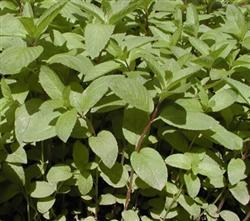
1. Select good varieties. For summer propagation and breeding of mint, choose varieties with vigorous growth, strong disease resistance, high menthol content, and pure aroma; generally, Asia 39 and Fuyou No. 1 are selected.
2. Propagation time. It is generally carried out when the first crop of mint enters the bud stage. In the south, around June; in the north, around July.
3. Land preparation. Choose a field with high terrain, good drainage, deep soil, and loose, fertile soil; sandy loam is best, and it should be finely cultivated. Apply sufficient base fertilizer together with land preparation: 3000-5000 kg of farmyard manure and 50 kg of NPK compound fertilizer per 667 sq m.
4. Propagation methods. ① Cutting propagation. Use the stems of the first crop of mint, cut them into 30 cm long sections, and plant them on the prepared beds at a row spacing and plant spacing of 30 cm x 5 cm. ② Rhizome propagation. After the first crop of mint is harvested, dig out the underground rhizomes and plant them at a row spacing and plant spacing of 30 cm x 5 cm.
5. Field management. ① Watering. After mint is planted, soil moisture should be maintained, and it needs frequent watering to facilitate rooting and seedling emergence. ② Weed control. Before mint emerges, use 100 g of herbicide per 667 sq m mixed with 60 kg of water and spray it evenly over the mint field, which can effectively control many kinds of weeds. After the mint seedlings are fully established, weeds that were not completely controlled can be removed by hand. ③ Topdressing. Use 100 g of mint yield-increasing agent per 667 sq m, prepare a 300-fold solution, and spray it evenly. Spray once every 10 days, for 3 consecutive sprays. When the mint seedlings are 10 cm tall, apply topdressing once. Apply 10 kg of urea and 5 kg of monopotassium phosphate per 667 sq m. ④ Pest and disease control. The main mint diseases include leaf spot and rust, which can be controlled by conventional methods at the early stage of onset.
6. Harvest. When mint grows to late October, it can be harvested. First cut off the aboveground stems and leaves, then dig out the underground seed stems for propagation and planting.