What are the key management techniques for chives during the summer?
How to manage chives well during the summer? Please give an introduction. In summer, high temperatures and frequent rain, to promote robust growth of chives, attention should be paid to key management points. First, do not harvest in summer. High summer temperatures lead to low nutrient accumulation and high consumption in chives, affecting plant growth, and leaf tissue fibers increase, making the texture coarse and the commodity...
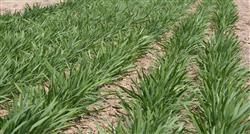
How to manage chives well during the summer? Please give an introduction.
In summer, high temperatures and frequent rain, to promote robust growth of chives, attention should be paid to key management points.
First, do not harvest in summer. High summer temperatures lead to low nutrient accumulation and high consumption in chives, affecting plant growth, and leaf tissue fibers increase, making the texture coarse and the commodity value poor, so harvesting should stop in summer to help nourish the roots and promote the clumps.
Second, fertilizer and water management. When a reporter interviewed in Xianfengying Village, Wenjia Street, Shouguang City, vegetable grower Master Zhang told the reporter: "In summer, fertilizer and water management for chives must be done according to variety. For example, for 'ben' chives, because green chives do not sell well, generally the chive flower stalks are sold, so watering and fertilizing must be early and sufficient to provide good conditions for bolting. Varieties such as Hanzhong and Xuejiu bolt later and generally fetch lower prices, so water can be appropriately controlled, so as not to waste fertilizer and water and not affect nutrient accumulation, laying a good foundation for selling green chives in winter. To prevent uneven fertilizer application when washed in with water, fertilizer can be broadcast. But it must be broadcast when there is no dew, and a broom can be used to sweep a few times so that fertilizer on the leaves falls to the ground, then water."
Third, prevent lodging. Summer weather is hot and rainy. For chives more than two years old, if not cut in summer, the plants are tall and the leaves lush and prone to lodging, which seriously affects ventilation and light penetration and makes disease likely. To prevent chive lodging and reduce disease, a frame should be built for the chives, that is, fix 30 cm high wooden stakes along the rows at the east and west ends of the chive bed, then tie 2 m long bamboo poles to the wooden stakes, set three thin steel wires along the east-west direction on both sides and in the middle of the bed, then set nylon ropes among the wires at a spacing of 25-33 cm to play a fixing role. Then between each row of chives, along the north-south direction, place thin bamboo poles on the nylon ropes and tie them well, so the leaves can lie on the bamboo poles and grow without lodging.
Fourth, harvest chive flower stalks at the right time. After chives bolt, except for seed-production fields, they should be harvested promptly to reduce nutrient consumption, help thicken the rhizomes, and increase chive yield in winter. According to Master Zhang of Xianfengying Village, Wenjia Street, Shouguang City, when harvesting, attention should be paid to the degree of fibrosis at the base of the chive flower stalk; if it bends and breaks with a gentle bend, that is the suitable harvest standard; if it is not crisp and is difficult to break, it means the chive flower stalk is older and has no commodity value. For ben chives sold for their flower stalks, they should generally be harvested once every three days, and can be harvested for up to two months. When the price of chive flower stalks is low and you no longer want to sell them, the young tender flower stalks should be cut off promptly to help nourish the roots and cultivate robust plants.
Fifth, promptly prevent and control pests and diseases. Under high summer temperatures, chives are most prone to Fusarium wilt, especially when heavy rain is followed by strong sun exposure, when the disease is severe. Therefore, in summer, attention should be paid to removing old and yellow leaves, and on the premise of maintaining good ventilation between rows, pesticides such as 50% carbendazim 500 times can be sprayed every 10-15 days to reduce disease occurrence. In addition, chive maggots should also be controlled promptly, and 48% diquling, 48% Lorsban emulsifiable concentrate, etc. can be used for control.
Click to get more chive cultivation techniques
Click to get more vegetable cultivation techniques