What to Do When Mint Gets Rust Disease? A Detailed Guide to Integrated Control Techniques
Mint is a medicinal plant renowned both in China and abroad, with the whole herb used as medicine. It is produced in Jiangsu. In recent years, with the adjustment of the rural planting structure and market demand, the planting area of mint in various parts of Jiangsu has expanded somewhat, but during its growth and development, it often suffers severe damage from rust disease, which not only causes serious yield reduction but also affects...
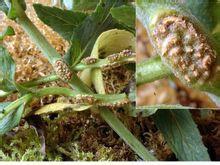
Mint is a medicinal plant renowned both in China and abroad, with the whole herb used as medicine. It is produced in Jiangsu. In recent years, with the adjustment of the rural planting structure and market demand, the planting area of mint in various parts of Jiangsu has expanded somewhat, but during its growth and development, it often suffers severe damage from rust disease, which not only causes serious yield reduction but also affects quality. The occurrence and control methods of mint rust disease are described below:
1. Symptom characteristics: Rust disease is a common and important disease of mint. It mainly damages leaves and stems. At the initial stage of the disease, yellow or orange-yellow slightly raised blister spots appear on the leaves or tender stems. Sometimes several blister spots merge into large patches. The epidermis of the blister spots ruptures, releasing yellow, orange-yellow or rust-colored powder (the summer spores of the pathogen). At the late stage of the disease, black powdery material (the winter spores of the pathogen) grows on the diseased parts. The damaged leaves grow poorly at first, and because yellow spores adhere to the leaf surface, photosynthesis is seriously affected. At the late stage of the disease, most leaves dry up, causing early defoliation. After the tender stems are affected, the stems above the diseased part first wilt, and then the tender stems die. Mint rust disease also damages many medicinal plants such as Panax notoginseng, Corydalis yanhusuo, Atractylodes macrocephala, Angelica sinensis and Fritillaria.
2. Occurrence pattern: The pathogen overwinters as winter spores on diseased residues in the soil, and the winter spores can also adhere to seeds to overwinter. The following year, the winter spores germinate and cause damage. From late May to late June, if there is continuous rainy or dry weather, the disease is extremely likely to occur, and it spreads quickly and causes severe damage. The summer spores are transmitted by wind. The transmission distance is at least a few kilometers and at most several dozen kilometers. Therefore, once rust disease occurs, it often covers a wide range and a large area.
3. Control methods: 1. Practice crop rotation. That is, rotate with crops that are not hosts of the rust pathogen for more than 3 years. 2. Fertilize reasonably. During the growth period of mint, avoid applying too much nitrogen fertilizer and appropriately increase the application of phosphorus and potassium fertilizers to promote steady plant growth and enhance disease resistance. At the same time, pay attention to field drainage to prevent waterlogging. 3. Chemical control. According to large-scale growers, spraying 1:1:100 Bordeaux mixture before the disease occurs has a good protective and preventive effect; when the disease occurs, spraying 25% triadimefon 1200-fold solution or 65% zineb 500-fold solution also works very well. If the disease is severe, spray once every 10 days for two consecutive treatments.