Detailed Explanation of Artificial Cultivation and Management Techniques for King Oyster Mushroom
King oyster mushroom Pleurotus eryngii (DC. ex Fr.) Quel. belongs to the kingdom Fungi, subkingdom Eumycota, phylum Basidiomycota, subphylum Agaricomycotina, class Agaricomycetes, subclass Agaricomycetidae, order Agaricales, family Pleurotaceae, genus Pleurotus. Also known as eryngo oyster mushroom, it is named because it mainly occurs on dead plants (roots) of the Umbelliferae family...
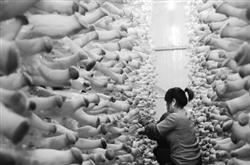
King oyster mushroom Pleurotus eryngii (DC. ex Fr.) Quel. belongs to the kingdom Fungi, subkingdom Eumycota, phylum Basidiomycota, subphylum Agaricomycotina, class Agaricomycetes, subclass Agaricomycetidae, order Agaricales, family Pleurotaceae, genus Pleurotus. Also known as eryngo oyster mushroom, it is named because it mainly occurs on dead plants (roots) of the Umbelliferae family. This mushroom has a fresh almond aroma, and in Fujian and Taiwan, China it is called almond abalone mushroom, abbreviated as king oyster mushroom.
King oyster mushroom is a large fleshy agaric with thick flesh, a crisp and tender texture, a delicate mouthfeel, and a delicious flavor with a fresh almond scent. Even more valuable is that it is rich in fungal oligosaccharides, which have the effects of cleansing the digestive tract, beautifying the skin, and lowering blood pressure and blood lipids, giving it excellent dietary therapeutic value.
Wild king oyster mushrooms are mainly distributed in the high mountains, grasslands, and desert regions of many countries in southern Europe, northern Africa, and Central Asia. They are also distributed in Sichuan, Qinghai, ** and other regions of China. Its fresh product has a long shelf life under natural conditions (generally about 1 week at around 5°C. At around 3°C it can be stored for about 12 days without spoilage). It is suitable for processing and cooking by many methods; it can be cooked together with green vegetables, meat, eggs, and fish, or fried alone (best when fried until the surface is browned and crisp), and it tastes even better as a filling for dumplings. Therefore, it is a high-grade edible mushroom extremely popular with consumers. Its bag cultivation method is briefly introduced below.
I. Cultivation Site
Any site where oyster mushrooms and shiitake mushrooms can be cultivated can also be used to cultivate king oyster mushrooms. The general requirements for the site are that it can retain heat and moisture, be protected from light, have good ventilation, and be relatively close to a water source. For example, plastic greenhouses, abandoned factory buildings, cave dwellings, etc. are all acceptable.
II. Cultivation Season
The most suitable temperature for fruiting of king oyster mushroom is 10-22°C. From bag making and inoculation to fruiting takes about 40-60 days. Cultivation seasons can be arranged according to the specific local temperatures. Cultivation in late autumn and early spring is more suitable.
III. Cultivation Methods and Varieties
At present there are bottle cultivation, bag cultivation (divided into vertical and three-dimensional types), and box cultivation. However, all must use sterilized substrate. Better varieties include King Oyster Mushroom No. 1, No. 2, and Beijing King Oyster Mushroom, with biological efficiency all reaching 50%-160%.
IV. Cultivation Raw Materials
1. Main raw materials Cottonseed hulls, corncobs, crushed soybean stalks, bagasse, sawdust, chopped rice straw or wheat straw, etc. (any one of them is sufficient) can all be used as the main raw materials for king oyster mushroom cultivation.
2. Supplementary materials Fine rice bran, wheat bran, cornmeal, gypsum powder, lime, sugar, and potassium dihydrogen phosphate, etc. are all very good supplementary materials for cultivating king oyster mushrooms.
V. Spawn Production
1. Mother spawn Use PDA medium or PDA with 3 g peptone added; it is best to use an enriched comprehensive medium, in which the mycelium grows thick and vigorous. After inoculation, the mother spawn is cultured at 22-26°C for 10-13 days until fully grown.
2. Stock spawn and cultivation spawn A medium of broadleaf tree sawdust or crushed corncobs plus wheat bran can be used. If some cottonseed hulls are added on this basis, the mycelial growth rate can be accelerated. Stock spawn and cultivation spawn can also use wheat or corn kernels as the medium. Generally, after inoculation, stock spawn and cultivation spawn are cultured at 22-26°C under light-shaded and well-ventilated conditions, and after 25-35 days they can fill the bottle (bag).
3. Cultivation
(1) Raw materials and formula There are many substrates suitable for the growth and development of king oyster mushroom (only 1 example is listed: for reference). Mixed hardwood sawdust 35%, cottonseed hulls or corncobs 40%, wheat bran 18%, cornmeal 3%, sugar 1%, calcium carbonate 1%, gypsum powder 1%, potassium dihydrogen phosphate 0.5%, magnesium sulfate 0.3%, urea 0.2%.
(2) Mixing materials and bagging When mixing materials, operate according to the conventional method and the formula proportions, and bag after stirring evenly. Polypropylene or high-density polyethylene plastic bags of (17-22) cm × (35-45) cm specifications can be selected for filling, with a hole 1-3 cm in diameter punched in the bag to facilitate mycelial growth and development, and the bag opening tied well.
(3) Sterilization and inoculation The filled spawn bags should be sterilized promptly at a pressure of 1.5 kg per cm2 for 2 h, or sterilized in an atmospheric pressure cooker for 10-12 h. After cooling, inoculate in an inoculation box or sterile room. After inoculation, place at 18-25°C under light-shaded conditions for culture, and generally after about 25-35 days the bag is fully grown.
(4) Management Management during the growth and development stage of the king oyster mushroom fruiting body is the key to obtaining high and stable yield and good quality. After the mycelium fills the bag, it can be transferred to fruiting-stage management. Open the bag mouth, roll the plastic bag down close to the substrate, and spray water to maintain moisture, appropriately lower the temperature and increase light to promote fruiting. At this time, the relative humidity is generally required to be about 80%-95%, and after about 15 days, primordia can be seen. After the primordia differentiate into mushroom buds, under conditions of 8-20°C and relative humidity of 85%-95%, the mushroom buds will continue to grow and form normal fruiting bodies. Overall, management during the fruiting period must comprehensively consider factors such as temperature, humidity, ventilation, light, nutrition, and bag-opening time, and only by continuously summarizing experience can mushrooms with excellent quality, high yield, a long fruiting period, and good marketability be cultivated.
(5) Prevention and control of diseases and insect pests During the vegetative growth stage, common fungal diseases include contamination by green mold, yellow mold, black mold, and Mucor. Due to the breeding of contaminant fungi, normal mycelial growth is adversely affected. The main causes include high initial contamination of raw materials, incomplete disinfection and sterilization, unsuitable pH, careless inoculation, poor ventilation in the culture environment, and high levels of contaminant fungi. Prevention and control methods mainly include selecting fresh raw materials free of contaminants and pollution, mixing materials evenly, suitable pH, thorough disinfection and sterilization, careful inoculation, and suitable temperature and humidity with good ventilation in the culture environment.
During the reproductive growth stage, common bacterial disease symptoms include dead mushrooms, rotten mushrooms, and yellow spots growing on the mushrooms. Causes include introduction by spawn, introduction by tools during operation, and introduction by water sources, as well as artificial spread and transmission caused by daily management operations. Prevention and control methods: select spawn free of bacterial contamination, thoroughly disinfect inoculation tools and daily management utensils, and do not store water used for humidifying the mushroom house for too long, etc.
In addition, insect pests may occur throughout the entire cultivation process, mainly including fungus gnats and fungus flies. Causes: introduction by spawn and migration from outside. Prevention and control methods: use insect-free, healthy and normally growing spawn, reduce unnecessary personnel entry, and add screens to the ventilation holes of the mushroom house, etc.
(6) Harvesting and processing When the mushroom cap opens and is nearly flat, the color becomes lighter, the edge curls slightly inward, and the spores have not yet been discharged, it should be harvested. Mushrooms harvested appropriately early have good flavor and a long shelf life. After the first flush is harvested, promptly clean the substrate surface and remove contaminated spawn bags. Adjust the temperature, humidity, ventilation, and light of the mushroom house well, and after 10-15 days the second flush can grow. After harvesting, king oyster mushrooms can be sold fresh immediately, or sold after refrigeration at 2-4°C for freshness preservation, or sliced and air-dried or oven-dried, or processed into salted products and canned goods.