How to grow summer-sown coriander for high yields? Key techniques explained
Coriander prefers cool conditions; its growth slows when the temperature is above 20°C, and stops when it is above 30°C. Therefore, cultivating coriander in summer is quite difficult, and the following supporting cultivation techniques must be mastered. 1. Choice of variety: choose varieties that are drought-tolerant, fast-growing and slow to bolt, such as purple-stem coriander, Beijing coriander, North China large-leaf...
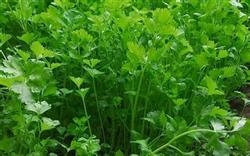
Coriander prefers cool conditions; its growth slows when the temperature is above 20°C, and stops when it is above 30°C. Therefore, cultivating coriander in summer is quite difficult, and the following supporting cultivation techniques must be mastered.
1. Choice of variety
Choose varieties that are drought-tolerant, fast-growing and slow to bolt, such as purple-stem coriander, Beijing coriander, North China large-leaf, American large-leaf coriander, Thailand heat-tolerant large-grain coriander, etc.
2. Seed treatment
Summer temperatures are high and moisture in the soil evaporates quickly. In order to achieve early and complete emergence, the seeds must be carefully treated before sowing: first crush the fruit rind, then soak the seeds to promote germination. Soak the seeds in cool water for 4-5 hours, put them in a cloth bag and hang it in a well 30 cm above the water surface, soak the bag in water once a day to replenish moisture; after 7-10 days, sow once the seeds have sprouted white.
3. Land preparation and fertilisation
Choose soil that is fertile, retains water and nutrients, is easy to drain and irrigate, is well ventilated, and has not grown coriander for more than 3 years. Apply 4000 kg of cow manure per mu, deep-plough the soil 20-25 cm, break up the clods, rake the land level, and make flat beds 1-1.5 m wide and 7-8 m long.
4. Sow carefully
Broadcasting is best, using 3 kg of seed per mu. Before sowing, water the bed thoroughly to the base; after the water has seeped in, mix the seeds with sand and broadcast them evenly, then cover with 1-2 cm of fine soil. After all sowing is finished, press once to conserve moisture. After sowing, rake shallowly and pat firm, then cover with grass to retain moisture and help the seedlings emerge. On the second day, depending on soil moisture, water lightly once in the morning and once in the evening. After that, keep the soil moist until emergence. Seedlings emerge about 7 days after sowing; once most of the seedlings have emerged, the covering should be removed.
5. Field management
After emergence, build small arched frames 60-70 cm high and cover them with shade netting to prevent scorching sun and rain erosion; remove the shade netting in the evening to allow ventilation. The plants grow slowly in the early stage, so the principle of fertiliser and water management is: do not water unless dry, water little in the early stage and more in the later stage; the amount of topdressing depends on the soil fertility, mainly nitrogen fertiliser (human and livestock manure and urine, urea). Coriander seedlings grow slowly and are prone to being overrun by weeds, so weeds should be removed promptly.
6. Pest control
Summer-sown coriander suffers relatively few insect pests; the main diseases are damping-off at the seedling stage, and virus disease, anthracnose and leaf spot at the mature-plant stage. About 5 days after emergence, spray once with 3% polyoxin wettable powder at 800 times dilution, then spray once every 7 days with polyoxin at 600 times dilution, for a total of 2-3 sprays, which can prevent damping-off, anthracnose and leaf spot; shading and other methods can be used to avoid yield loss from high temperatures; use insect-proof netting and spray 20 g of 20% imidacloprid wettable powder mixed with 50 kg of water on the leaves to control aphids, thereby reducing the occurrence of virus disease.