What are the key cultivation techniques for spring corn?
Adapt measures to local conditions and select improved varieties. In plain and hilly areas, promote Yedan 13 and Xiyu No. 3, paired with Huayu No. 4, Zhongdan 32, Chenghai No. 1, and Yuanzheng 808; for intercropping in cotton fields, select short-stalked, short-growth-period Yedan 22 and Yedan 51; in suburban areas, where fresh eating is the main purpose, waxy corn such as Zhongnuo No. 1 can be planted. Apply sufficient base fertilizer and skillfully apply topdressing...
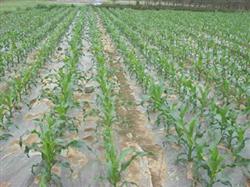 The temperature during the sowing period of spring corn is low and unstable, making it prone to uneven emergence and weak seedlings, and the occurrence of rough dwarf disease is more severe than in summer corn. To ensure high yield of spring corn, the following key techniques should be emphasized.
Land preparation and fertilization: Choose loose, fertile soil with sufficient water and good drainage for planting. Apply base fertilizer in combination with plowing, mainly organic fertilizer, so that the fertilizer blends with the soil.
Select improved varieties: Choose varieties such as Nongda 108 with a growth period of more than 112 days, compact plant type, and strong stress resistance. Carefully select seeds before sowing, remove small, diseased, and shriveled grains, and sun-dry them for 2-3 days to enhance the seeds' water absorption capacity and promote earlier emergence.
Seed soaking before sowing: (1) Warm water soaking: Soak corn seeds in 55°C warm water for 20 minutes, then soak at 20-30°C for 6-12 hours, remove, spread out to air-dry, and sow. Warm water soaking can kill the smut fungus attached to the seed surface. (2) Human urine soaking: Soak seeds in 30% human urine for 12 hours or in 50% human urine for 6-8 hours, remove, air-dry slightly, and sow. Soaking seeds in urine can promote strong seedlings. (3) Potassium dihydrogen phosphate solution soaking: Soak seeds in a 500-fold potassium dihydrogen phosphate solution for 8-12 hours, which can advance emergence by 1-2 days. In addition, soaking seeds in solutions such as yield-increasing agents and ammonium molybdate also has a good yield-increasing effect. Place soaked seeds in a cool place to air-dry, and do not expose them to the sun.
Film mulching for seedling raising: Use film mulching for seedling raising to increase temperature and preserve moisture. In cold areas, double-film mulching with plastic film plus arched shed can be used for seedling raising. Before sowing, rake the ridge surface flat, spray herbicides such as Yumibao and Yutianjing for chemical weed control, and use seed dressing agents to control underground pests. Sow in holes, 2 seeds per hole, sowing depth 3-7 cm, with a seeding rate of 2.5-3 kg per mu. After emergence, promptly break the film to release seedlings, and when emergence reaches 70%, pay attention to preventing low-temperature chilling injury.
Fertilizer and water management: Apply seedling-strengthening fertilizer when seedlings have 3-4 leaves, stalk-strengthening fertilizer from the 5-leaf stage to the jointing stage, and grain fertilizer at the 8-9 leaf stage. When spring corn is sown, the temperature is low, soil nutrient transformation is slow, and root absorption capacity is poor, so fertilizer should be applied near the roots to facilitate absorption and utilization. Water timely, keeping field water capacity at 70% during the jointing stage, 70-80% during the booting stage, and keeping the soil moist from tasseling to the milk-ripe stage.
Pest and disease control: The main pests and diseases at the seedling stage of spring corn include thrips, wireworms, mole crickets, and white grubs, which can be controlled in time by spraying dimethoate. The main pests and diseases at the ear stage include armyworms, corn borers, and stalk rot, which can be controlled by spraying Kuailing and carbendazim.
Timely harvest: Harvest when the stalks turn yellow, the husks are yellow-white and loose, and the kernels harden. Generally, spring corn from greenhouses is available on the market from March to June.