-
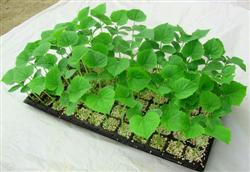
Detailed explanation of key techniques for raising cucumber seedlings through the summer
Normally, vegetable growers mostly sow summer cucumbers directly, thinking that since summer temperatures are high there is no need to raise seedlings, and besides, raising seedlings takes labor and time and is rather troublesome. According to my years of experience, in fact, growing summer cucumbers by raising seedlings is much better than direct sowing. Specifically, there are two major benefits: first, it favors early transplanting and early marketing, and growers...
-
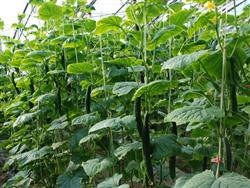
Fertilization Techniques and Facility Key Points for Autumn Cucumber Planting
Cucumber is a high-yielding vegetable with a long fruiting period, and it is also a shallow-rooted crop that needs long-term nutrition throughout its growing period. Topdressing should be applied in stages in a timely manner. For cucumbers, the principle of "frequent light watering and frequent light fertilizing" should be followed. Before cucumber planting, apply 2000 kg of high-quality organic fertilizer and 30 kg of phosphate fertilizer per mu as base fertilizer. Cucumber...
-
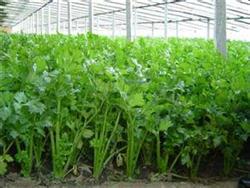
Conventional Celery Seed Saving Methods and Key Techniques
In recent years, many places have bred some excellent conventional celery varieties, which also occupy a relatively large proportion in cultivation. Given that celery is a cross-pollinated crop, conventional improved varieties especially require good seed saving and degeneration prevention work, effectively establishing seed-saving fields or seed-saving bases, and selecting and keeping good seed plants. Strictly isolate at least 4...
-
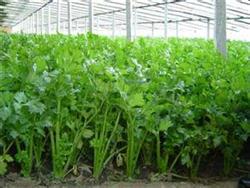
Detailed Explanation of Water and Fertilizer Management Techniques for Greenhouse Celery
I. Seedling Stage: When the sprouts push through the soil, water lightly once, and the seedlings will emerge completely in 1-2 days. After that, keep the soil moist, following the principle of frequent but light watering. When the seedlings are 10 cm tall, apply topdressing with irrigation 1-2 times. II. Transplanting and Seedling Restraint: From transplanting to seedling recovery, water frequently and lightly to keep the soil moist; after seedling recovery, control the water amount and carry out cultivation (to a depth of 1 cun) to restrain the seedlings, so that the roots grow downward and the differentiation of heart leaves accelerates. III. Vegetative Growth Stage: This period is the key stage for yield formation. After the seedling restraint period ends, concentrate fertilizer and water to promote vegetative growth of the plants. Generally, immediately after seedling restraint, apply quick-acting nitrogen fertilizer, then apply topdressing 2-3 times in stages. Pay special attention to applying a certain amount of potassium fertilizer, because celery is a potassium-loving vegetable. Water once every 3-4 days, but with a smaller amount of water, to avoid excessively low soil temperature, which is unfavorable for petiole thickening. About half a month before harvest, spray the whole plant with 30-50 ppm gibberellin 1-2 times for a better yield-increasing effect. Nitrogen deficiency in celery shows as small leaves and easy hollowing and aging of petioles. Phosphorus deficiency in the early stage and potassium deficiency in the later stage both have a relatively large impact on the yield and quality of celery, so phosphorus and potassium liquid fertilizers can be sprayed in the early and late stages respectively. In addition, celery is very sensitive to boron fertilizer. When boron is deficient, stem cracking occurs, and 0.5-0.75 kg of borax per mu can be applied for prevention and control.
-
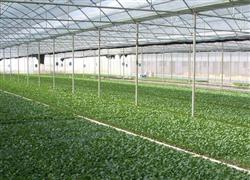
Full analysis of celery seedling-raising techniques: easily grow strong, healthy seedlings
Key points of celery seedling-raising techniques. Celery can be cultivated all year round, and its seedling-raising time and methods vary with the cultivation time and method. 1. Seedling raising for spring cultivation (1) Seed treatment. 5 to 6 days before sowing, sun the seeds for 1 to 2 days. When sunning the seeds, do not spread them directly on a concrete surface. Soak the seeds for 24 hours, and change the water 1 to 2 times during soaking...
-
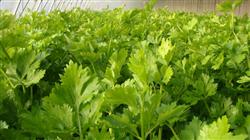
Detailed Explanation of Key Techniques for Blanching Cultivation of Celery
Overwintering celery is mainly grown in a single-slope solar greenhouse with covering conditions, with the supply period from New Year to the Spring Festival. Because of its good quality, it is well received by the market and has relatively high output value. Its cultivation techniques are introduced as follows: 1. Select good varieties. For solar greenhouse celery cultivation, choose varieties that do not tiller, grow fast, are high-yielding, ...
-
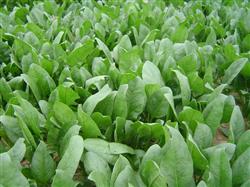
A detailed guide to four-season spinach cultivation techniques: master the key points for growing year-round
1. Sowing time and varieties. Autumn spinach is the main crop in spinach production, generally sown from August to September, but sowing can also be advanced to July or delayed to early October; after sowing, it can be harvested in batches in 30-40 d (days). Variety selection requirements are not strict, but for early-autumn spinach it is best to choose early-maturing varieties that are more heat-tolerant and fast-growing, such as Litou spinach, Huabo...
-
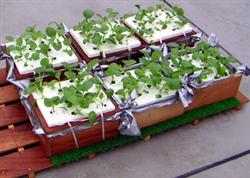
Detailed Explanation of Key Techniques for Hydroponic Spinach Cultivation in Summer
Spinach is one of the important vegetables in spring in northern China. It prefers cool conditions and cannot tolerate heat, with an optimum growth temperature of 15°C--20°C. Cultivation in summer is relatively difficult due to high temperatures and frequent rain. In recent years, some vegetable growers in Shouguang have successfully cultivated summer spinach using hydroponic techniques in greenhouses. The key cultivation techniques are introduced as follows:...
-
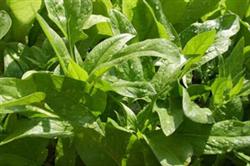
Detailed Explanation of the Key Points of Pollution-Free Cultivation Techniques for Spring Spinach
Spring spinach has a short growing period, and can generally be harvested and brought to market 30 to 50 days after sowing. Planting spring spinach plays an important role in quickly easing the spring shortage. 1. Select suitable varieties. After spring spinach is sown and emerges, the temperature is low and the daylight hours gradually lengthen, making it very easy to bolt after passing through phase development. Therefore, choose varieties that bolt late, have thick and large leaves...
-
Key Techniques for Three-Dimensional Intercropping of Greenhouse Green Peppers, Loofah, and Cilantro
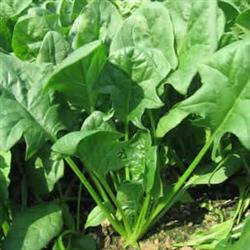
Summer spinach, also known as fu spinach, is difficult to cultivate and can only be grown on a small scale because it tends to bolt prematurely, and it also has the shortest leaf growth period of any crop in the year, resulting in unsatisfactory quality and yield, with pests and diseases hard to control. 1. Variety selection: It is advisable to choose varieties with strong drought resistance, heat tolerance, rapid growth, and low sensitivity to day length...
条件筛选