Detailed Explanation of the Key Points of Pollution-Free Cultivation Techniques for Spring Spinach
Spring spinach has a short growing period, and can generally be harvested and brought to market 30 to 50 days after sowing. Planting spring spinach plays an important role in quickly easing the spring shortage. 1. Select suitable varieties. After spring spinach is sown and emerges, the temperature is low and the daylight hours gradually lengthen, making it very easy to bolt after passing through phase development. Therefore, choose varieties that bolt late, have thick and large leaves...
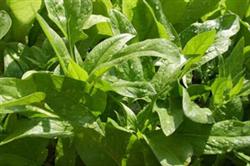
Spring spinach has a short growing period, and can generally be harvested and brought to market 30 to 50 days after sowing. Planting spring spinach plays an important role in quickly easing the spring shortage.
1. Select suitable varieties
After spring spinach is sown and emerges, the temperature is low and the daylight hours gradually lengthen, making it very easy to bolt after passing through phase development. Therefore, choose varieties that bolt late, have thick and large leaves, high yield and good quality. Such as Late Round-Leaf Spinach, Spring-Autumn Large-Leaf, Liaoning Round-Leaf Spinach, etc.
2. Land selection and bed preparation
On a base that meets the conditions for pollution-free vegetable growing, choose neutral to slightly acidic soil that is wind-ventilated and sunny, fertile and loose, and well drained. After the previous crop is harvested, deeply plow the vegetable soil and remove residual roots. When preparing the land, apply 3000 to 4000 kg of decomposed organic fertilizer per 666.7 sq m, level and finely break up the bed soil, and make narrow beds with slightly deep furrows to facilitate drainage on rainy days. Generally the bed width is about 1.2 m. To prevent rain from wetting the soil, after the beds are prepared and before sowing, cover the bed soil well with plastic film to facilitate sowing.
3. Sowing at the right time and raising seedlings
For spring spinach, sowing can begin after the start of spring when the temperature rises above 5°C. Generally there is no need to sow germinated seeds; both dry seeds and wet seeds can be sown. There is also no need to water the base before sowing. Instead, choose a sunny morning to sow on the leveled and finely broken bed soil, then pour on a layer of decomposed thick manure slurry or cover with about 2 cm of soil. The sowing rate is 4 to 5 kg per 666.7 sq m.
4. Cultivation management
When spring spinach is sown, the temperature is relatively low. In the early stage, cover with plastic film, either directly over the bed surface or with a small arched shed, which helps keep warmth and promotes early emergence. When directly covered, remove the film immediately after the spinach emerges or change to covering with a small arched shed. Also let the spinach seedlings see more light and undergo more hardening. Note that the small arched shed should be uncovered by day and covered at night, uncovered on sunny days and covered on rainy days. On sunny days, thin out dense seedlings in time, and timely topdress with fertilizer and water according to the weather and seedling conditions. In the early stage, apply decomposed human and livestock manure lightly and frequently. In the later stage, especially 15 days before harvest, stop topdressing with human and livestock manure and instead topdress with quick-acting nitrogen fertilizer. With sufficient nitrogen fertilizer, leaf growth is vigorous, bolting can be delayed, and this helps improve yield and quality. However, attention should be paid to controlling the application rate of nitrogen chemical fertilizer to avoid accumulating too much nitrate in the leaves. In the middle and late stages of spring spinach growth, because the temperature rises, pests and diseases are likely to occur and cause damage. The main pests and diseases include aphids, leafminers and downy mildew, etc., and they should be controlled in time.
5. Harvest
Spring spinach should be harvested and brought to market in time according to its growth condition and market demand. Generally, it should be harvested in time before bolting to ensure quality and marketability. It is generally harvested 30 to 50 days after sowing.