Detailed Explanation of Key Techniques for Hydroponic Spinach Cultivation in Summer
Spinach is one of the important vegetables in spring in northern China. It prefers cool conditions and cannot tolerate heat, with an optimum growth temperature of 15°C--20°C. Cultivation in summer is relatively difficult due to high temperatures and frequent rain. In recent years, some vegetable growers in Shouguang have successfully cultivated summer spinach using hydroponic techniques in greenhouses. The key cultivation techniques are introduced as follows:...
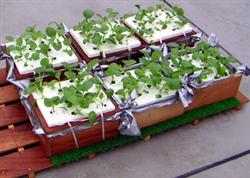
Spinach is one of the important vegetables in spring in northern China. It prefers cool conditions and cannot tolerate heat, with an optimum growth temperature of 15°C--20°C. Cultivation in summer is relatively difficult due to high temperatures and frequent rain. In recent years, some vegetable growers in Shouguang have successfully cultivated summer spinach using hydroponic techniques in greenhouses. The key cultivation techniques are introduced as follows:
1. Variety selection. Heat-tolerant varieties must be selected for summer spinach cultivation, such as Japanese Jixianfeng and Xinkang Nai Re No. 3.
2. Sowing and seedling raising. Sow in May, generally using planting cups for centralized seedling raising in a seedling greenhouse. First fill the bottom of the cup with ceramsite to a height of 2 cm--3 cm below the rim, cover with fine sand after sowing, and water. Cover the seedling greenhouse with a shade net, and remove the shade net promptly after emergence to prevent leggy seedlings. Thin to one strong seedling per cup at the 2-leaf--3-leaf stage.
3. Shade net coverage. Strong sunlight and high temperatures in summer seriously affect spinach growth, so a silver-gray shade net should be covered on top of the greenhouse to reduce light intensity and temperature. The shade net can reduce light intensity by about 30% and lower the temperature by 2°C--3°C.
4. Transplanting. When the seedlings are 5 cm--6 cm tall and have 3 leaves--4 leaves (seedling age 18 days--20 days), they can be transplanted onto the cultivation troughs at 60 plants per sq m.
5. Nutrient solution management. ① Nutrient solution formula. Add to 1 kg of water: 379 mg ammonium sulfate, 306 mg monopotassium phosphate, 150 mg potassium sulfate, 186 mg calcium nitrate, 120 mg magnesium sulfate, 1.54 mg manganese sulfate, 0.22 mg zinc sulfate, 0.08 mg copper sulfate, 0.02 mg ammonium molybdate, and 22 mg Fe--EDTA. ② Nutrient solution concentration management. The nutrient solution concentration and EC value (note) for spinach growth should be adjusted appropriately as growth progresses. At the early transplanting stage, the plants are small and require few nutrients, so the nutrient solution concentration can be appropriately lowered, with an EC value of 0.8 ms/cm--1.3 ms/cm being suitable; by the mid-to-late growth stage, the EC value should be controlled at 1.3 ms/cm--2.0 ms/cm. Test about once every 7 days, record water consumption and EC value changes, and replenish and adjust promptly, with each replenishment amounting to about 20%--30% of the initial amount. ③ Water level management. At the early transplanting stage, the plants are small and the root system is underdeveloped, so the nutrient solution water level should be high, preferably about 1 cm from the foam planting board. As growth proceeds, the water level can be gradually lowered to about 2 cm--3 cm from the planting board, allowing part of the root system to be exposed to the air, which benefits root and plant growth and development. ④ pH adjustment. The suitable pH value for spinach growth is 5.8--6.3. During cultivation, as the plants grow, the pH value of the nutrient solution tends to decrease, so it should be tested regularly with a pH meter. When the pH value falls below 5.8, it can be adjusted with 0.5%--1.0% NaOH solution. ⑤ Nutrient solution circulation. The nutrient solution should be circulated every day to ensure balanced nutrient supply and increase the oxygen content in the nutrient solution, so that spinach grows uniformly. Generally, circulate twice a day, once in the morning and once in the afternoon, with each nutrient supply lasting 1 hour--2 hours.
6. Harvesting. Hydroponic spinach rarely suffers from pests and diseases. It has high water content, tender stems and leaves, fast growth and high yield. Generally, it can be harvested 30 days--45 days after transplanting, when the plant height reaches 25 cm--35 cm.