Conventional Celery Seed Saving Methods and Key Techniques
In recent years, many places have bred some excellent conventional celery varieties, which also occupy a relatively large proportion in cultivation. Given that celery is a cross-pollinated crop, conventional improved varieties especially require good seed saving and degeneration prevention work, effectively establishing seed-saving fields or seed-saving bases, and selecting and keeping good seed plants. Strictly isolate at least 4...
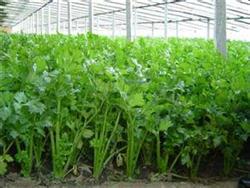
In recent years, many places have bred some excellent conventional celery varieties, which also occupy a relatively large proportion in cultivation. Given that celery is a cross-pollinated crop, conventional improved varieties especially require good seed saving and degeneration prevention work, effectively establishing seed-saving fields or seed-saving bases, and selecting and keeping good seed plants.
Strict isolation: Within at least 4000 m around the seed-saving field, no other celery varieties may be planted. Generally, special terrain such as lake islands, remote areas or forest belts is used as a natural isolation screen to establish a seed-saving plot or a small-scale propagation base.
There are two celery seed production methods: the large-plant seed production method and the small-plant seed production method.
Large-plant seed production method: also called mature-plant seed production method or old-root seed production method. Before harvesting commercial celery in winter, select excellent individual plants that can represent the typical characteristics of the variety in the autumn-planted celery field as seed plants, and remove off-types and inferior plants. When saving a small amount of seed, the selected excellent individual plants can also be transplanted to the seed-saving field; in early spring, selection is carried out again, that is, eliminating plants that bolt early, are not cold-tolerant, and are susceptible to disease. After flowering, pay attention to watering and fertilizing. Celery has a long flowering period, and the seed maturation period is not uniform. To ensure seed quality, it is best to harvest in stages and batches. Generally, each mu of seed-saving field can produce 75-100 kg of seed. When the large-plant seed production method is used, selection can be made for the plant's commercial traits and cold tolerance, and to a certain extent it can prevent variety degeneration and degradation. Therefore, this method is more suitable for purification and rejuvenation of local excellent celery varieties.
Small-plant seed production method: sow in the current year and harvest seed, or cultivate small seedlings before winter, transplant them to the seed-saving field the following spring, then let them bolt, flower and set seed, and then collect the seed. Although this method has a low seed production cost, strict selection cannot be carried out on the seed plants, and continuous use year after year easily causes variety degeneration. Therefore, it is mostly used to propagate production seed when excellent new varieties are first being promoted. With the small-plant seed production method, mastering the appropriate sowing time is key. Generally, direct sowing in the open field is done around late February. If sowing is too late, the seedlings cannot pass through the low-temperature vernalization stage, and the seed plants cannot bolt and flower smoothly; but if sowing is too early, the seedlings pass through the vernalization stage while still very small, bolt and flower, and the vegetative growth period is too short, so the nutrients accumulated are few, resulting in low seed yield. When using the small-plant seed production method, because the plants are smaller and the seed plants have weak branching ability after bolting, the planting density should be denser than in the large-plant seed production method, usually with a hole spacing of 20 cm x 50 cm, and 2-3 plants per hole. Other cultivation and management techniques and seed harvesting methods are the same as those of the large-plant seed production method.