-

Succulent 3-Month Autumn Care Techniques to Help You Become a Succulent Growing Tycoon
Everyone who grows succulents is drawn in by their plump, chubby leaves and slender stems, and since they are also relatively easy to keep alive, they are even more deeply loved by succulent enthusiasts. Although succulents are easy to grow, repotting is no easy task...
-

Freesia blooming techniques before Spring Festival: temperature control is key
Freesia is a flower grown mainly for ornamental purposes. It is precisely because it has rich colors and its blooms carry a strong fragrance that many gardening enthusiasts have fallen in love with it. Generally speaking, freesias are...
-

Key Points of Ginger Cultivation Techniques and a Detailed Explanation of Field Management Methods
Ginger Cultivation Techniques
-

Key Points of Feeding and Management Techniques for Rabbit Farming
Feeding and Management for Raising Rabbits
-

Detailed Explanation of Key Management Techniques for Sea Cucumber During the Overwintering Period
Management Techniques for Sea Cucumber During the Overwintering Period
-

A Complete Guide to Succulent Pest and Disease Prevention and Control Methods and Techniques
Text and images: Internet Although succulents are easy to grow and care for, pests and diseases can still occur under certain conditions. For succulents that follow a refined aesthetic, even a tiny pest or disease problem can leave "a flaw in fine jade," greatly reducing their ornamental value....
-
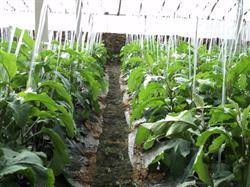
Comprehensive Fertilization Techniques for Eggplant: Key Points Explained
Eggplant is an annual herbaceous plant, and a perennial shrub in the tropics. Eggplant has a well-developed root system; the roots of a mature plant reach more than 1.5 m deep, with a lateral diameter exceeding 1 m, while eggplants grown under protected cultivation have roots mainly distributed in the 0-30 cm plow layer. Eggplant roots have poor regeneration capacity and lignify early, so they are not suitable for repeated transplanting...
-

Detailed Explanation of Cucumber Nutrient Requirements and Scientific Fertilization Techniques
Nutrient Requirements Cucumbers are best grown in loose, fertile soil with good aeration. Heavy clay soil is not conducive to cucumber root development. Soil with high organic matter content can balance the contradiction of cucumber roots being moisture-loving but not waterlogging-tolerant, and fertilizer-loving but not fertilizer-tolerant. The growth cycle of cucumbers is roughly divided into the germination stage, seedling stage, vine elongation stage, and...
-
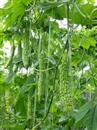
Key Cultivation Techniques for Intercropping Bitter Melon in Greenhouse Cucumber
Bitter melon is a heat-tolerant crop with few pests and diseases. Using a solar greenhouse for intercropping cucumber with bitter melon makes full use of the greenhouse's idle period, improves the utilization rate of greenhouse facilities, and increases economic returns. Variety selection. For cucumber, use Xintai Mici as the scion and black-seed pumpkin as the rootstock for grafted seedling raising....
-
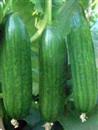
Detailed Explanation of Key Cultivation Techniques for Onion-Cucumber-Rape Rotation
Thornless cucumbers prefer fertile soil, so apply sufficient organic fertilizer along with nitrogen, phosphorus, and potassium fertilizers. Adding molybdenum fertilizer can increase the vitamin content in the fruit and reduce nitrate and nitrite content. Producing 1000 kg of thornless cucumbers requires 2.6 kg of pure nitrogen, 1.4 kg of phosphorus pentoxide, and 3.5 kg of potassium oxide, of which the fruiting stage accounts for...
条件筛选