A Complete Analysis of the Key Technical Points for Sesame Cultivation and Management
Most farmers believe that sesame is a low-yielding, drought-tolerant crop that requires only extensive management. As a result, for many years the yield of spring sesame has been less than 150 kg per mu, and the yield of summer sesame or intercropped sesame has been below 100 kg per mu. Experiments have proven that as long as good seed is combined with good methods and cultivation measures are improved, sesame yields can be increased by more than 20%. 1. Applying...
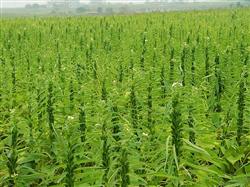 Sesame is one of the main cash crops and enjoys a high reputation in both domestic and international markets. The key technical points for high-yield sesame cultivation are introduced below:
I. Land preparation and fertilization
After the previous crop is harvested, replanting should be done promptly. Before plowing, apply 3000 kg of farmyard manure, 10 kg of standard nitrogen fertilizer, 30-40 kg of superphosphate, and 10 kg of potassium sulfate per mu. Deep plowing to 15-20 cm is appropriate, and the soil should be harrowed level and fine.
II. Seed dressing with chemicals
Before sowing, use 5 g per mu of carbendazim wettable powder or 40% carbendazim suspension concentrate, add water to make a paste, mix evenly with the seeds, and sow after drying.
III. Timely sowing
Sesame should be sown before the end of June, with a seeding rate of 500 g per mu. Sesame must be sown with sufficient soil moisture; if moisture is insufficient, irrigation should be applied to create adequate moisture before sowing. Sesame must never be grown on the same land repeatedly; continuous cropping of sesame results in short plants, fewer capsules, more severe disease, and very low yields. Therefore, a rotation system of planting twice in four years is generally recommended. After sowing, the soil should be pressed appropriately and promptly to improve moisture retention and promote seedling emergence.
IV. Careful management
1. Checking seedlings and replanting. After sesame emerges, if gaps appear, replant seeds or transplant seedlings promptly.
2. Cultivation and weeding. When the first pair of true leaves appears, carry out the first cultivation, with shallow depth being appropriate; when 2-3 pairs of true leaves have grown, carry out the second cultivation; when branching just begins, carry out the third cultivation; in the late flowering stage, carry out a shallow cultivation.
3. Thinning and final spacing. When the first pair of true leaves appears, thin the seedlings; when 2-3 pairs of true leaves have grown, set the final spacing. Leave about 14,000 plants per mu, with a row spacing of 47 cm and a plant spacing of 10 cm.
4. Rational fertilization. On the basis of sufficient basal fertilizer, when sesame plants are 33 cm tall, hill up the soil in combination with fertilization. At the beginning of flowering, apply 10-15 kg of urea per mu as a top dressing, and in the late full-bloom stage spray the leaves 1-2 times with a 0.3% potassium dihydrogen phosphate solution.
5. Appropriate watering. Sesame is a crop that does not tolerate waterlogging. During the seedling stage, as long as soil moisture is good, generally no watering is needed. During the flowering and capsule-setting stage, if rainfall is sufficient, do not water, and pay attention to drainage; if the weather is dry, water appropriately. During the topping stage, if there is an autumn drought with little rain, watering should be done to promote full seeds and increase yield.
6. Controlling excessive growth and preventing decline. If sesame shows a tendency toward excessive growth, spray once per mu during the flowering stage with 2.5 g of mepiquat chloride or daminozide mixed with 50 kg of water.
7. Pest and disease control. At the jointing stage, spray the leaves with 50% iprodione at 1000 times dilution or 50% thiophanate-methyl at 700 times dilution to control sesame capsule blight or leaf blight; for cutworms before the third instar, spray with 2.5% deltamethrin or 20% fenvalerate at 1000 times dilution; for cutworms after the third instar, use cottonseed cake or wheat bran mixed with poison bait to trap and kill them, or handpick them; to control aphids, spray with 40% omethoate at 1000 times dilution.
8. Topping to promote ripening. When sesame is flowering and the lower capsules are approaching maturity, from the end of July to the first ten days to the middle ten days of August, on a sunny day, remove the top 3 cm of the flower cluster from the upper part of sesame plants that are still flowering by hand or with scissors, so as to concentrate nutrients for the capsules already formed, which helps early ripening and improves yield and quality.
V. Timely harvest
When about 20 days after sesame finishes flowering, most leaves have turned yellow and withered, more than 2/3 have fallen off, the capsules are yellowish brown, some lower capsules have already split open, the upper capsules are slightly yellow and green and still tightly closed, and the lower part rattles when shaken by hand and the seeds show their inherent color, it is time to harvest, and harvesting should be done as much as possible before early frost.