Key Technical Points for Fertilizer-Saving and Water-Saving Cultivation of Tomatoes in Winter Warm Greenhouses
Fertilizer saving: Considering cost reduction, input reduction and fertilization efficiency, apply 10000 kg of chicken manure, 50 kg of urea and 50 kg of ternary compound fertilizer per mu. This is the optimal fertilization rate for fruit vegetables in winter warm greenhouses in the coastal area of Shandong. Water saving: Use drip irrigation, with the suitable relative soil moisture content being 80%, which can also save 70.4% of water compared with conventional furrow irrigation...
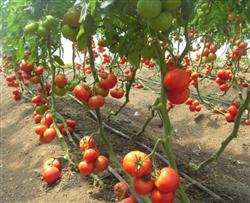
Fertilizer saving: Considering cost reduction, input reduction and fertilization efficiency, apply 10000 kg of chicken manure, 50 kg of urea and 50 kg of ternary compound fertilizer per mu. This is the optimal fertilization rate for fruit vegetables in winter warm greenhouses in the coastal area of Shandong.
Water saving: Use drip irrigation, with the suitable relative soil moisture content being 80%, which can also save 70.4% of water compared with conventional furrow irrigation. This is of great significance for developing protected vegetable production in saline-alkali areas where agricultural water is extremely scarce.
Main technical procedures:
① Introduce excellent varieties. Select the mid-to-late maturing tomato variety Israel 144, which is tolerant to low temperatures and weak light, disease-resistant, high-yielding and of good quality.
② Raising seedlings and planting. Soak tomato seeds in 55°C water for 10 minutes, then slowly lower the temperature to 25°C-30°C and continue soaking for 5 hours. Remove and drain the water, then prepare for sowing and raising seedlings. When the seedlings have 5-6 leaves, transplant them at a density of 2000 plants per mu.
③ Water and fertilizer management. Use drip irrigation. When the relative soil moisture content is below 80%, water until the relative moisture content reaches 100%. During the fruiting period, topdress generally once about every 20 days, and each topdressing can be controlled at 5-10 kg of urea and 5 kg of compound fertilizer per mu.
④ Temperature management. After entering the fruiting period, never let the minimum temperature inside the greenhouse fall below 8°C. When the daytime temperature exceeds 30°C, ventilate appropriately.
⑤ Plant adjustment. Use single-stem pruning and remove side branches at any time to ensure ventilation and light penetration in the field. The vines can be topped after 5 fruit clusters. Select and retain one robust side branch below the upper fruit cluster to replace the original main branch, and after retaining another 4-5 fruit clusters, top the plant.
⑥ Flower and fruit preservation. Spray flowers with tomato hormone at an appropriate concentration to ensure the fruit-setting rate, and at the same time combine with artificial pollination.