-
How to manage sweet persimmon after harvest? Detailed explanation of key technical points
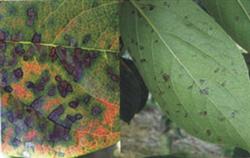
Anthracnose is the main disease of persimmon, mainly harming fruit, branches and shoots, and the trunks and branches of seedlings. It causes a large amount of fruit drop and the death of branches. When the disease is severe, fruit drop can reach 20%-40%, seriously affecting the yield and quality of persimmons. The control methods are as follows. 1. Water and fertilizer management Strengthen water and fertilizer management, enhance tree vigor, and improve disease resistance...
-
Key Technical Points for Pest and Disease Control in the Middle and Late Stages of Rice
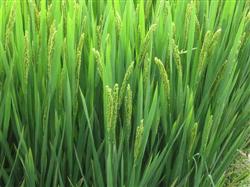
Currently, rice is at the booting stage. In order to seriously carry out pest and disease control in the middle and late stages of rice and ensure increased yield and income this year, Shuangfengqiao Subdistrict recently took strong measures to strengthen pest and disease control in the middle and late stages of rice. Because last winter and this spring were a warm winter year, the overwintering populations of the rice stem borer (Chilo suppressalis), rice leaf roller (Cnaphalocrocis medinalis), and rice planthopper were large...
-
Correct Methods and Technical Key Points for Fertilizing Winter Rapeseed
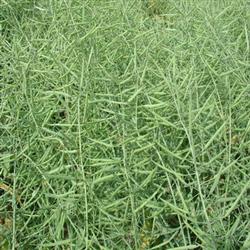
Rapeseed "flowering but not seeding," also known as stunted non-seeding. That is, from the onset of the disease in the plant until maturity, it continues to bloom successively, but cannot set seed normally. It is a physiological disease caused by planting rapeseed on boron-deficient soil, mainly occurring in Brassica napus varieties, but in recent years it has also been found in Brassica rapa rapeseed. After the disease occurs...
-
What are the key technical points for summer management of a persimmon orchard?
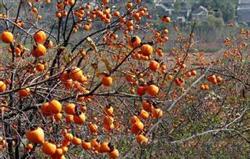
Summer management of a persimmon orchard should pay attention to the following matters: 1. Fruit thinning For astringent persimmons, from mid-May to early June, and for sweet persimmons, from early June to early July, after the physiological fruit drop ends, select and keep healthy young fruits free of pests and diseases at a ratio of 20 to 25 leaves per fruit. The ones to remove are deformed fruits, pest- and disease-damaged fruits, and fruits set on branches less than 15...
-
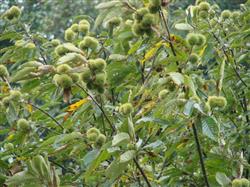
Key Technical Points for Pressing Green Manure under Chestnut Trees in the Rainy Season
Pressing green manure under chestnut trees can improve the soil and prevent water and soil erosion. It has many advantages such as low investment, low cost, and a high comprehensive utilization rate. The techniques for pressing green manure under chestnut trees in the rainy season are introduced as follows: 1. Sources of green manure for chestnut. First, artificially cultivated green manure, commonly including leguminous plants such as false indigo (Amorpha fruticosa) and mung bean; second, wild green manure,...
-
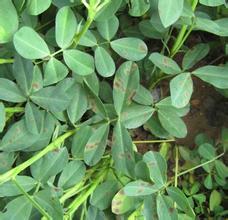
Control Methods and Technical Key Points for Peanut Web Blotch
Peanut web blotch, also known as brown stripe disease and cloud-pattern blotch disease, often occurs mixed with leaf spot disease, and can cause early defoliation of peanut leaves, severely affecting peanut yield. I. Disease occurrence pattern The disease mostly begins during the flowering stage, with the peak period from pod setting to maturity, mainly damaging leaves, initially producing circular or irregular...
-
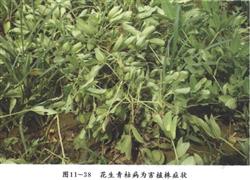
How to prevent and control peanut bacterial wilt and stem rot? Detailed explanation of technical key points
I. Peanut bacterial wilt 1. Symptoms. Peanut bacterial wilt mostly begins to develop around flowering, but the disease is most severe during the peak flowering and pegging stage, and the condition eases somewhat after pod setting. Its most notable symptom is: the aboveground leaves of diseased plants wilt rapidly, the vascular bundles of the underground roots turn brown, and along the root-stem section, when moist, squeezing the cut surface can exude...
-
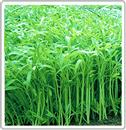
Detailed Explanation of the Key Technical Points for Water Spinach Cultivation and Management
Water spinach, also known as bamboo-leaf vegetable, tongxin cai, weng cai, tong cai or vine vegetable, is a fast-growing leafy green vegetable that has been actively introduced in various regions in recent years. Its main management techniques are as follows: (1) Raising seedlings. The seed coat of water spinach is relatively thin and not hard, and it absorbs water rather quickly, so sowing dry seeds and allowing them to germinate is sufficient. Soaking seeds to promote germination and then sowing. ...
-
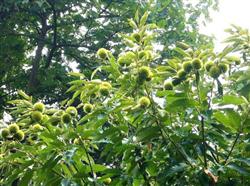
Chestnut Pest and Disease Prevention and Control Methods and Technical Key Points
In Anhui Province, chestnuts are mainly distributed in the mountainous areas of southeastern and western Anhui. Since the 1990s, they have also been developed on a large scale in the Jianghuai hilly region. The main chestnut-producing counties (cities) include Jinzhai, Huoshan, Shucheng, Yuexi, Guangde, Ningguo, Taihu, and others. There are about 150 species of pests and diseases harming chestnuts in our province, with common and severe occurrences affecting chestnuts...
-
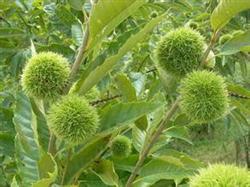
Key Technical Points for Skillfully Applying Boron Fertilizer to Chestnut Trees
According to surveys, in areas where chestnuts grow normally, 15% of the burrs are empty, and in some cases the rate is even as high as over 50%, seriously affecting chestnut growth. Boron deficiency is the main cause of empty chestnut burrs. Applying boron fertilizer can markedly inhibit the formation of empty chestnut burrs and increase yield. In spring, before the chestnuts sprout, apply it in a ring-shaped trench or in holes...
条件筛选