-
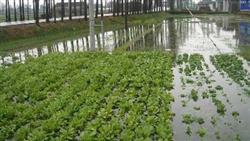
How to prevent and control waterlogging damage in peanuts? Detailed explanation of key technical points
Peanut waterlogging damage occurs for two reasons: first, low-lying terrain, heavy clay soil, and poor drainage; second, during seasons with long rainfall periods or excessive rainfall, surface water and groundwater are in excess and cannot be drained away in time. From the perspective of the water requirements for peanut growth and development, the suitable soil relative humidity at the seedling stage of peanuts is 50%-60%. When the soil relative humidity is higher than 70% or there is standing water...
-

How to prevent and control downy mildew in water spinach? A detailed explanation of practical technical points
1. Practice a 2-to-3-year crop rotation with other vegetable varieties. 2. Before sowing, dress the seed for sterilization at a ratio of 300 g of 35% metalaxyl per 100 kg of seed; 3. In the early stage of the disease, spray with 50% copper metalaxyl wettable powder at 6000 to 7000 times dilution, or with 72.2% Previcur AS at 8000 times dilution, applying once every 7 to 10 days...
-
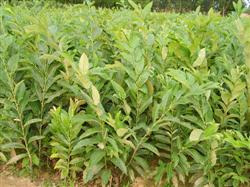
Key Technical Points for Spring Irrigation and Moisture Conservation in Chestnut Orchards
Chestnut (Castanea mollissima) is a deciduous tree and one of the woody grain tree species, with a long lifespan, known as the "iron-stemmed crop." The chestnut fruit is nutritious and delicious, and can serve as a substitute for grain; all parts of the chestnut tree can be used medicinally, and tannin extract can also be obtained from the bark, branches and leaves, and the pith of the wood, while the leaves can also be used to raise camphor silkworms and oak silkworms. Chestnut wood is hard, with straight grain, moisture-resistant and rot-resistant...
-
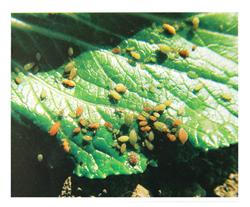
How to control aphids on rapeseed? These technical points need to be mastered
Aphids, commonly known as greasy bugs, are the main insect pest of rapeseed in Linxiang District, occurring in all major rapeseed-producing areas; when drought is severe in winter and spring, the pest is heavier in plots lacking irrigation conditions. Aphid damage mainly occurs from the bolting stage to the maturity stage of rapeseed, and untimely or improper control can cause a certain amount of yield loss. 1. Rapeseed aphids...
-
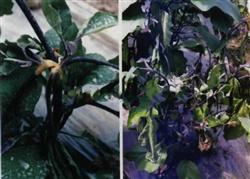
How to prevent and control pests and diseases in early spring eggplant? Key technical points to master
For eggplant seedlings raised in early spring, the main focus is preventing and controlling soil-borne diseases: damping-off, rhizoctonia rot and sclerotinia rot. For seedbed soil disinfection, mix 50 kg of seedbed soil with 20 g of 68% Jinlei water-dispersible granules and 10 ml of 2.5% Shileshi suspension concentrate, sift the soil and mix well, then fill nutrient pots, or spread it over the seedling bed. During the seedling stage, spray 0.1%-0.2% monopotassium phosphate...
-
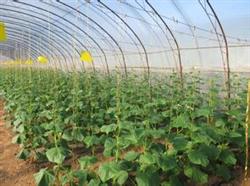
Key Technical Points for Multi-Layer Covered Seedling Raising of Cucumbers in Spring Greenhouses
I. Greenhouse Structure. The best span for the greenhouse is 6-8 m. Put on the greenhouse film in early November. Set up a 1.5 m low tunnel inside the greenhouse and cover it with 3 m wide greenhouse film. At night, cover the low tunnel with a thick straw mat, and add a layer of old greenhouse film over the straw mat, which greatly enhances heat preservation. After seedling raising, cucumbers can still be planted in the greenhouse. II. Nutrient...
-

-
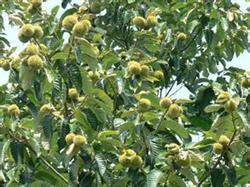
Key Technical Points and Precautions for Summer Fertilization of Chinese Chestnut
To improve the yield and quality of Chinese chestnut, the chestnut trees should be fertilized in summer. There are mainly two fertilization methods: the soil fertilization method: for chestnut orchards with thin, poor soil and a severe lack of fertilizer, the soil fertilization method gives better results. Dig a circular ring trench within the drip line of the chestnut tree canopy for fertilization, with a trench width of 25 cm and a depth of 2...
-
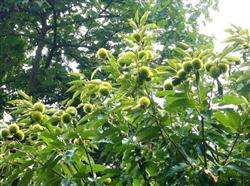
Technical points for supplementary application of micronutrient fertilizers after chestnut harvest
The main cause of low yields and high rates of empty burrs in chestnut orchards is the failure to apply or spray boron micronutrient fertilizer during management. When the soil available boron content is lower than 0.5 parts per million, it affects the normal fertilization process of chestnut, causing early embryo development to stall, thereby forming empty burrs. In production, one can seize the period after harvest...
-
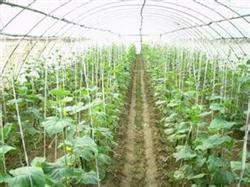
Spring cucumber planting is all about management: master the key technical points to boost yields
Cucumber is one of people's favorite vegetables. It contains various sugars, free amino acids, vitamins, cucurbitacin, and calcium, phosphorus, iron, and more. Among these, cucurbitacin has anti-tumor effects. Cucumber also has the effects of clearing heat and promoting diuresis, detoxifying, and relieving sore throat and heat-related abdominal pain. Cucumbers are generally planted at 3500 plants per mu, with a yield of 5000-8000 kg per mu...
条件筛选