-
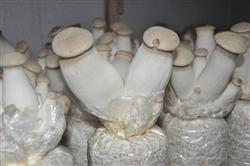
Detailed Explanation of King Oyster Mushroom Bud Thinning Methods and Technical Key Points
During the cultivation of king oyster mushrooms, growers often fail to carry out the necessary bud thinning in time, which leads to many small mushroom buds growing on both sides of the mushroom bag after primordium differentiation, ranging from a few to as many as dozens. However, due to limitations of nutrients and space, most of these buds cannot grow into marketable mushrooms and lose their commercial value....
-
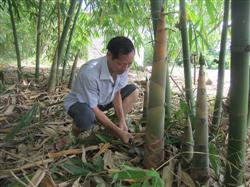
What are the key technical points for bamboo shoot planting and management?
How should bamboo shoots be managed during cultivation? Here is a detailed introduction. Managing planted bamboo is relatively easy, but without proper management it still will not deliver returns. The following introduces methods for establishing a bamboo shoot grove. I. First year. 1. Choosing bamboo species: the better varieties are Datoudian bamboo and Badu shoot bamboo. The former produces shoots early, starting to shoot around the May Day holiday, one month earlier than other shoots, and early shoots fetch a high market price. The latter has excellent quality; a normal shoot weighs several jin, and later shoots sell well on the market.
-
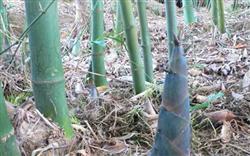
Sweet Bamboo Shoot Planting Management Methods and Technical Key Points
How do you manage sweet bamboo shoots well after planting? Here are the methods. The general management methods for planting sweet bamboo shoots include the following: 1. Fertilization: Because bamboo shoot yields are high, fertilizer demand is relatively large. Fertilization can begin one month after planting, applying 250-300 kg of plant ash per mu, 100-150 loads of farmyard manure, or 250 kg of poultry manure...
-
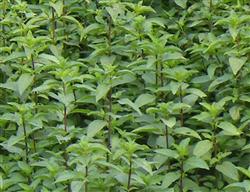
How to manage mint before and after emergence? Key technical points explained in detail
Based on many years of large-scale mint cultivation practice, effectively strengthening field management before and after the emergence of first-cut mint is an effective measure to achieve high yield, high quality and high efficiency. It can increase mint crude oil by l-1.5 kg per mu, with a net profit increase of about 100 yuan. 1. Clear ditches and improve soil moisture conditions to reduce field humidity. Mint is both afraid of drought and intolerant of waterlogging, and soil...
-
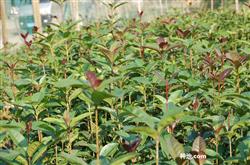
Detailed Explanation of Seed Sowing and Seedling Raising Methods and Technical Points for Osmanthus Trees
How to sow seeds and raise seedlings of osmanthus trees? Please advise. Osmanthus is generally propagated by cuttings, while single-trunk osmanthus is mostly propagated by sowing. The following is an introduction: 1. Seed collection. Osmanthus flowers from September to October, and the fruit matures from late March to late April of the following year. When the fruit enters the maturity stage and the peel gradually changes from green to purple-black, it can be collected...
-
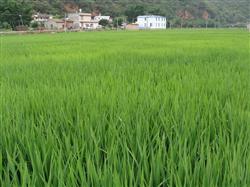
Key Technical Points for Late-Stage Rice Growth Management
How should rice be managed in the late growth stage? What should be noted? In the late growth stage of rice, premature senescence must especially be prevented. If premature senescence occurs from the heading to maturity stage, it will lead to poor grain filling and an increase in blighted grains, causing reduced yield. There are many factors causing premature senescence in the late growth stage of rice. First, improper cultivation management. Planting...
-
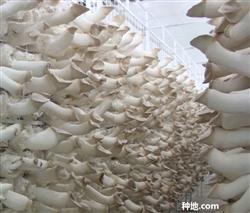
How to cultivate king oyster mushrooms in northern China? Key technical points explained
How to cultivate king oyster mushrooms in northern China? Please advise. The king oyster mushroom (Pleurotus eryngii), also known as xuerong, is a high-quality large fleshy agaric mushroom. The king oyster mushroom has thick flesh, a crisp and tender texture, and a delicious flavor, and can be called the "king of oyster mushrooms." It is rich in nutrients and high in oligosaccharides, and has intestinal-regulating and beauty benefits....
-
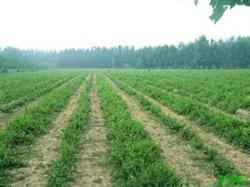
Detailed Explanation of Honeysuckle Propagation Methods and Technical Key Points
I. Cutting Propagation Honeysuckle cutting propagation can be carried out in spring, summer, and autumn. In autumn, it is suitable to do so from early September to mid-October. The nursery plot should be a sandy loam or loam soil with flat terrain, deep soil, and convenient drainage and irrigation. Before propagation, apply 3-5 cubic meters of decomposed organic fertilizer per mu, and 50 kg of superphosphate or calcium magnesium phosphate...
-
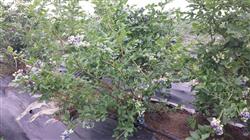
How to prune mature blueberry trees? Pruning methods and technical key points
How to prune mature blueberry trees? Please give an introduction. After strawberry plants reach maturity, the inner canopy tends to become congested and the crown is relatively tall, so pruning at this time is mainly to control tree height and improve light conditions; pruning is mainly thinning out branches, removing overly dense branches, thin and weak branches, diseased and pest-infested branches, and suckers produced by the root system. For trees with a more spreading growth habit, when thinning branches remove weak branches and keep strong ones; for upright varieties, remove the central leader and open up the top, and keep moderate branches. The best fruiting age for large branches is 5 to 6 years, and beyond that they should be renewed by cutting back. Weak small branches can be pruned by the method of removing flower buds to make them grow stronger.
-
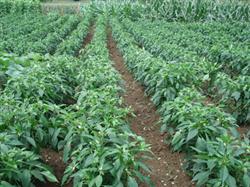
Key Technical Points for Summer Pepper Cultivation and Management
How to manage peppers in summer when growing them? Please provide guidance on management methods. Summer pepper management can be carried out with reference to the following methods: 1. Growth period management. About 20 days after transplanting, promptly remove the first pepper (the door pepper). 2. Promptly control pests such as tobacco budworm, cotton bollworm, aphids, and red spider mites. For tobacco budworm and cotton bollworm, it is advisable to choose...
条件筛选