Key Technical Points for Summer Pepper Cultivation and Management
How to manage peppers in summer when growing them? Please provide guidance on management methods. Summer pepper management can be carried out with reference to the following methods: 1. Growth period management. About 20 days after transplanting, promptly remove the first pepper (the door pepper). 2. Promptly control pests such as tobacco budworm, cotton bollworm, aphids, and red spider mites. For tobacco budworm and cotton bollworm, it is advisable to choose...
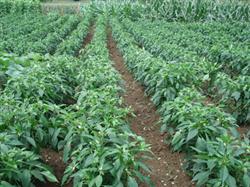
How to manage peppers in summer when growing them? Please provide guidance on management methods
Summer pepper management can be carried out with reference to the following methods:
1. Growth period management. About 20 days after transplanting, promptly remove the first pepper (the door pepper).
2. Promptly control pests such as tobacco budworm, cotton bollworm, aphids, and red spider mites. For tobacco budworm and cotton bollworm, it is advisable to choose pesticides such as Lvgongfu, Yitaibao, and Baoer for rotation and alternating application, applying once every two days for 5-6 consecutive applications. To control aphids, choose imidacloprid-type pesticides. To control red spider mites, choose Saomanjing and similar products.
3. The main diseases of peppers are phytophthora blight and viral disease. The key to preventing and controlling pepper phytophthora blight is preventing waterlogging. Summer has a lot of rain; to drain water promptly, when making ridges, a drainage ditch can be dug every few beds for standby use. When diseased plants are found in the field, promptly spray pesticides such as Anke-manganese zinc and Redomil. The key to preventing and controlling viral disease is to control aphids well. When diseased plants appear in the field, choose virus A 500-times solution for spraying, combined with spraying an appropriate amount of foliar fertilizer.
4. During the vigorous growth period of summer peppers, in years with heavy rainfall, basically no watering is needed. In years with little rainfall, 3-4 waterings are needed. When the first layer of fruit expands, apply 25 kg of compound fertilizer and 15 kg of urea per mu as a top dressing. After that, each time a crop of fruit is harvested, water and apply top dressing as appropriate according to the plant's growth conditions.
5. Foliar fertilizer spraying. Because the plant's water evaporation is relatively large, if fertilizer and water management cannot keep up, weak plants are prone to withering and dying or becoming "stunted seedlings" that do not grow. In addition to normal fertilization at the roots, foliar fertilizer should also be sprayed at irregular intervals according to the plant's growth conditions to enhance the plant's vigor and stress resistance. Spraying with a 0.25% "potassium dihydrogen phosphate" solution on the leaves is sufficient. Using "Yeba", "Penshibao", and similar products for foliar spraying, using 20 grams per mu diluted 3000 times before spraying, can promote bright and vivid fruit color.
Click to get more pepper cultivation techniques
Click to get more vegetable cultivation techniques