-
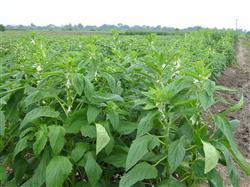
What are the key technical points for summer management of black sesame?
How should black sesame be managed in summer? Please give guidance. The summer management methods for black sesame can refer to the following: First, thinning and final thinning of seedlings, checking seedlings and filling gaps. Because sesame seeds are small and many seedlings emerge, after emergence, when the first pair of true leaves grows, the seedlings should be thinned; when 2-3 pairs of true leaves grow, the seedlings should be thinned again; at 4 pairs of true leaves, the seedlings should be finally thinned. Black sesame generally leaves about 8,000 plants per mu; if seedling gaps or broken rows occur due to poor soil moisture at sowing, transplanting dense seedlings to fill sparse areas or replanting after sprouting can be used to ensure full and strong seedlings.
-
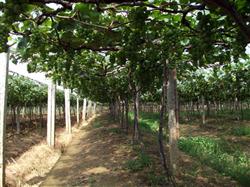
Summer Pruning Methods and Technical Key Points for Kyoho Grapes
How should Kyoho grapes be pruned in summer? Please give an introduction. For Kyoho grapes in summer, the following methods can be used for pruning: 1. Thinning inflorescences and pinching cluster tips. Thinning inflorescences of Kyoho grapes should be determined according to the strength of the new shoots and the size of the plant load. The average weight of a Kyoho cluster is about 400 grams, and the yield target per mu is generally 1600 kg...
-
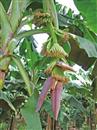
How to Manage Bananas During the Bunch Emergence Stage? Key Technical Points Explained
How to manage bananas well during the bunch emergence stage? Please introduce the management methods. July to August is the bunch emergence stage for ratoon and autumn-planted bananas, a period when vegetative and reproductive growth coexist. To improve banana yield and quality, attention should be paid to managing every aspect of the banana bunch emergence stage. Reference management methods are as follows: 1. Timely apply...
-
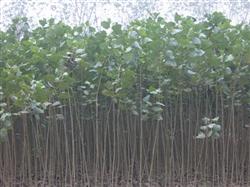
Detailed Explanation of Summer Poplar Seedling Cultivation Methods and Technical Key Points
Pre-planting preparation: select fast-growing, high-quality, high-yielding, and highly adaptable varieties, such as 80351, Populus × euramericana '72', Populus × euramericana '69', etc. From late July to late September each year, propagation begins when the cuttings are semi-lignified. For mass propagation, use mainly the branch shoots and thin, weak, inferior seedlings of the current-year seedlings in the nursery. Make beds 1 m wide, with length based on the number of cuttings, and 20 cm high. ...
-
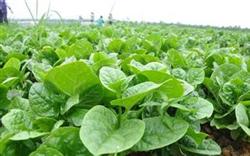
Methods for Raising Seedlings and Transplanting Ceylon Spinach (Malabar Spinach) and Key Technical Points
Prepare the seedbed well, sow dry seeds, and seedlings emerge in 3 to 5 days at a suitable temperature of around 28°C; if the soil temperature is on the low side, the seeds should be pre-germinated before sowing. During the seedling stage, keep the temperature appropriately low, and transplant when the plants have 4 to 5 true leaves. For harvesting tender shoots, use a row spacing of 20 to 25 cm and a plant spacing of 15 to 20 cm; for growing on trellises to harvest tender leaves, use a row spacing of 60 cm and a plant spacing of 25 to 35 cm, keeping...
-
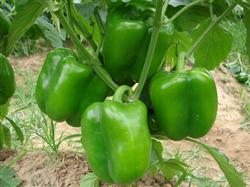
Detailed Explanation of Sweet Pepper Pruning Methods and Technical Points
How to prune sweet peppers properly? Please explain the reasons. For late-autumn cultivation of sweet peppers, if moderate pruning is carried out, old plants can be renewed and rejuvenated, and another peak fruiting period will occur in autumn, thereby increasing the per-mu yield of sweet peppers. The specific method is: after the peak fruiting period, around late July to early August, cut the second or third...
-
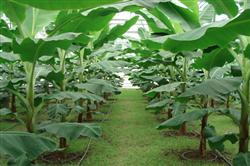
Scientific Fertilization Methods and Technical Points for Bananas
How to fertilize bananas scientifically when growing them? Please give a detailed introduction. Fertilizing bananas requires suitable fertilization according to the banana's growth stage. The following detailed analysis is for reference: (1) Growth and nutritional characteristics. Bananas have no taproot, and the root system is distributed most densely in the topsoil at a depth of 10-25 cm. Suckers begin to sprout after February each year...
-
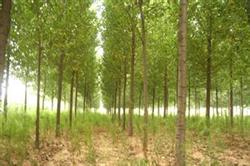
Poplar Pest Control Methods and Key Technical Points
Poplar pests can be divided into the following major categories based on their mode of damage and the corresponding control measures: 1. Leaf-eating pests: mainly including Clostera anachoreta (poplar prominent moth), Micromelalopha troglodyta (poplar small prominent moth), Cerura menciana (poplar two-tailed prominent moth), Botyodes diniasalis (poplar yellow leaf-roller), slug moths, and scarab beetles. Poplars from the seedling stage to the timber stage are all damaged by the above pests, which feed and cause leaf defects or completely strip the foliage...
-
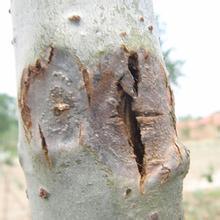
Common Poplar Pest Control Methods and Technical Key Points
In recent years, poplar canker disease has occurred widely, with incidence rates reaching over 30% in severely affected plots. Canker disease severely weakens tree vigor and inhibits growth. If not controlled in time, it will inevitably cause significant economic losses to growers. Disease symptoms: Canker disease mainly affects the trunk and is a chronic disease. In the early stage, on the bark...
-
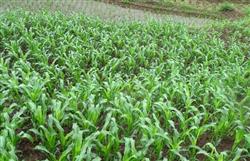
What are the key technical points for sorghum seedling stage management?
How to manage sorghum seedlings well? Please give guidance. Sorghum seedling stage management can be carried out by referring to the following methods: 1. Chemical weeding: Chemical weeding should be carried out 3 days after sowing, using 3-3.5 kg of atrazine per hectare mixed with 400-500 kg of water for spraying. If the weather is dry, spray clean water once within two days after spraying the herbicide, wetting the ground to a finger's depth to improve the weed-killing effect.
条件筛选