What are the key technical points for bamboo shoot planting and management?
How should bamboo shoots be managed during cultivation? Here is a detailed introduction. Managing planted bamboo is relatively easy, but without proper management it still will not deliver returns. The following introduces methods for establishing a bamboo shoot grove. I. First year. 1. Choosing bamboo species: the better varieties are Datoudian bamboo and Badu shoot bamboo. The former produces shoots early, starting to shoot around the May Day holiday, one month earlier than other shoots, and early shoots fetch a high market price. The latter has excellent quality; a normal shoot weighs several jin, and later shoots sell well on the market.
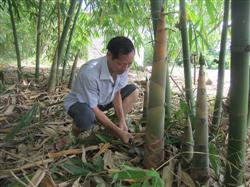
How should bamboo shoots be managed during cultivation? Here is a detailed introduction.
Managing planted bamboo is relatively easy, but without proper management it still will not deliver returns. The following introduces methods for establishing a bamboo shoot grove.
I. First year
1. Choosing bamboo species: the better varieties are Datoudian bamboo and Badu shoot bamboo. The former produces shoots early, starting to shoot around the May Day holiday, one month earlier than other shoots, and early shoots fetch a high market price. The latter has excellent quality; a normal shoot weighs several jin, and later shoots sell well on the market.
2. Land preparation and planting: prepare the land with a row spacing of 3 m x 4 m or 4 m x 4 m, at 56 or 42 plants per mu, with permanent pits whose length, width and depth are 1 m x 0.3 m x 0.3 m. For planting stock, use root seedlings, that is, dig up mature bamboo seedlings left from the previous year, or use one-year-old seedling stock raised from branch seedlings. The yield of this kind of seedling in the second year is three times higher than that of branch seedlings. Qualified root seedlings must have an intact "pipe" with roots and bud eyes. When planting, the bamboo seedling's pipe is fastened at the bottom of the pit, the seedling culm is buried in the pit soil, the culm nodes face both sides, and the tail of the seedling culm is left 5-10 cm exposed above the pit surface. This planting method helps the bamboo seedling retain moisture and survive. When planting, coat the roots with mud slurry and tread the soil in the pit firm. The planting time is the rainy season from early spring to Qingming Festival.
3. Tending, pit expansion and fertilizing: tend 2-3 times a year; timely tending is very important. Pit expansion should be done later, in the second half of the year after new bamboo has grown. Fertilize once from June to August, applying 0.5 jin of compound fertilizer per plant.
4. Fencing off cattle to protect the seedlings: bamboo most fears being knocked loose by cattle before new roots have grown well, in which case the bamboo seedling cannot survive.
II. Second year
1. Fertilizing: environmental protection is now advocated, and topdressing is not recommended during the shoot-producing season, to avoid the shoots rotting after being left too long. Therefore in the second year, topdressing should be done around the Spring Festival, applying 1 jin of compound fertilizer per plant. Bamboo is not afraid of fertilizer being close; wherever there is fertilizer, bamboo shoots emerge from there.
2. Harvesting shoots: Datoudian begins to be harvested a little before the May Day holiday; May, June and July are the peak period; shoot production gradually decreases in August and September; after the National Day holiday, harvesting should stop and shoots should be left to grow into bamboo. Method of digging shoots: usually dig when the shoot tip has emerged 3-5 cm above the soil; dig away the soil and, at the base of the shoot, leave at least a pair of bud eyes, from which new shoots will later grow, so one plant becomes two. Bamboo shoots are best when the nodes have not yet formed.
3. Tending and pit expansion: tend twice, hoeing once in April and once from August to October. Expand the pits once at the end of the year.
4. Cutting old bamboo: after leaving bamboo to grow in October, in December you may cut the old bamboo left from the previous year that produced shoots this year, keeping this year's new bamboo. This is because old bamboo no longer has bud eyes and cannot produce shoots; it can only compete for nutrients, which is called "grandfather and grandson never meet." If branch seedlings need to be kept, cut the old bamboo in January-February of the following year and take branch seedlings. After cutting old bamboo, loosen the soil and expand the pits around the bamboo clump.
Click to get more bamboo shoot planting techniques
Click to get more vegetable planting techniques