How to cultivate king oyster mushrooms in northern China? Key technical points explained
How to cultivate king oyster mushrooms in northern China? Please advise. The king oyster mushroom (Pleurotus eryngii), also known as xuerong, is a high-quality large fleshy agaric mushroom. The king oyster mushroom has thick flesh, a crisp and tender texture, and a delicious flavor, and can be called the "king of oyster mushrooms." It is rich in nutrients and high in oligosaccharides, and has intestinal-regulating and beauty benefits....
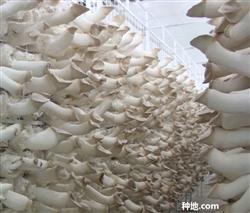
How to cultivate king oyster mushrooms in northern China? Please advise.
The king oyster mushroom (Pleurotus eryngii), also known as xuerong, is a high-quality large fleshy agaric mushroom. The king oyster mushroom has thick flesh, a crisp and tender texture, and a delicious flavor, and can be called the "king of oyster mushrooms." It is rich in nutrients and high in oligosaccharides, and has intestinal-regulating and beauty benefits. It is suitable for fresh preservation or drying, is highly favored by consumers, and has promising market prospects. Its biological characteristics and cultivation techniques are introduced below.
I. Biological characteristics:
1. Temperature: Temperature is the key factor determining the success or failure of king oyster mushroom cultivation and the level of yield. The optimum temperature for mycelial growth is 23-25°C, and the optimum temperature for fruiting body growth is 12-18°C. Below 8°C, primordia will not form, and above 20°C, deformed mushrooms are likely to appear.
2. Humidity: The suitable water content of the substrate for mycelial growth is 60%-65%; the relative humidity required during the fruiting body formation stage is 90%-95%, and during the growth stage it is 85%-90%.
3. Nutrition: The king oyster mushroom has a strong ability to decompose lignin and cellulose, and requires relatively rich nutrition, especially an adequate nitrogen source, for vigorous mycelial growth and higher yields.
4. Air: The oxygen requirement during the mycelial growth stage is relatively low, and low concentrations of carbon dioxide promote mycelial growth; the fruiting body growth stage requires sufficient oxygen, and the carbon dioxide concentration should preferably be less than 0.02%.
5. Light: The mycelial growth stage does not require light, and mycelial growth is accelerated in a dark environment; primordium formation and fruiting body growth require a certain amount of scattered light, and the suitable light intensity is 500-100lx.
6. pH value: The optimum pH value during the mycelial growth stage is 6.5-7.5, and the optimum pH value during the fruiting stage is 5.5-6.5.
II. Cultivation techniques:
1. Cultivation season: The king oyster mushroom is a low-temperature mushroom species, and in northern China it can be cultivated in spring and autumn.
2. Spawn production: The mother culture uses PDA medium, and adding peptone can promote mycelial growth. For the stock culture, wheat grain or sawdust-bran medium can be used; generally the stock culture is incubated at 25°C and can fill the bottle in 20-30 days.
3. Raw materials and formula: There are many substrate materials suitable for the growth of king oyster mushrooms, such as mixed sawdust, cottonseed hulls, rice straw, wheat straw, soybean stalks, corn (2339, -5.00, -0.21%) cobs, etc., all of which can be used as cultivation materials. Cultivation material formula: sawdust 34%, corn cobs 20%, soybean stalks 20%, bran 20%, cornmeal 3%, sugar, calcium carbonate and gypsum 1% each, water content 60%-65%.
4. Bag making and cultivation: Use 17cm×33cm low-pressure polyethylene plastic (11310, -5.00, -0.04%) bags, with a dry weight of 500g and a wet weight of 1000g of material per bag. Fill the material with moderate tightness, sterilize at normal pressure at 100°C for 8-10h, and inoculate aseptically after cooling. After inoculation, place at 23-25°C for culturing in the dark. Generally, the bags can be fully colonized in 30-40 days.
5. Fruiting management: After the mycelium has fully colonized the bags, move the fungus bags into a mushroom house or greenhouse. The fruiting site should be carefully disinfected and sterilized. Place the fungus bags upright, or stack them in a wall style. Before fruiting, carry out bud stimulation treatment, strengthen ventilation, and widen the temperature and humidity difference to stimulate primordium formation. When the mycelium knots to form primordia and small mushroom buds have appeared, open the bags, untie the bag opening, and roll the bag film outward and fold it down to 2cm above the material surface. During the fruiting period, the temperature in the mushroom shed should be controlled at 13-18°C, and the relative air humidity should be maintained at 85%-90%. Never spray water onto the mushrooms, otherwise the fruiting bodies will turn yellow and their quality will be affected.
6. Harvesting and processing: Generally, harvesting can be done about 15 days after budding; the harvest period is when the caps are about to flatten and the spores have not yet been discharged. The harvest standard depends on the need; for export mushrooms, the cap diameter is required to be 4-6cm and the stalk length 6-8cm. About 15 days after harvesting the first flush, the second flush can be harvested. The product can be sold fresh, stores well, and can also be dried or canned.
2. Humidity: The suitable water content of the substrate for mycelial growth is 60%-65%; the relative humidity required during the fruiting body formation stage is 90%-95%, and during the growth stage it is 85%-90%.
3. Nutrition: The king oyster mushroom has a strong ability to decompose lignin and cellulose, and requires relatively rich nutrition, especially an adequate nitrogen source, for vigorous mycelial growth and higher yields.
4. Air: The oxygen requirement during the mycelial growth stage is relatively low, and low concentrations of carbon dioxide promote mycelial growth; the fruiting body growth stage requires sufficient oxygen, and the carbon dioxide concentration should preferably be less than 0.02%.
5. Light: The mycelial growth stage does not require light, and mycelial growth is accelerated in a dark environment; primordium formation and fruiting body growth require a certain amount of scattered light, and the suitable light intensity is 500-100lx.
6. pH value: The optimum pH value during the mycelial growth stage is 6.5-7.5, and the optimum pH value during the fruiting stage is 5.5-6.5.
II. Cultivation techniques:
1. Cultivation season: The king oyster mushroom is a low-temperature mushroom species, and in northern China it can be cultivated in spring and autumn.
2. Spawn production: The mother culture uses PDA medium, and adding peptone can promote mycelial growth. For the stock culture, wheat grain or sawdust-bran medium can be used; generally the stock culture is incubated at 25°C and can fill the bottle in 20-30 days.
3. Raw materials and formula: There are many substrate materials suitable for the growth of king oyster mushrooms, such as mixed sawdust, cottonseed hulls, rice straw, wheat straw, soybean stalks, corn cobs, etc., all of which can be used as cultivation materials. Cultivation material formula: sawdust 34%, corn cobs 20%, soybean stalks 20%, bran 20%, cornmeal 3%, sugar, calcium carbonate and gypsum 1% each, water content 60%-65%.
4. Bag making and cultivation: Use 17cm×33cm low-pressure polyethylene plastic bags, with a dry weight of 500g and a wet weight of 1000g of material per bag. Fill the material with moderate tightness, sterilize at normal pressure at 100°C for 8-10h, and inoculate aseptically after cooling. After inoculation, place at 23-25°C for culturing in the dark. Generally, the bags can be fully colonized in 30-40 days.
5. Fruiting management: After the mycelium has fully colonized the bags, move the fungus bags into a mushroom house or greenhouse. The fruiting site should be carefully disinfected and sterilized. Place the fungus bags upright, or stack them in a wall style. Before fruiting, carry out bud stimulation treatment, strengthen ventilation, and widen the temperature and humidity difference to stimulate primordium formation. When the mycelium knots to form primordia and small mushroom buds have appeared, open the bags, untie the bag opening, and roll the bag film outward and fold it down to 2cm above the material surface. During the fruiting period, the temperature in the mushroom shed should be controlled at 13-18°C, and the relative air humidity should be maintained at 85%-90%. Never spray water onto the mushrooms, otherwise the fruiting bodies will turn yellow and their quality will be affected.
6. Harvesting and processing: Generally, harvesting can be done about 15 days after budding; the harvest period is when the caps are about to flatten and the spores have not yet been discharged. The harvest standard depends on the need; for export mushrooms, the cap diameter is required to be 4-6cm and the stalk length 6-8cm. About 15 days after harvesting the first flush, the second flush can be harvested. The product can be sold fresh, stores well, and can also be dried or canned.
Click to get more king oyster mushroom cultivation techniques
Click to get more edible mushroom cultivation techniques