-
Ginseng Disease Prevention and Control Methods and Key Technical Points
Ginseng is a plant of the genus Panax in the family Araliaceae, mainly produced in China's Jilin, Liaoning, Heilongjiang and other provinces. Its roots, stems, leaves and fruits are used as medicine, and it has the functions of greatly tonifying vital energy, strengthening the heart and rescuing from collapse, benefiting the heart and restoring the pulse, promoting fluid production and calming the mind. There are many types of ginseng diseases, more than 20 in China, and those that currently occur commonly and cause serious damage in production include...
-
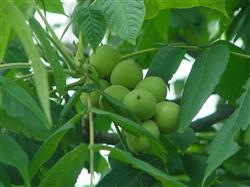
What are the key technical points for summer management of walnut trees?
How to manage walnut trees well in summer? Here are the methods. In summer, walnut new shoots grow fastest and physiological activity is strongest; this is the period with the highest survival rate for bud grafting and the most critical time. Pests such as the yellow slug moth, the walnut fruit moth (walnut black), the walnut yellow weevil, the cloud-banded longhorn beetle, the gypsy moth and the walnut tuft moth begin to emerge and lay eggs. Rot disease...
-
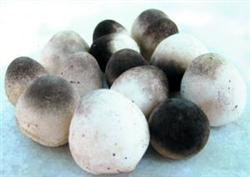
Straw Mushroom Summer Planting Methods and Technical Key Points
The weather is hot in summer, so how should straw mushrooms be planted in summer? The following methods can be used for planting straw mushrooms in summer: Preparation of mushroom beds. The mushroom beds are set up inside a plastic greenhouse, and the greenhouse is covered with film and straw mats to preserve warmth and moisture. The mushroom beds are 1 m wide, with no limit on length, and the spacing between mushroom beds is 30 cm, which can serve both as walkways and as water storage ditches...
-
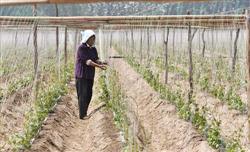
What are the key technical points for managing yam (Chinese yam) seedlings?
How do you manage yam seedlings well? Please explain the management methods. For growing yam, the following methods can be used for management during the seedling stage: 1. Trellis insertion and trellis material disinfection. It takes 25--35 days from sowing to emergence for yam, and during this period the main task is to set up the trellis well. For trellis insertion, use three bamboo poles at the edge angled inward at once, with the fourth in the opposite direction, and afterward insert the trellis in a crossing pattern of one inward and one outward, then tie it securely...
-
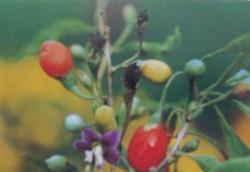
Control Methods and Technical Key Points for Black Fruit Disease of Goji Berry
Black fruit disease is one of the major diseases of goji berry (Lycium barbarum). The pathogen damages the green fruit, flowers and buds of goji berry, and also damages young shoots and leaves. After the green fruit of goji berry is infected, small black spots or black patches or black net-like patterns begin to appear. On cloudy and rainy days, the lesions expand rapidly, turning the fruit black and producing orange-red conidial masses, making it unfit for medicinal use. ...
-
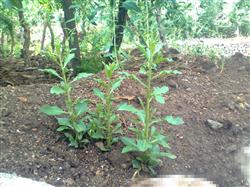
Management Methods and Technical Key Points for Young Goji Berry (Lycium barbarum) Plants
Trunk-establishing pruning: After the planted seedlings sprout, remove the sprouts below 30 cm above the base of the main trunk (the branching zone); above the branching zone, select and retain 3-5 lateral buds or lateral branches growing in different directions with a spacing of 3 cm-5 cm as the scaffold branches forming the small tree crown (the first layer of the tree crown), and at a plant height of 40 cm-50 cm...
-
What are the key technical points for spring management of mulberry trees?
How should mulberry trees be planted to achieve high yields? Mulberry is a perennial woody plant. Mulberry leaves are the main nutritional organ of the mulberry tree and also the primary "food" for silkworms. Therefore, the amount of leaves produced by mulberry trees will directly affect the healthy growth of silkworms. High-yield cultivation techniques for mulberry leaves can be considered from the following aspects. 1...
-
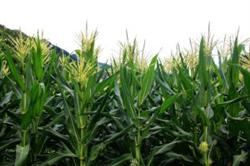
Summer Corn Ear Stage Management Methods and Technical Key Points
How should summer corn be managed during the ear stage? Please explain the methods. Summer corn ear stage management can refer to the following methods: 1. Remove weak plants and cultivate to promote roots. For those small plants, weak plants and ineffective plants, they should be removed early. During the ear stage, generally cultivate 1-2 times. After the small trumpet stage, cultivation should be shallow, to protect roots and conserve soil moisture; ...
-
Key Technical Points for Integrated Pest and Disease Control in Button Mushrooms (Agaricus bisporus)
1 Competing fungi, diseases, and insect pests and their control 1.1 Competing fungi and their control methods 1.1.1 Coprinus comatus, commonly known as the wild mushroom, morphological characteristics: the cap is initially bullet-shaped or oval, jade white, grayish white, or yellowish white, mostly with scales on the surface, and the stalk is slender and hollow. When mature, the cap expands, and the gills gradually turn from white to black, finally autolyzing together with the cap into an ink-like liquid.
-
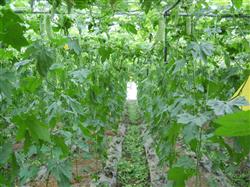
Bitter Melon Continuous Cropping: Planting Methods and Key Technical Points
How to grow bitter melon in continuous cropping? Please provide guidance on the methods. First, pay attention to timely pest and disease control. In the middle and late stages, bitter melon's stress resistance decreases, and the likelihood of pest and disease infection increases, so prevention should be carried out early. At present, the main disease harming bitter melon is powdery mildew, which can be controlled by spraying 12.5% myclobutanil emulsifiable concentrate at 2000 times dilution or 12.5% tebuconazole...
条件筛选