-
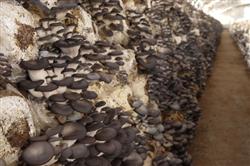
Key Technical Points for Summer Cultivation and Management of Oyster Mushrooms
How to manage oyster mushrooms in summer? Please explain the methods. For summer oyster mushrooms, you can refer to the following management methods: the mycelium block (bag) air-drying method. This method is relatively simple and labor-saving. Air-dry the mycelium blocks (bags) that have not fruited or have only produced 1-2 flushes (bags that have not fruited do not need to be opened), and place them in a cool, ventilated place. If placed...
-
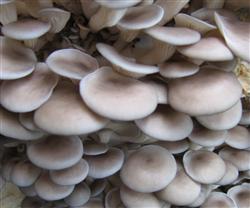
Oyster Mushroom Summer Cultivation Methods and Key Technical Points
How to cultivate oyster mushrooms in summer? Please note that oyster mushrooms are generally cultivated in autumn and winter, and are mainly sold fresh, but the selling price of autumn and winter cultivation is greatly affected by the market. Generally, when fresh mushrooms flood the market in autumn and winter, their selling price is low, while in summer there are fewer fresh mushrooms on the market and the price is higher. Because summer is hot and humid, the requirements for cultivation techniques are...
-
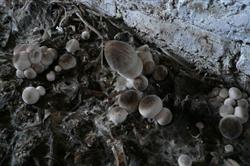
Straw Mushroom Summer Planting Methods and Technical Key Points
How to grow straw mushrooms in summer? Here are the methods. The straw mushroom is a high-temperature type of mushroom, suitable for cultivation in summer. Its flesh is tender and young, its taste is delicious, and its nutritional value is high, containing abundant protein, carbohydrates, vitamins, and so on. Among the many edible fungi, the straw mushroom has the simplest cultivation method, the shortest production cycle (around 20 days...
-
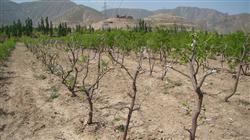
Autumn Jujube Tree Planting Methods and Key Technical Points
How to plant jujube trees in autumn? Here are the key points for your reference: 1. Planting time: The earlier jujube trees are planted in autumn, the higher the survival rate. Generally, planting from mid-September to early December is suitable. 2. Digging the hole: Dig a planting hole 60 cm long and 60 cm wide, apply sufficient base fertilizer, backfill soil, water, and wait to plant.
-
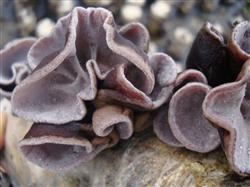
Cultivation Methods and Technical Key Points for Oversummering Auricularia polytricha
How to cultivate oversummering Auricularia polytricha? Please give guidance. For substitute-material cultivation of Auricularia polytricha and Auricularia maxima, there are two types: spring cultivation and autumn cultivation, and in most regions it is spring cultivation. However, in spring cultivation, the early stage generally has low temperatures, making mycelial growth difficult; in the later stage, the fruiting temperature is high, resulting in many malformed fruiting bodies. To solve this problem, soil-covering oversummering cultivation is carried out. Feeding 200...
-
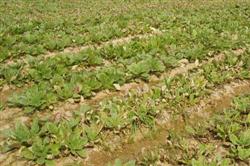
Detailed Explanation of Rehmannia Cultivation Methods and Technical Key Points
How is Rehmannia cultivated? Is there a technical introduction to Rehmannia planting? Rehmannia planting can be carried out by referring to the following methods: 1. Site selection and land preparation. It is advisable to choose sandy loam soil with deep soil layers, fertility, and good drainage. In the winter of the previous year or early spring, plow the soil more than 25 cm deep, and at the same time apply 2000-3000...
-
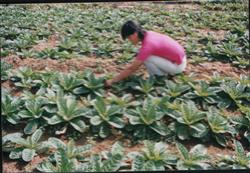
Detailed Explanation of Rehmannia Planting Methods and Technical Key Points
How to plant Rehmannia? Please give a detailed introduction to the planting method. Rehmannia, also known as Huai Rehmannia, Shengdi, and Shudi, is a plant of the genus Rehmannia in the Scrophulariaceae family. Its rhizome is used as medicine and has the effects of nourishing yin and clearing heat, stopping bleeding, and tonifying blood. It mainly treats conditions such as yin deficiency, blood deficiency, blurred vision and tinnitus, and soreness and pain in the waist and knees. The pollution-free cultivation techniques are introduced below...
-
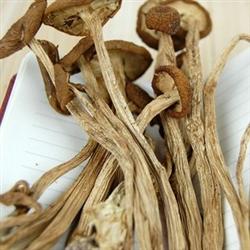
Corn intercropping with tea tree mushroom: planting methods and technical key points
How to intercrop tea tree mushroom with corn? Please refer to the following methods for corn intercropping with tea tree mushroom: 1. Choose a plot with flat land, sheltered from the wind and facing the sun, with convenient water sources, suitable for intercropping in a corn field. 2. Cultivation season. Meet the requirements for tea tree mushroom mycelium growth temperature of 10°C-35°C, optimum temperature 22°C-27°C; fruiting...
-
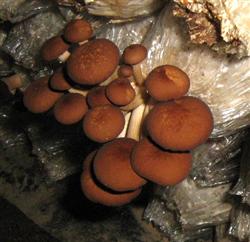
Detailed Explanation of Key Technical Points for Cultivation and Management of Tea Tree Mushroom
How to cultivate and manage Tea Tree Mushroom? Please introduce. Agrocybe aegerita, also known as poplar mushroom, columnar Agrocybe, willow pine mushroom, willow ring fungus, etc., is one of the newly developed edible mushroom varieties in recent years. The fruiting bodies of Agrocybe aegerita are delicious and fragrant, with a crisp and tender texture, and are rich in protein. It is one of the most popular edible mushrooms in Europe and Southeast Asia...
-
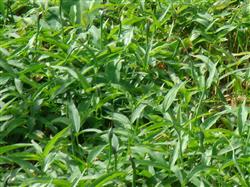
How to grow Pinellia ternata? Planting methods and key technical points
How to grow Pinellia ternata? Please give a detailed introduction. Pinellia ternata is also known as three-leaf pinellia, three-step jump, hemp jade fruit, swallow tail, etc. It is a plant of the genus Pinellia in the Araceae family. Pinellia is a commonly used traditional Chinese medicine, with its tubers used medicinally; it has functions such as drying dampness and transforming phlegm, and directing qi downward to stop vomiting. Raw pinellia is toxic. It is mainly produced in the provinces of the Yangtze River basin, and is now cultivated throughout the country...
条件筛选