Detailed Explanation of Key Technical Points for Cultivation and Management of Tea Tree Mushroom
How to cultivate and manage Tea Tree Mushroom? Please introduce. Agrocybe aegerita, also known as poplar mushroom, columnar Agrocybe, willow pine mushroom, willow ring fungus, etc., is one of the newly developed edible mushroom varieties in recent years. The fruiting bodies of Agrocybe aegerita are delicious and fragrant, with a crisp and tender texture, and are rich in protein. It is one of the most popular edible mushrooms in Europe and Southeast Asia...
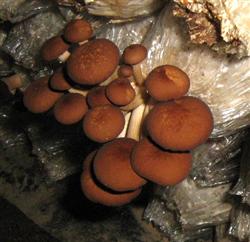
How to cultivate and manage Tea Tree Mushroom? Please introduce
Agrocybe aegerita, also known as poplar mushroom, columnar Agrocybe, willow pine mushroom, willow ring fungus, etc., is one of the newly developed edible mushroom varieties in recent years. The fruiting bodies of Agrocybe aegerita are delicious and fragrant, with a crisp and tender texture, and are rich in protein. It is one of the most popular edible mushrooms in Europe and Southeast Asia. The key technical points for its cultivation are as follows:
Raw material selection and substrate formula. Agrocybe aegerita is a wood-rotting fungus. Using broadleaf tree sawdust, cottonseed hulls, or crop straw as the main raw materials, with the addition of appropriate amounts of wheat bran, rice bran, corn flour, soybean cake powder, oil meal, mixed feed, etc., the mycelium can grow vigorously and form normal fruiting bodies. Substrate formulas: (1) Broadleaf tree sawdust 40%, cottonseed hulls 40%, wheat bran or rice bran 14%, corn flour or soybean cake powder 5%, gypsum 1%. (2) Cottonseed hulls 80%, wheat bran or rice bran 14%, corn flour or soybean cake powder 5%, gypsum 1%. (3) Broadleaf tree sawdust 69%, wheat bran 30%, gypsum 1%. (4) Broadleaf tree sawdust 89%, mixed feed or oil meal 10%, gypsum 1%. The moisture content of all the above substrate formulas is 65%-75%, with pH 5-6 being most suitable.
Substrate preparation and culturing. The substrate preparation method is the same as for other bag-cultivated (wood-rotting type) edible mushrooms. Tea Tree Mushroom cultivation mostly uses polypropylene plastic bags of 17 cm x 33-38 cm for sterilized substrate cultivation, and some use 15 cm x 55 cm low-pressure high-density polyethylene fungus logs for cultivation or bottle cultivation. For short-bag cultivation, rings and cotton plugs are used, with each bag containing 0.2-0.3 kg of dry material; for long bags, each log contains 0.7 kg of dry material. Routine sterilization, inoculation, and culturing. The culturing temperature is controlled at around 25°C. After the mycelium has fully colonized, it can be transferred to fruiting management.
Fruiting management. Indoor mushroom houses or outdoor shaded sheds can be used as fruiting sites. Generally, short-bag cultivation or bottle cultivation uses indoor mushroom houses, while fungus log cultivation uses outdoor shed cultivation. For indoor cultivation, bags can be placed upright in single layers on shelves or arranged in wall-style rows. After the mycelium has fully colonized the bags, remove the cotton plugs, take off the rings, pull the plastic bag openings upright, cover with newspaper, spray water 1-2 times daily, keep the newspaper moist, maintain air relative humidity at 85%-95%, control temperature at 16-28°C, with 20-24°C being optimal, maintain ventilation and a certain amount of scattered light. Another fruiting management method is to loosen the bag openings after the mycelium has fully colonized to facilitate the formation of mushroom buds. After budding, move the fungus bags to the mushroom house. As the buds grow, cut away the plastic at the bag openings so that buds grow from the material cylinder on all sides. As buds gradually appear from top to bottom around the cylinder, move the fungus bag downward and peel it off until it is completely removed. Water management uses the spray method, without directly spraying water on the fruiting bodies. For fungus log cultivation, after the mycelium has fully colonized, cut away a strip of film from the inoculation hole surface, then arrange on the bed surface and cover with soil, with a soil thickness of about 1 cm. Before arranging, disinfect the site and casing soil with insecticides and fungicides. Spray water on the soil surface 2 days after casing to keep the soil moist. During low temperatures, cover the bed surface with plastic film to retain warmth and moisture. Fruiting bodies appear in large numbers about 10 days after opening the bags. After harvesting, stop watering for 5-10 days to restore the mycelium, then proceed to the second flush management. Fungus bags with good nutrient reserves can continue to produce mushrooms in the spring of the following year after overwintering.
Click to get more Tea Tree Mushroom cultivation techniques
Click to get more edible mushroom cultivation techniques