Corn intercropping with tea tree mushroom: planting methods and technical key points
How to intercrop tea tree mushroom with corn? Please refer to the following methods for corn intercropping with tea tree mushroom: 1. Choose a plot with flat land, sheltered from the wind and facing the sun, with convenient water sources, suitable for intercropping in a corn field. 2. Cultivation season. Meet the requirements for tea tree mushroom mycelium growth temperature of 10°C-35°C, optimum temperature 22°C-27°C; fruiting...
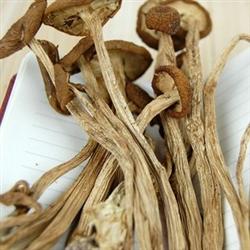
How to intercrop tea tree mushroom with corn? Please explain
For corn intercropping with tea tree mushroom, you can refer to the following methods:
1. Choose a plot with flat land, sheltered from the wind and facing the sun, with convenient water sources, suitable for intercropping in a corn field.
2. Cultivation season. Meet the requirements for tea tree mushroom mycelium growth temperature of 10°C-35°C, optimum temperature 22°C-27°C; fruiting body formation and growth temperature of 16°C-32°C, optimum temperature 20°C-28°C. Raw material formulas. Formula 1: sawdust 72%, wheat bran 25%, gypsum 1%, sugar 1%, superphosphate 0.5%, lime 0.5%; Formula 2: cottonseed hull 78%, wheat bran 20%, gypsum 1%, sugar 0.5%, lime 0.5%; Formula 3: sawdust 38%, rice straw powder (corn cob) 37%, wheat bran 23%, gypsum 1%, superphosphate 0.5%, lime 0.5%. Mushroom bag preparation. Use polypropylene bags with specifications of 17 cm x 33 cm x 0.05 cm for filling the material. Mix the raw materials evenly, with a moisture content of 60%-62% and a pH value of 6-6.5. Fill the culture material into the bags to a height of 18 cm (each bag holds about 450 grams of dry material), put on the neck ring, and plug with a cotton plug. After atmospheric pressure sterilization, cool to below 30°C, inoculate in an inoculation box, expand each bottle of stock culture to 25-30 bags, then place in a cool, dry, clean and ventilated culture room for mycelium cultivation. It usually takes 40-50 days for the mycelium to fill the bag. First-level spawn is made in early October, second-level spawn is completed on November 5, both cultured for 25-30 days, and third-level spawn is made on January 5 of the following year.
3. Making the mushroom bed. The corn field is rotary tilled and weeded before winter, and winter irrigation is applied. From late February to early March of the second year, the mushroom bed is made. A mushroom house is built in the corn field, with specifications of 60 cm wide and 10-15 cm deep, with about 100 cm walkways left on both sides. The length and direction of the mushroom bed depend on the plot.
4. Before sowing, select the production spawn, discard contaminated bags, cut open the qualified bags with a blade, remove the aged mycelial skin, and then crush them for sowing. Mix the culture material according to a certain ratio, and after fermentation, white actinomycete-like mycelium can be seen. Spread the culture material on the mushroom bed. Before spreading, disinfect the mushroom bed with lime, spray trichlorfon to control underground pests such as mole crickets, then lay the plastic film, spread the material and sow. The thickness of the mushroom material is 9-10 cm, and after tamping the thickness of the mushroom material reaches 7 cm. The mushroom bed surface is shaped like a turtle back, with the middle 1 cm higher than both sides. Cover with film and soil for cultivation. On the mushroom bed surface, place a handful of disinfected straw every 10-15 cm, and place a handful of keel grass perpendicular to the slanted straw, and place a ventilation straw every 50 cm. Finally, cover the plastic film on both sides of the mushroom bed onto the bed surface, cover with soil on the film, with a soil layer thickness of 3-4 cm, and cultivate for 35 days.
5. Ventilation, arch support and curtain covering.
After 35 days of cultivation, the culture material turns white. Choose a windless cloudy day or ventilate every morning and evening, and at the same time support the arch and cover with a curtain. Insert 3 arch rods per linear meter, with an arch height of 35 cm.
6. Fruiting management. When the mycelium fills the material, it changes from vegetative growth to reproductive growth, the material surface secretes yellow water, brown patches appear, and then small mushroom buds grow. After 10-15 days of management, the fruiting bodies can be harvested when they are 80% mature.
7. Harvesting. From mushroom bud to harvest generally takes 5-7 days. Harvest when the cap is hemispherical and the annulus has not yet separated from the cap. After harvesting the second flush, the material is rather dry, so generally spray water once every 15 days. The second flush can be heavily watered to keep the moisture content of the substrate at 55%-60%. After the moisture meets the fruiting requirements, the material is rather dry. Generally, 3-4 harvests can be made, and every 450 grams can yield 40-50 grams of dried mushrooms.
8. Preventing mushroom bed infection. For infected parts of the mushroom bed, remove them in time. Bacterial spots can be scooped out with a small spoon. When the bacterial spots are large and deep, cut out the mushroom material as a whole. After clearing, spray white lime or carbendazim for disinfection to prevent spread.
Click to get more tea tree mushroom cultivation techniques
Click to get more edible mushroom cultivation techniques