Straw Mushroom Summer Planting Methods and Technical Key Points
How to grow straw mushrooms in summer? Here are the methods. The straw mushroom is a high-temperature type of mushroom, suitable for cultivation in summer. Its flesh is tender and young, its taste is delicious, and its nutritional value is high, containing abundant protein, carbohydrates, vitamins, and so on. Among the many edible fungi, the straw mushroom has the simplest cultivation method, the shortest production cycle (around 20 days...
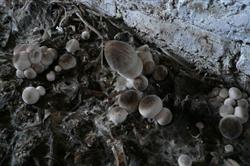
How to grow straw mushrooms in summer? Here are the methods
The straw mushroom is a high-temperature type of mushroom, suitable for cultivation in summer. Its flesh is tender and young, its taste is delicious, and its nutritional value is high, containing abundant protein, carbohydrates, vitamins, and so on. Among the many edible fungi, the straw mushroom has the simplest cultivation method, the shortest production cycle (around 20 days), the most abundant sources of raw materials, and the most delicious taste. Whether fresh mushrooms, dried products, or canned goods, its products are deeply loved by consumers in domestic and international markets. The mycelial growth temperature range of the straw mushroom is 30-39°C, with the most suitable temperature being 36°C, and the relative air humidity being 80-85%; the fruiting body growth temperature range is 22-34°C, with the most suitable temperature being 30°C, and the relative air humidity being 85-95%. The temperature in the growing medium is best kept at 32-38°C.
I. Building Beds and Erecting Sheds
Choose a well-ventilated, sandy loam site with convenient water supply, easy drainage, and rich organic matter as the cultivation site. Clear weeds, turn the soil and loosen it, and spray concentrated lime water to kill soil pests. Make beds running east-west, 1 m wide, with unlimited length. Dig ditches around the beds for drainage and irrigation. On the beds, use bamboo strips to build arched sheds, with a shed height of 0.7-0.8 m, cover the sheds with plastic film, and press down the plastic film around the edges with soil.
II. Preparing the Substrate
There are many growing substrates suitable for straw mushroom growth, and cottonseed hulls are the best substrate. The formula is: 95% cottonseed hulls, 5% lime, with the amount of water added being 1.8 times the weight of the dry material. Before cultivation, mix the growing substrate thoroughly and evenly according to the formula requirements, and pile it up for fermentation for 5-7 days. The fermentation method is: after adding water and mixing evenly, pile the material into long piles about 1 m wide and 60-70 cm high, with unlimited length; a small amount can also be piled into round piles. On both sides around the pile, use wooden sticks 3-4 cm in diameter to make slanted holes down to the bottom of the pile, with a hole spacing of 10 cm, to allow ventilation. Insert a thermometer into the pile to observe the pile temperature. After 2-3 days, the pile temperature can rise above 55°C; at this time, carry out the first turning of the pile. The method of turning the pile is to turn the inner material to the outside and the outer material to the inside, then continue fermenting. After 1 day, when the material temperature rises again to about 60°C, carry out the second turning. Generally, turning the pile 3 times is enough to achieve full fermentation.
III. Laying the Substrate and Inoculating
Transport the fermented cottonseed hulls to the bed surface and arrange them in a wave pattern, with each wave about 30 cm wide, a wave height of 12-14 cm, and a wave trough depth of 1-1.5 cm. The inoculation method can be layer inoculation, hole inoculation, or mixed inoculation. The topmost layer should have a larger inoculation amount, preferably accounting for 50% of the total inoculation amount. Then cover with plastic film, and then cover the plastic film on the small arched shed with straw curtains.
IV. Management Measures
(1) Pay attention to heat preservation. When the air temperature is relatively low, on sunny days uncover the straw curtains around 10 a.m. to increase temperature, and cover the straw curtains around 4 p.m. to preserve heat; on rainy, windy days do not uncover the straw curtains. When the air temperature is relatively hot, cool it down appropriately; during high temperatures, do not uncover the straw curtains at noon, and only open them in the morning and evening. In short, note that the temperature in the substrate generally must not exceed 40°C, and the temperature on the substrate surface generally must not exceed 36°C; when the substrate temperature is low, try to preserve heat, and the substrate temperature should not be lower than 30°C. (2) Pay attention to moisture retention. If the air is dry and the soil and growing substrate are on the dry side, it is best to add water at noon to make the soil moist. The water surface in the ditch should be below 1 cm from the bed bottom; generally the water temperature must not be too low, and is best at 28-35°C. (3) Pay attention to ventilation. Carry out ventilation and air exchange every day along with checking the temperature. After 3-5 days from inoculation, increase the ventilation volume; generally uncover the four corners of the plastic film for ventilation twice, about 1 hour each time. (4) Casing soil. After 5-7 days from inoculation, when the mycelium has grown all over the bed, choose clean and fertile garden soil for casing. Control the soil layer at 1-1.5 cm thick. The moisture content of the soil should be at the level where it can be formed into a ball when squeezed by hand and scattered when released. After casing, the film must still be covered, and after the mycelium grows up onto the soil layer, uncover the film.
V. Fruiting Management
When the mycelium forms nodules, begin fruiting management. Pay attention to temperature control and moisture retention. Generally, do not water directly; mainly make the soil moist and let the growing substrate absorb water by irrigating into the ditches, so as to meet the needs of the growth and development of the mushroom buds; uncover the curtains to let in diffused light, so as to facilitate the development of the fruiting bodies.
VI. Timely Harvesting
Harvest when the straw mushroom fruiting body has grown to the shape of an egg and has not yet broken the veil. Harvesting too late easily causes the fruiting body to open its cap and reduces its commercial value. Harvested straw mushrooms are very difficult to keep fresh. In the high-temperature season above 30°C, 4-5 hours after harvesting the mushroom eggs, the cap-opening rate can reach about 50%, so they should be handled promptly. Those for fresh sale should be brought to market as soon as possible, and those for canning should be processed promptly.
Click to get more straw mushroom cultivation techniques
Click to get more edible fungus cultivation techniques