Detailed Explanation of Rehmannia Planting Methods and Technical Key Points
How to plant Rehmannia? Please give a detailed introduction to the planting method. Rehmannia, also known as Huai Rehmannia, Shengdi, and Shudi, is a plant of the genus Rehmannia in the Scrophulariaceae family. Its rhizome is used as medicine and has the effects of nourishing yin and clearing heat, stopping bleeding, and tonifying blood. It mainly treats conditions such as yin deficiency, blood deficiency, blurred vision and tinnitus, and soreness and pain in the waist and knees. The pollution-free cultivation techniques are introduced below...
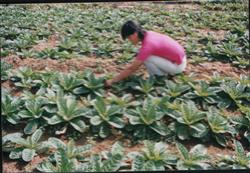
How to plant Rehmannia? Please give a detailed introduction to the planting method
Rehmannia, also known as Huai Rehmannia, Shengdi, and Shudi, is a plant of the genus Rehmannia in the Scrophulariaceae family. Its rhizome is used as medicine and has the effects of nourishing yin and clearing heat, stopping bleeding, and tonifying blood. It mainly treats conditions such as yin deficiency, blood deficiency, blurred vision and tinnitus, and soreness and pain in the waist and knees. The pollution-free cultivation techniques are introduced as follows:
1. Site selection and land preparation: For planting Rehmannia, it is advisable to choose sandy loam soil with deep soil layers, fertility, looseness, and good drainage. Deep plow 25-30 cm before winter, apply 3500-4500 kg of fully decomposed high-quality barnyard manure and 25 kg of superphosphate per 667 sq m (1 mu), and plow them into the soil as base fertilizer. After fertilizing, level and rake finely, and make high beds 1.3 m wide for planting, with a bed ditch width of 40 cm. Open large drainage ditches around the perimeter to facilitate drainage.
2. Planting: The planting period of Rehmannia varies depending on the climate conditions and planting methods in different regions. Before planting, remove the head and tail of the seed rhizomes, take the middle section, and then cut it into small sections 4-6 cm long. Each section should have 2-3 bud eyes. Dip the cut ends in plant ash, let them dry slightly, and then plant. Planting density: row spacing 30-40 cm, plant spacing 27-33 cm. Dig shallow holes 3-5 cm deep on the prepared bed surface. Place 1-2 sections of seed rhizomes horizontally in each hole, cover with a handful of soil and ash, and then cover with fine soil flush with the bed surface. Each 667 sq m requires 30-40 kg of seed rhizomes.
3. Field management: (1) Thinning and replanting. When the seedlings are 10-12 cm tall, begin thinning, leaving 1 strong seedling per hole. If there are missing seedlings, replant promptly on cloudy days. To improve the survival rate, lift the seedlings with soil when replanting. (2) Cultivation and weeding. The rhizomes of Rehmannia enter the soil relatively shallowly, so cultivation should be shallow to avoid damaging the roots. Weeds around the seedlings should be pulled out by hand. Stop cultivation after the rows close. (3) Topdressing. Rehmannia likes fertilizer. In addition to applying sufficient base fertilizer, it should also be fertilized 3 times each year. The first time is after all seedlings emerge, applying 2500 kg of decomposed human and livestock manure water and 50 kg of decomposed cake fertilizer per 667 sq m to promote strong seedlings. Apply the second fertilizer when the seedlings are 10 cm tall. Combined with thinning, apply 2500-3000 kg of fully decomposed human and livestock manure water, 30 kg of decomposed cake fertilizer, and 100 kg of superphosphate per 667 sq m to promote rhizome expansion. Apply the third fertilizer when the rows close, spreading a layer of burnt soil ash between the rows once to promote robust plant growth. (4) Irrigation and drainage. Water frequently in the early stage and control watering in the later stage. Dig drainage ditches well and clear and drain them promptly to prevent root rot. Water promptly during drought or after each topdressing. (5) Removing buds and tillers. If the plant bolts, cut it off promptly. For tillers growing around the root system, cut them off from the base promptly to promote underground growth. (6) Removing creeping rhizomes. In addition to the main root, Rehmannia also grows slender underground stems along the soil surface. These underground stems are also called creeping rhizomes, consume a large amount of nutrients, and should all be removed promptly.
4. Pest and disease control: If leaf spot disease occurs, spray with 65% mancozeb wettable powder at 500 times dilution for control. To make Rehmannia meet pollution-free standards, the number of mancozeb applications during the entire growth period should not exceed 3 times. If ring spot disease occurs, spray with 75% chlorothalonil wettable powder at 600 times dilution for control, with a maximum of 3 applications per season. If aphids occur, spray with 50% pirimicarb wettable powder at 500 times dilution for control, with a maximum of 3 applications per season.
5. Harvesting and processing: (1) Harvesting. Harvest promptly when the aboveground stems and leaves turn yellow and have spots. When harvesting, first cut off the stems and leaves, then open a ditch 35 cm deep at one end of the bed, and carefully dig out the rhizomes in sequence. (2) Processing. First remove the fibrous roots from fresh Rehmannia, grade them into large, medium, and small sizes, and place them separately on a heated kang to dry. Start with a strong fire, raising the temperature to 80-90°C. After 8 hours, when the Rehmannia body is soft and has no hard core, take it out and pile it to sweat, covering it with burlap sacks or rice straw. After 5-7 days, return it to the kang at 50-60°C and dry for 6-8 hours, until the color gradually turns black and it is dry and soft. This is Sheng Dihuang. Soak Sheng Dihuang in yellow rice wine, stew over fire until the yellow rice wine is dried, then sun-dry the Rehmannia to obtain Shu Dihuang. Generally, each 667 sq m yields more than 3000 kg of fresh Rehmannia. Those without reed heads, with large blocks, heavy weight, and a black cross-section are considered superior.
Click to get more Rehmannia planting techniques
Click to get more medicinal herb planting techniques