Oyster Mushroom Summer Cultivation Methods and Key Technical Points
How to cultivate oyster mushrooms in summer? Please note that oyster mushrooms are generally cultivated in autumn and winter, and are mainly sold fresh, but the selling price of autumn and winter cultivation is greatly affected by the market. Generally, when fresh mushrooms flood the market in autumn and winter, their selling price is low, while in summer there are fewer fresh mushrooms on the market and the price is higher. Because summer is hot and humid, the requirements for cultivation techniques are...
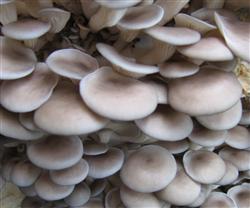
How to cultivate oyster mushrooms in summer? Please note
Oyster mushrooms are generally cultivated in autumn and winter, and are mainly sold fresh, but the selling price of autumn and winter cultivation is greatly affected by the market. Generally, when fresh mushrooms flood the market in autumn and winter, their selling price is low, while in summer there are fewer fresh mushrooms on the market and the price is higher. Because summer is hot and humid, the requirements for cultivation techniques are relatively high. Based on the author's many years of cultivation experience, adopting the following key techniques can improve the success rate of cultivation and achieve relatively high economic returns.
Timely cultivation
Generally, preparation of mother cultures, stock cultures and cultivation spawn begins from mid-March to early April, substrate preparation and cultivation are carried out from mid-May to mid-June, mushrooms are available on the market from early June to early July, and cultivation can be finished in mid-October.
Selecting suitable varieties
For summer cultivation, high-temperature-type or wide-temperature-type varieties should be selected. A good variety should first of all have the characteristics of tolerance to high temperature and high humidity, and secondly should be resistant to contaminants and diseases, high-yielding and of good quality. Different varieties have different characteristics and adapt to different environments. Varieties introduced from other places or strains isolated locally should first undergo tests for temperature tolerance, humidity tolerance, contaminant resistance and substrate adaptability before large-scale cultivation can be carried out.
Doing a good job at the spawn-running stage
The problems most likely to occur during spawn running in the hot season are substrate overheating and contamination. The following methods can be used to improve the success rate of spawn running: 1. Sterilized substrate cultivation; 2. Fermented substrate cultivation; 3. Raw substrate cultivation with an appropriate amount of fungicide added. All three methods have the characteristics of fast spawn running and a low contamination rate, but sterilized substrate cultivation has a relatively high cost and is not commonly used. When using fermented substrate cultivation, attention should be paid to thorough fermentation, and bags should be filled only after the substrate has completely cooled. During fermentation, the surface of the substrate should be properly covered or sprayed with insecticide to prevent mosquitoes and flies from laying eggs. When using raw substrate cultivation, a fungicide must be added, otherwise substrate overheating and contamination are very likely to occur. Highly effective, low-toxicity, broad-spectrum fungicides should be selected, such as thiabendazole, Wanxing, Dekesi disinfectant powder, carbendazim and others, all of which have relatively good effects.
Cultivation management
For summer cultivation, the cultivation site should be chosen in a well-ventilated, cool, clean place. Cave dwellings, mountain caves, air-raid shelters and basements are relatively cool, but ventilation is often poor, which leads to a decline in the quality of mushroom stem growth; therefore, attention should be paid to strengthening ventilation.
During the fruiting period, water management should be the core and ventilation management should be the focus, and the temperature should be reduced as much as possible. To avoid high-temperature damage to the mycelium, cultivation bags should be stacked in three dimensions; during fruiting, a gap of about 10cm should be left between bags in each layer, layers should be separated with corn stalks, and the bags in the upper and lower layers should be arranged in a staggered "pin" shape, with a stack height not exceeding 5~6 bags. The sunny side of the mushroom shed should be tightly shaded, and the ventilation openings should be extended outward with straw curtains and sprayed with water to increase the humidity at the ventilation openings. During the period of inducing primordia and fruiting, water should be sprayed mainly on the cultivation bags to help lower the temperature and increase humidity. After each flush of mushrooms is finished, a supplementary nutrient water should be applied once; after 3~4 flushes are finished, the bags can be removed and the mushrooms can be grown on flat ground covered with soil.
Click to get more oyster mushroom cultivation techniques
Click to get more edible mushroom cultivation techniques