-
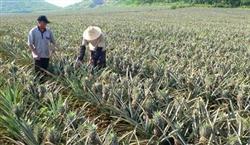
How to scientifically manage pineapple autumn fruit after flowering?
How to manage pineapple autumn fruit after flowering? Please explain in detail. For the management of pineapple autumn fruit after flowering, you can refer to the following methods: 1. Pineapple fertilization: apply more potassium fertilizer. Pineapples like potassium, and after flowering and fruiting they need even more potassium fertilizer: applying more potassium fertilizer after pineapple autumn fruit flowering can not only make the fruit expand rapidly and ripen fully, increase sugar content, raise yield and improve quality, but also enhance drought resistance, cold resistance, storage tolerance and transport tolerance = therefore.
-
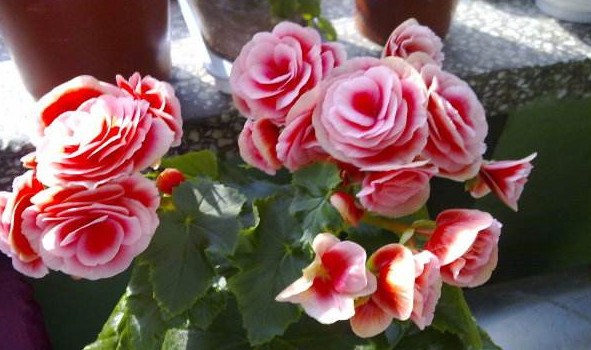
How to scientifically cultivate and manage Rieger begonia in a greenhouse?
Rieger begonia is also known as rose begonia. It is characterized by rich flower colors and beautiful flower forms. Because of its unique ornamental value, it is currently a new favorite among indoor ornamental flowers. It can be enjoyed both for its flowers and its leaves, and it is a very good potted flower. Below is a detailed greenhouse...
-
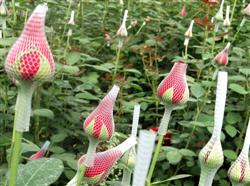
How to Grow Roses? A Complete Guide to Scientific Cultivation Methods
How to grow roses scientifically? Please provide guidance. Rose cultivation can follow the methods below: 1. Variety arrangement: Use Meilan Lipstick and Bellamy as the main summer varieties, and American Pink can serve as a companion variety for summer or autumn and winter. Cardinal and Red 90 serve as the main autumn and winter varieties. 2. Planting period and...
-
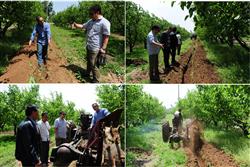
How to fertilize pear trees for good growth? A detailed guide to scientific fertilization methods
How should pear trees be fertilized for good growth? Please explain the fertilization methods. For planting pear trees, you can refer to the following methods for fertilization: 1. Apply more organic fertilizer to build up soil fertility and improve the soil. Organic fertilizer not only contains the various nutrients needed for pear tree growth, but can also improve soil structure, increase the soil's nutrient buffering capacity,...
-
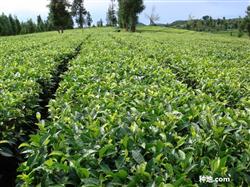
Detailed Explanation of Scientific Topdressing Methods and Technical Key Points for Tea Plants
How to scientifically topdress tea plants? Please provide guidance. Tea fertilization should, on the basis of adhering to the combination of organic fertilizers and inorganic fertilizers, control the total amount of nitrogen fertilizer, especially the amount of nitrogen fertilizer applied in the later stage, so as to improve tea quality. At the same time, pay attention to the combined application of the three major nutrients nitrogen, phosphorus and potassium and the balanced application of medium and trace elements. It is strictly prohibited to apply...
-
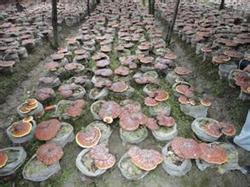
Detailed Explanation of Reishi Mushroom Cultivation Techniques: Scientific Cultivation Methods and Management Key Points
In recent years, bag-cultivated reishi mushroom has been widely promoted. The author summarizes years of reishi mushroom production practice, and now introduces several production technique key points as follows: 1. Choose a suitable cultivation period: In Taizhou City, Jiangsu Province, the most suitable cultivation period for reishi mushroom is from April 10 to May 10, and after May 20, the bags are opened successively for mushroom fruiting. Every year from June to...
-
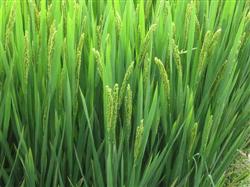
How to scientifically manage water and fertilizer in the middle and late stages of rice?
How should water and fertilizer be managed in the middle and late stages of rice? Please provide an introduction to the management methods. Water and fertilizer management in the middle and late stages of rice can refer to the following: (1) Apply panicle fertilizer cautiously as appropriate to promote large panicles, full grains, and high yield. Based on the earlier rice seedling growth and field diagnosis results, for fields with high soil fertility, strong water and fertilizer retention capacity, many tillers, and darker leaves, delay, reduce, and lower the application rate of panicle fertilizer, generally applying 4-5 kg of urea per mu at the 5th-7th stage of panicle differentiation or at the penultimate leaf stage; for fields with poor fertilizer retention capacity, insufficient tillering, and lighter leaf color, appropriately increase the panicle fertilizer rate earlier, generally applying 6-8 kg of urea per mu at the 4th leaf from the top stage when entering the panicle initiation stage, and spray trace element fertilizers such as potassium dihydrogen phosphate on the leaves at the initial heading stage to increase grain filling and raise yield.
-
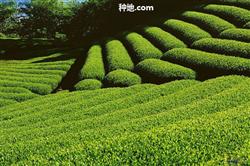
How to fertilize tea plants scientifically? A full breakdown of the key methods
How to fertilize tea plants scientifically? Please advise. Fertilizer is the food for tea plant growth and the material basis for increasing tea yield and improving quality. Therefore, fertilization plays an important role in the growth of tea plants and the yield and quality of tea leaves. Good fertilization techniques can maximize the yield-increasing effect of fertilization, maintain and improve...
-
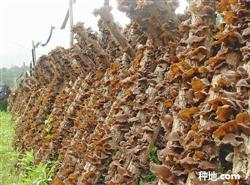
Scientific cultivation of black fungus?
Scientific cultivation of black fungus? Please advise (1) Overview Black fungus is also called wood ear, smooth wood ear, or cloud ear. Taxonomically it belongs to the class Basidiomycetes, order Auriculariales, family Auriculariaceae, genus Auricularia. There are about a dozen or more species in this genus, such as black fungus, hairy wood ear, wrinkled wood ear, felt-cap wood ear, horny wood ear, shield-shaped wood ear, etc. Among these wood ears, only the smooth wood ear has plump and tender texture and delicious flavor, and is known as a mountain delicacy.
-
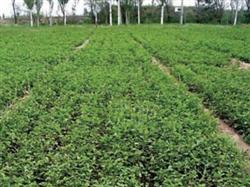
Licorice Market Prospects Analysis and Scientific Planting Techniques
Licorice is a plant of the Fabaceae family, the dried root and rhizome of Glycyrrhiza uralensis, Glycyrrhiza inflata, or Glycyrrhiza glabra, and is a commonly used bulk medicinal material. Wild licorice is mainly distributed in Inner Mongolia, Ningxia, **, Gansu, and other places; cultivated licorice is mainly distributed in the Hexi Corridor of Gansu, the surrounding area of Longxi, and parts of Ningxia. Licorice is a national-level se...
条件筛选