How to scientifically cultivate and manage Rieger begonia in a greenhouse?
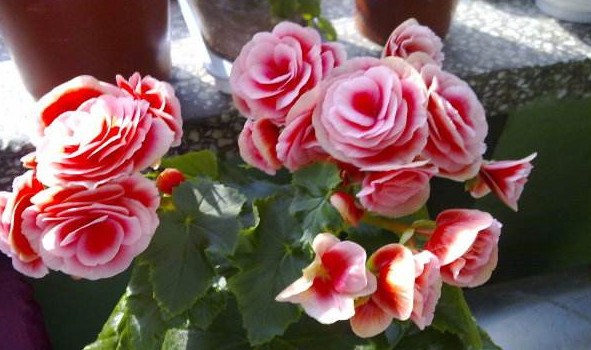
Rieger begonia is also known as rose begonia. It is characterized by rich flower colors and beautiful flower forms. Because of its unique ornamental value, it is currently a new favorite among indoor ornamental flowers. It can be enjoyed both for its flowers and its leaves, and it is a very good potted flower. Below are detailed scientific cultivation and management techniques for Rieger begonia in the greenhouse. Flower lovers, do not miss them.
Facilities and Equipment
Rieger begonia is mostly produced in greenhouses. The greenhouse is equipped with seedbeds, circulation fans, cooling water curtains, supplementary lighting lamps, and other equipment. To facilitate daily management and prevent water accumulation, the seedbeds should be more than 45 cm above the ground, the ground should not be paved or hardened, and weeds should be removed regularly. Usually, the indoor temperature is regulated by a wet curtain-fan system. This can effectively control the growth of Rieger begonia. The top of the greenhouse is equipped with an outer shade net and a shading curtain. The outer shade net is used to reduce light intensity, and the blackout curtain is used to reduce the number of light hours during flower forcing.
Purchasing Commercial Seedlings
To save costs and improve the survival rate, Rieger begonia seedlings should be purchased from specialized planting bases. Qualified commercial seedlings should have grown for more than 5 weeks after cutting, with upright stems, spread leaves, more than 3 mature leaves, and 1 core leaf at the same time, roots covering the substrate, uniform color, plant height not exceeding 12 cm, and no pests or diseases.
Potting
Choose flower pots with a diameter of 14 cm. The cultivation substrate is fine peat fiber and perlite at a ratio of 4:1. Mix evenly and fill the pots, then place them on the seedbed in order. Leave no gaps between pots. Place 1 Rieger begonia seedling in each pot. Dig a hole by hand, plant the seedling, and set the planting depth at the original soil ball, neither too deep nor too shallow, then press gently to firm it.
Environmental Management
Newly potted seedlings need to be watered immediately. However, note that watering should be light and slow until the substrate is thoroughly watered. Generally, water twice a week in summer and once a week in winter. At this time, the indoor temperature is controlled at around 20 °C.
During the seedling stage, keep the daily light duration at 18 h. If the light intensity is too high, it will affect the healthy growth of the seedlings. In the first 2 weeks, the light intensity should be less than 10,000 lx. When the light intensity begins to increase in the morning, pull up the shade net in time. When light is insufficient at night, turn on the supplementary lighting lamps, and the supplementary light intensity is 100 lx. Starting from the 3rd week, gradually increase the light intensity, with a maximum not exceeding 22,000 lx, also using the shade net and supplementary lighting lamps for regulation. Every morning and evening, observe the leaf surface of Rieger begonia. If water droplets appear, it means the plant has guttation (mostly occurring in summer), and the humidity in the greenhouse should be reduced in time to avoid affecting plant growth. In the 2nd week after planting, fertilize once and apply it with irrigation water.
Topping
When the Rieger begonia plant has 5 mature leaves, topping is needed. This is because topping can make the plant shape fuller and correspondingly improve the quality of the finished flower. Counting upward from the root, the core bud appearing on the 5th leaf is the one to remove. At this time, the plant is relatively small, the leaves are compact, and the core bud is small. When topping, avoid damaging the stem and other leaves.
Adjusting Spacing Between Pots
About the 4th week after topping, Rieger begonia seedlings reach a plant height of 18 cm, new branches appear, there are more than 12 mature leaves, and the circumference diameter is about 15 cm. At this time, the spacing between pots should be adjusted, with about 10 cm between flower pots, to give Rieger begonia more growing space. To allow them to receive sufficient sunlight and grow evenly, choose the direction in which the weak leaves of each plant face direct sunlight. Depending on the region and season, starting from planting, after 6-9 weeks of management, the vegetative growth of the seedling stage has been completed, and the plants enter the flower forcing stage.
Flower Forcing Stage Management
Rieger begonia is a short-day flower. Reducing the number of light hours can promote flower bud differentiation. Every day during the periods of weak natural light in the early morning and evening, open the blackout curtain outside the greenhouse to shade the plants, so that the daily light duration does not exceed 10 h.
After about 2 weeks of flower forcing, for plants with earlier flowering, the flower buds are already opening, and when there are more than 8 flower buds per plant on average, they enter flowering stage management.
Flowering Stage Management
The number of flowers is an important standard for measuring the quality of finished Rieger begonia flowers, and flowering stage management is a very important stage for improving the quality of Rieger begonia. High-quality finished Rieger begonia flowers not only continue to open existing flower buds, but also continuously produce new flower buds. Temperature during flowering stage management is key. Controlling the temperature in the greenhouse at 18-19 °C can make the flowers color better, the colors more vivid, and the edges of the flower buds less likely to age. Below 16 °C, flower buds are not easy to open, and flowers that have already opened will drop. Apply 1 time a compound flower fertilizer with a nitrogen-phosphorus-potassium ratio of 10:20:30, dilute with water to a 1000-1500 times solution, and apply it with irrigation water to ensure the number of flowers and flowering quality. Set air humidity at 65%-75%. Water once a week. Light intensity should not exceed 22,000 lx, and light duration should be 12-14 h. After 2-3 weeks of growth, most flower buds on the plant have opened. When the plant height reaches 25-30 cm, the circumference diameter is not less than 25 cm, there are no fewer than 3 branches, the root system is well developed, and there are no pests or diseases, it can be packaged and marketed.
Pest and Disease Control
Diseases
Leaf Spot Disease
Leaf spot disease is a common disease of Rieger begonia. In the early stage of the disease, spots appear on the back of the leaves. In severe cases, the spots gradually become water-soaked lesions. When the plant is first infected, promptly cut off the infected branches and leaves. You can choose 72% "Agricultural Streptomycin" 4000 times solution, 30.3% "Tetracycline" 1000 times solution, or 77% "Kocide" 400 times solution for spraying, once every 7-10 days, for 2-3 consecutive sprays. If the disease is severe, the entire plant must be removed to prevent the spread of the disease.
Gray Mold
Gray mold often occurs on lower leaves. When it occurs, water-soaked spots appear. The spots then turn black, and cell tissue necroses. The cause is generally large temperature differences between day and night, excessively high humidity, and water accumulation on the leaf surface at night. Keeping the leaf surface dry at night helps prevent the occurrence of gray mold. When it occurs, remove diseased leaves in time, and spray with "Yili", "Huimei Sukee", and others.
Pests
Common pests of Rieger begonia include cottony cushion scale, aphids, snails, slugs, thrips, and whiteflies. In production, prevention should be the main approach. Insecticides can be sprayed once a month, and greenhouse management can also be strengthened to prevent pests from being carried into the facilities by workers.
Packaging and Marketing
Before marketing, Rieger begonia needs shading treatment. Open the shade net and the wet curtain-fan system to provide a relatively cool environment for Rieger begonia, which can extend the freshness preservation time of the plants during transportation. Then put the plants into packaging bags, but note that the packaging boxes must not be squeezed, otherwise the plants will be bent and broken, affecting quality.
Rieger begonia is currently one of the most important four-season ornamental plants. It has a long flowering period and diverse flower shapes, and is deeply loved by people. Such a beautiful flower, everyone should try planting it quickly.