-
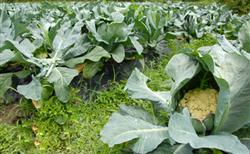
How to Fertilize Cauliflower Properly? A Detailed Guide to Scientific Fertilization Methods
How to fertilize cauliflower properly? Please give guidance. Cauliflower, also known as cauliflower (Brassica oleracea var. botrytis), has an edible portion that is a malformed flower head, and fertilization techniques differ depending on the variety. 1. Given that early-maturing varieties have a short growing season, the base fertilizer should be a quick-acting nitrogen fertilizer, applying about 8 kg of urea and about 8 kg of superphosphate per mu; for mid- and late-maturing varieties with a long growing season, the base fertilizer should be 1500 kg of barnyard manure, applied into the soil when tilling and preparing the land, followed by transplanting the seedlings. 2. Topdressing. In the early growth stage of cauliflower, frequently apply light applications of quick-acting chemical fertilizer as a 2% to 4% ammonium sulfate aqueous solution, about 700 kg per mu each time, or 10% to 30% human feces and urine, about 700 kg each time, applied around the roots. When the flower head begins to form, heavy topdressing should be applied to promote leaf and flower head growth. Apply about 800 kg of 40% human feces and urine per mu, or 10 kg of urea, about 20 kg of superphosphate, and about 8 kg of potassium sulfate, watered on.
-

Scientific Fertilization Methods and Technical Points for Bananas
How to fertilize bananas scientifically when growing them? Please give a detailed introduction. Fertilizing bananas requires suitable fertilization according to the banana's growth stage. The following detailed analysis is for reference: (1) Growth and nutritional characteristics. Bananas have no taproot, and the root system is distributed most densely in the topsoil at a depth of 10-25 cm. Suckers begin to sprout after February each year...
-
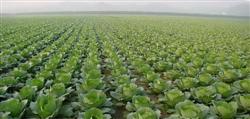
How to fertilize cabbage? A complete guide to scientific fertilization methods
How to fertilize cabbage? Is there any sharing of cabbage fertilization techniques? Producing 1000 kg of cabbage requires 2.0 kg of pure nitrogen, 0.72 kg of phosphorus pentoxide, and 2.2 kg of potassium oxide; for a yield of 3000-5000 kg of cabbage per mu, 6-10 kg of pure nitrogen, 2.2-3.6 kg of phosphorus pentoxide, and 6.6-11 kg of potassium oxide are required. Before planting...
-
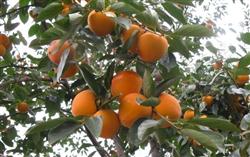
How to Fertilize a Persimmon Tree Well? A Detailed Guide to Scientific Fertilization Methods
How to fertilize a persimmon tree well? Please give guidance. The persimmon tree is a fruit tree that is widely cultivated, easy to manage, long-lived and high-yielding. It originated in our country, and is also cultivated in Japan, Korea and other countries. The persimmon tree is a deciduous tree, with a tree height of more than 10 m, a crown spread of about 16 m, and a lifespan of several hundred years. I. Root nutrition of the persimmon tree...
-
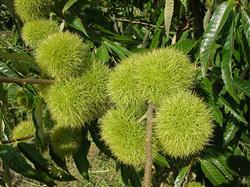
What are the scientific fertilization methods for chestnut trees?
How do you fertilize chestnut trees scientifically? Please give a detailed introduction. Chestnut, like other fruit trees, has the same fertilizer requirements, except that in addition to the three major elements of nitrogen, phosphorus and potassium, it is especially sensitive to the secondary element magnesium and the trace elements manganese and boron. If these are lacking or insufficient, serious physiological disorders occur that affect growth and development. According to measurements...
-
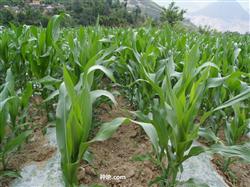
What are the scientific methods for growing corn?
How do you grow corn scientifically? Please provide guidance. Corn contains large amounts of lecithin, linoleic acid, grain alcohol, and vitamin E. Long-term consumption can effectively lower serum and cholesterol levels, reduce the occurrence of high blood pressure and arteriosclerosis, and has the effect of delaying cell aging and the degeneration of brain function. Corn contains anti-cancer factors...
-
Different types of micro-fertilizers have different usage methods, and scientific application requires distinction.
In recent years, the problem of wheat seed burning and seedling burning during autumn planting has occurred repeatedly. In mild cases, it causes 20% to 30% missing seedlings and broken rows; in severe cases, replanting becomes necessary, and this problem is on the rise. In pursuit of higher and higher yields, some farmers one-sidedly believe that as long as they apply more fertilizer, they can achieve high yields. They pay no attention to whether the soil nutrients in the plot are abundant or deficient...
-
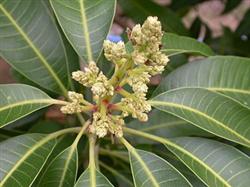
How to apply early fertilizer for mango flowers scientifically
After mango flower panicles are damaged by pests and diseases, the panicles become deformed, flower quality declines, buds drop, and flowers wither, making it impossible to bloom and bear fruit. The control methods for pests and diseases harming mango flower panicles are as follows: 1. Anthracnose. Anthracnose is the most serious disease harming flower panicles, and it can develop as soon as the panicles just emerge, first appearing as black...
-

Detailed Explanation of Key Scientific Irrigation and Drainage Techniques for Dragon Fruit
Soil moisture status is closely related to tree development, high yield, stable yield, and tree lifespan. Maintaining soil moisture within a range favorable for fruit tree growth and development through irrigation and drainage is an important task in orchard soil management. 1. Irrigation Water is the lifeblood of plant growth and an indispensable component of all organ activities...
-
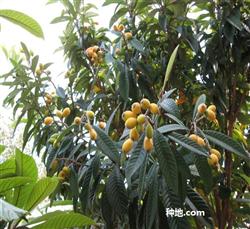
How to fertilize loquat scientifically? Master these technical points
How to plant loquat trees for high yield? What are the tips? Loquat is the earliest fruit variety to ripen in the year. High-quality loquat has large fruit, few seeds, bright orange-red skin, soft and juicy flesh, moderate sweet-sour taste, unique flavor and rich nutrition, with effects such as clearing heat, moistening the lungs, relieving cough and strengthening the stomach. In recent years, high-quality loquat...
条件筛选