Scientific cultivation of black fungus?
Scientific cultivation of black fungus? Please advise (1) Overview Black fungus is also called wood ear, smooth wood ear, or cloud ear. Taxonomically it belongs to the class Basidiomycetes, order Auriculariales, family Auriculariaceae, genus Auricularia. There are about a dozen or more species in this genus, such as black fungus, hairy wood ear, wrinkled wood ear, felt-cap wood ear, horny wood ear, shield-shaped wood ear, etc. Among these wood ears, only the smooth wood ear has plump and tender texture and delicious flavor, and is known as a mountain delicacy.
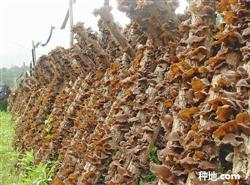
Scientific cultivation of black fungus? Please advise
(1) Overview
Black fungus is also called wood ear, smooth wood ear, or cloud ear. Taxonomically it belongs to the class Basidiomycetes, order Auriculariales, family Auriculariaceae, genus Auricularia. There are about a dozen or more species in this genus, such as black fungus, hairy wood ear, wrinkled wood ear, felt-cap wood ear, horny wood ear, shield-shaped wood ear, etc. Among these wood ears, only the smooth wood ear has plump and tender texture and delicious flavor, and is known as a mountain delicacy.
Black fungus has a long history in our country, and was recognized and used by the working people early on. As far back as more than 2,100 years ago, it was recorded in the Rites of Zhou. In the Important Arts for the People's Welfare by Jia Sixie of the Later Wei, the method of processing wood ear into pickled wood ear is recorded. In the Tang Materia Medica Annotations by Su Gong and others of the Tang Dynasty, the tree species and methods used for producing wood ear at that time are also recorded. Li Shizhen, a physician of the Ming Dynasty, recorded in the Compendium of Materia Medica: "Wood ear grows on decayed wood... [Nature and flavor] sweet and neutral... [Indications] boosts qi, prevents hunger, lightens the body and strengthens the will... Duan Hu treats hemorrhoids... abnormal uterine bleeding, bloody dysentery with blood in the stool." It can be seen that in ancient China, in addition to listing wood ear as a fine food, considerable research had also been done on the medicinal use of black fungus.
According to modern scientific analysis, every 100 grams of fresh black fungus contains 11 grams of water, 10.6 grams of protein, 0.2 grams of fat, 65 grams of carbohydrates, 7 grams of fiber, and 5.8 grams of ash (the ash includes 375 mg of calcium, 201 mg of phosphorus, and 180 mg of iron); in addition, it also contains a variety of vitamins, including 0.031 mg of provitamin A (carotene), 0.7 mg of vitamin B (including 0.15 mg of B1 and 0.55 mg of B2), 217 mg of vitamin C, provitamin D (ergosterol), and glycogen, etc. Therefore, black fungus is relatively rich in nutrients and delicious in taste.
Medicinal effects of black fungus: suitable for nourishing and strengthening, clearing the lungs and boosting qi; enriching the blood and invigorating blood circulation, and for conditions such as postpartum weakness and numbness and cramps of the hands and feet. At the same time, because black fungus is a gelatinous fungus, its fruiting body contains abundant gelatinous substances, which have a good cleansing and lubricating effect on the human digestive system. It can remove accumulated waste food and hard-to-digest fibrous food from the stomach and intestines. At the same time, after the active substances in black fungus are absorbed by the human body, they can clear the lungs and moisten the lungs, so it is also one of the health foods for textile workers and mine workers. Recently, according to research by the School of Medicine of the University of Minnesota in the United States, regular consumption of black fungus can reduce ordinary blood clotting in the human body and has a role in preventing and treating cardiovascular diseases.
Whether in output or quality, our country's black fungus ranks first in the world. It is a flagship export commodity of our country, sold far at home and abroad, and enjoys a high reputation in the countries of Southeast Asia. In recent years, it has entered the European and American markets, and its foreign exchange value is relatively high.
(2) Biological characteristics of black fungus
Black fungus is a gelatinous fungus belonging to the phylum Fungi, and it is composed of two parts: the mycelium and the fruiting body. The mycelium is colorless and transparent, composed of many tubular hyphae with cross walls and branches. It grows inside decayed wood or other substrates and is the vegetative organ of black fungus. The fruiting body grows laterally on the surface of wood or culture material. It is its reproductive organ and also the part people eat. When the fruiting body is first born, it looks like a small ring. Through continuous growth and development, it spreads out into a wave-shaped individual, with the lower side concave and smooth, having vein-like textures, and the back side protruding, with the edge slightly curled upward. Its overall shape resembles a human ear, hence the name.
The mycelium twists together to form a fruiting body after developing to a certain stage. When fresh, the fruiting body is gelatinous, semi-transparent, dark brown, and elastic. After drying, it shrinks into a horny substance, with the ventral surface smooth and lacquer-black, hard and somewhat sparse, and the dorsal surface dull-colored with short downy hairs. After absorbing water, it can still return to its original state. During the mature stage, the fruiting body produces basidiospores (seeds). The basidiospores are colorless and transparent, sausage-shaped or kidney-shaped, smooth, and are on the ventral surface of the ear piece. After maturing and drying, they spread everywhere through airflow and reproduce their offspring.
Black fungus is a saprophytic fungus. It has no chlorophyll and cannot make its own food. It must rely on organic matter in other organisms as its nutrients. At the same time, it lives saprophytically, and must grow and develop on dead organisms. Its mycelium has a strong ability to decompose cellulose and hemicellulose in organisms, and can finally break the organisms down.
Under suitable conditions, the basidiospores of black fungus germinate into mycelium, or form conidia, and the conidia germinate again to produce mycelium. Because the mycelium grows continuously, it gradually produces branches, and cross walls are formed in the branches, developing into tubular downy hyphae with only one nucleus in each cross wall, namely monokaryotic hyphae. This kind of hypha, produced by the germination of a single spore, is distinguished by positive and negative sexes, and is called primary mycelium or first-generation mycelium. Then, after the tip cells of two monokaryotic hyphae of different sexes contact and fuse with each other, a binucleate cell is formed, and the binucleate cell develops into dikaryotic hyphae through clamp connections. At this time, the mycelium grows and develops continuously, and produces a large number of branches that spread deep into the organism, absorbing large amounts of nutrients and water, and preparing for further development into a fruiting body. Once conditions are ripe, it produces fruiting body primordia on the surface of the organism.
(3) External conditions required for the growth and development of black fungus
During the growth and development of black fungus, the external conditions required are mainly nutrients, temperature, moisture, light, air, and pH. Among these, the factors with greater influence are moisture and light.
1. Nutrients: The nutrient requirements for the growth of black fungus are mainly carbohydrates and nitrogen-containing substances, and a small amount of inorganic salts is also needed. During the growth and development of the mycelium of black fungus, it continuously secretes various ferments (enzymes), and therefore has a very strong ability to decompose wood or culture material. Wherever the mycelium spreads, it decomposes there, obtaining the needed nutrients through decomposition and supplying the needs of the fruiting body. When we choose wood to cultivate wood ear, especially when choosing Qinggang oak from sunny slopes to cultivate wood ear, we do not need to consider the nutrient issue, because the nutrients in trees are generally relatively sufficient and can fully meet the needs of wood ear growth. If sawdust or other substitute materials are chosen for cultivation, a small amount of gypsum, sucrose, and potassium dihydrogen phosphate, etc., should be added to meet the nutritional needs of black fungus growth and development. Nutrients are added once and supplemented a second time, abbreviated as "add first, supplement later."
2. Temperature: Black fungus is a mesophilic fungus. Its mycelium can grow and develop between 15°C and 36°C, but 22°C to 32°C is most suitable. Below 14°C and above 38°C it is inhibited, but the black fungus mycelium in wood has considerable resistance to short-term high and low temperatures.
The fruiting body of black fungus can form and grow between 15°C and 32°C, but wood ear grown between 22°C and 28°C has large pieces, thick flesh, and good quality. Wood ear grown above 28°C has slightly thinner flesh, light yellow color, and poor quality. Although wood ear grown between 15°C and 22°C has thick flesh, black color, and good quality, its growth period is slow, affecting yield. Cultivating mycelium requires higher temperature, while fruiting body growth requires a slightly lower temperature, abbreviated as "high first, low later."
3. Moisture: Moisture is one of the important factors in the growth and development of black fungus. Both the mycelium and the fruiting body of black fungus need large amounts of water during growth and development, but their requirements differ. Under the same suitable temperature, the mycelium develops and colonizes relatively quickly under low-humidity conditions, while the fruiting body develops rapidly under high-humidity conditions. Therefore, when inoculating, the water content of the ear logs is required to be 60% to 70%, and the water content of the substitute culture medium is 65%, which is favorable for mycelial development and colonization. Although the growth and development of the fruiting body requires relatively high moisture, dry and wet conditions must be combined, and spraying should also be given appropriately according to the temperature. When the temperature is suitable, the relative humidity of the air in the cultivation site can reach 85% to 95%, so that the fruiting body grows and develops relatively quickly. When the temperature is lower, water should not be given too much, otherwise it will cause ear rot. The mycelium cultivation stage requires dryness; fruiting body growth requires moisture. That is, "dry first, wet later."
4. Light: Black fungus lives saprophytically, and light originally has little to do with the mycelium. In dim and dark environments, both the mycelium and the fruiting body can grow. However, light promotes the formation of the fruiting body primordia of black fungus, and ear buds can only unfold robust ear pieces under a certain amount of direct sunlight. According to experience, when the ear site has a certain amount of direct light, the wood ear produced is both thick and large and dark black, while in ear sites with alternating light and shade but no direct light, the wood ear produced has thin flesh, light color, lacks elasticity, and appears unhealthy.
Although black fungus has a relatively strong tolerance for direct light, appropriate humidity must be provided, otherwise the ear pieces will shrink, dry out, stop producing, and affect yield. Therefore, in production management, it is best to create a kind of "dappled sunlight" for the ear site, promoting the rapid development and growth of the fruiting body. In darkness, the mycelium can form fruiting body primordia, but they do not open. Only when there is a certain amount of scattered light do they open and form fruiting bodies. That is, "dark first, bright later."
5. Oxygen: Black fungus is an aerobic fungus. During the formation, growth, and development of the mycelium and fruiting body, it continuously carries out the activity of absorbing oxygen and exhaling carbon (carbon dioxide). Therefore, the air circulation of the ear site (indoor) must be maintained regularly to ensure the oxygen needs of black fungus growth and development. Prevent stuffy environments and avoid ear rot and the spread of contaminating fungi. Mycelial growth requires little oxygen, while fruiting body growth requires large amounts of oxygen, that is, "weak first, strong later."
6. pH: Black fungus is suitable for living in a slightly acidic environment, with pH 5.5-6.5 being best. When cultivating wood ear with ear logs, this factor is generally rarely considered, because after rack drying and fermentation, the ear logs themselves have already formed a slightly acidic environment. However, in strain isolation, strain culture, and substitute material cultivation, this is a problem that cannot be ignored, and the pH value of the culture medium (material) must be adjusted to a suitable level. In substitute material cultivation, first adjust it to the suitable range on the alkaline side, and through natural fermentation, it will reach the most suitable level. In short, the requirement is "alkaline first, acidic later."
(4) Production of black fungus spawn
In the cultivation of edible mushroom spawn, we call the mycelium isolated from black fungus itself and from ear logs the "mother culture." When the mother culture is expanded onto sawdust medium for culture, the mycelium produced is called the "stock culture," and then the stock culture is propagated and cultured into cultivation spawn for production.
Production spawn (cultivation spawn) culture medium, used for inoculating wood ear.
Formula A:
branches (Qinggang oak branches)
70 jin
sawdust
18 jin
wheat bran
10 jin
Preparation method: Except that for branch spawn the branches are first soaked in 70% sugar water for 12 hours, then taken out, and the sawdust and wheat bran are poured together and mixed evenly, then the remaining 30% sucrose and gypsum are dissolved in water and sprinkled on top, adding water while stirring, the remaining production method is the same as for producing mother culture.
(5) Cultivation of black fungus
1. Ear log cultivation
(1) Tree selection: There are many tree species suitable for the growth and development of black fungus. However, we must adapt to local conditions and choose tree species that are abundant in local resources and easy for wood ear to grow on. Except for tree species containing pine resin, essential oils, alcohols, ethers, etc., and economic forest trees, all other tree species can be used to cultivate wood ear. Currently commonly used tree species include cork oak, sawtooth oak, Mongolian oak, warty birch, Castanopsis carlesii, Chinese wingnut, sweetgum, elm, black locust, willow, Catalpa, plane tree, Chinese pistache, etc. But cork oak and sawtooth oak are the best.
(2) Cutting trees: The historical custom is to cut trees during the "entering the nines" period. Generally speaking, cutting can be carried out from when the leaves wither and turn yellow until before new leaves sprout, because this period is precisely the tree's "dormant" period. The nutrients in the trunk are in a state of accumulation and non-flow, moisture is relatively low, and nutrients are richest and most concentrated. This is called cutting "sap-collected trees." At the same time, trees cut during this period have bark and xylem closely combined, and after cutting, the bark is not easy to fall off, which is beneficial to the growth and development of black fungus.
For the age of trees to be cut, those growing on sunny slopes are 7 to 8 years old, and those growing on shady slopes or with poorer soil are 8 to 10 years old. The thickness of the trunk is best around 10 cm, and the length is 1 m. One rack has 50 logs.
As for the cutting method, the stumps are required to be left low, 10 to 15 cm above the ground; the axe is applied from both sides of the trunk, and the stump is left in a "crow and sparrow mouth" shape. This is beneficial for the regeneration and sprouting of old stumps, and will neither accumulate water and rot the buds nor cause multiple buds to sprout competitively and affect stump regeneration. When cutting, it is advocated to cut by pulling out the stump, not by sweeping the stump, because this is beneficial both for protecting young trees and for soil and water conservation.
(3) Pruning branches: After the tree is cut down, do not prune the branches immediately. Retaining the branches and leaves can accelerate the evaporation of water from the tree, prompt the trunk to dry quickly, cause its cell tissues to die, and at the same time help the nutrients in the treetop concentrate in the trunk. Wait ten days to half a month before pruning the branches. When pruning, use a sharp chopping knife and cut upward from below close to the trunk, trimming it flat into a "copper coin scar" or "ox eye." Do not cut too deep and injure the cortex. After pruning, the scars are best smeared with limewater to prevent the invasion of contaminating fungi and water accumulation, and also to facilitate stacking and arranging in the yard.
(4) Cutting the logs: In order to facilitate stacking the ear logs, arranging them in the yard, setting up racks, management, and harvesting, and at the same time to make it easy for the ear logs to absorb moisture from the ground when laid down, too-long trunks should be cut into short logs 3 chi long. When cutting, use a hand saw or chain saw to cut them into even ends, and smear them with limewater to prevent infection by contaminating fungi.
(5) Rack drying: Rack drying is to take the cut wooden logs, choose a high, dry, well-ventilated, sunny place, and stack them into a "#"-shaped or "fish-back-shaped" pile about 1 m high, letting them quickly lose water and die. During rack drying, every 10 days or so, turn them once top to bottom and inside to outside, to promote even drying of the ear logs. The rack drying time should be flexibly controlled according to tree species, thickness of ear logs, and climatic conditions. Generally, rack drying for 1 month to 1.5 months, so that the ear logs lose 30% to 40% of their water compared with before rack drying, and then they can be inoculated.
(6) Selection of ear site: The place where ear racks are arranged and placed is called the ear site. The quality of the ear site environment is directly related to the growth and development of black fungus and its final yield. Generally speaking, it is best to choose a wind-sheltered mountain hollow facing south with the north at the back. This place has long daily sunlight hours and small day-night temperature differences; morning and evening are often covered with cloud and mist, humidity is high, and air circulation is good, making it most suitable for the growth and development of black fungus. When choosing a site, it should also be close to a water source, which is beneficial for artificial watering. A slope of 15 to 30 degrees is suitable. Absolutely avoid places with stone cover, chalk soil, or iron alum soil.
After the site is chosen, it should first be cleared. Thin out excessively dense trees in the site, and cut away shrubs, thorny vines, and weeds that rot easily, leaving only a small number of tall broadleaf trees with small crowns or not-too-dense branches and leaves, to provide appropriate shade for the ear racks in summer. Before cultivation, apply insecticide to the ground and disinfect once with bleaching powder, quicklime, etc.; in winter, it is best to burn the site with firewood and grass. Do not remove the sheep's beard grass, turf, moss, etc. growing on the site, in order to prevent soil erosion and maintain the moisture of the ear site.
(7) Inoculation: Inoculation is inserting the artificially cultured mycelial spawn into the rack-dried ear logs, so that it develops and colonizes inside the ear logs and grows fruiting bodies. This is the most critical procedure in the artificial cultivation of black fungus and is a major technological innovation in production. It takes effect quickly and gives high yields.
When inoculating, first disinfect the ear site and ear logs (disinfectant drugs or fire can be used; disinfect the tools used with alcohol or boiling water; workers can wash clean with soapy water). Choose a cool place to carry out the work. Do not let direct sunlight hit the spawn, and absolutely do not carry it out on rainy days.
The inoculation time is generally from February to early May, and in autumn it can be carried out between White Dew and Cold Dew. When inoculating, choose different tools according to the different spawn types. For branch spawn and triangular wood spawn, a hatchet can be used to cut openings, and sawdust together with the branches or triangular wood is stuffed into the cut openings, then lightly tapped tight with the back of the axe, on the principle that it does not fall off; for sawdust spawn and granular spawn, a 10 mm hand drill, hole puncher, or hollow punch can be used to make holes, the spawn is inserted into the holes, covered with bark lids, and lightly tapped tight.
For inoculation density, the general row spacing is 2 cun, and plant spacing is 2.5 to 3 cun, arranged in a "" shape or staggered into a plum-blossom shape, both are acceptable. The density at both ends of the ear logs should be greater, so that the mycelium quickly occupies the position and avoids the invasion of contaminating fungi. The depth of inoculation should pass through the bark and enter the xylem by 3 to 4 fen.
(8) Stacking for colonization: Stacking is to maintain suitable temperature and humidity, so that the mycelium quickly germinates, colonizes, grows, and develops in the ear logs. This is an important step in whether inoculation succeeds. The method is: first choose a stacking site, clear the weeds, sprinkle a little insecticide or bleaching powder, rake it into the soil, then place the inoculated ear logs flat and push them up, stacking them into a "#" shape or "fish-back" shape, both are acceptable. The stack height is 3 chi, then cover tightly with plastic film, press the surroundings down with soil, and scatter a ring of insecticide around to prevent ants from climbing the stack and eating the mycelium. The temperature inside the stack should be maintained between 22°C and 32°C, and the humidity should be maintained at 60% to 70%. If the temperature is too high, the surrounding film can be lifted to ventilate once and lower the temperature. Every 10 days or so, turn the stack once, that is, turn all top and bottom, inside and outside, so that the temperature and humidity of the ear logs in the stack remain uniform. The first turning does not need watering; after that, water once with each turning. If there is a chance to receive rainwater, so much the better. After about 1 month, colonization is complete.
(9) Breaking up the stack and arranging in the yard: After the ear logs have been stacked for colonization, the mycelium has already grown out of the ear logs, so the stack can be broken up and arranged in the yard. The purpose of arranging them in the yard is to let the ear logs absorb moisture from the ground, receive natural sunlight, rain, dew, and fresh air, change their living environment, let them quickly adapt to nature, and promote the mycelium to spread rapidly further inside the ear logs, shifting from the growth stage to the development stage. The method of arranging them in the yard is to lay the ear logs flat on the ground, with the whole body touching the ground and not raised in the air, with a spacing of 2 fingers between each. The site is best with some slope, so that rainwater does not accumulate in the site and flood the ear logs. Every 10 days or so, turn the logs once, that is, turn the side originally touching the ground upward to face the sky, and turn the side originally facing the sky downward to touch the ground, so that the ear logs absorb moisture evenly and avoid infection by moisture-loving contaminating fungi. After about 1 month, ear buds grow abundantly in clusters, and then they can be put on racks.
(10) Rack setting and management: When the ear buds have covered the ear logs, it shows that the growth and development of the mycelium have entered the fruiting stage. At this time, external conditions of "alternating dry and wet" are needed. After rack setting, its needs can be met, and those contaminating fungi and insect pests that are not suited to such conditions can be reduced. The method of rack setting is to use a long pole as a crossbeam, support both ends with forked tree branches, then lean the ear logs obliquely on the crossbeam to form a "" shape, with a spacing of 2 cun between each log. Each rack is calculated for yield based on 50 logs.
The management work after rack setting is very important. As the saying goes, "three parts planting, seven parts management," and "whether there is a harvest depends on planting; how much is harvested depends on management." This shows the importance of management work.
Management work mainly includes removing long grass, contaminating fungi, and insect pests, and regulating temperature, humidity, air, and light. At noon in summer, try to avoid strong direct light on the ear racks. In winter, the ear logs that have begun to flower should be laid down, letting them absorb moisture from the ground and keep warm, prompting early sprouting and early fruiting the following year.
(11) Harvesting and sun-drying: After the wood ear has grown, it should be harvested frequently and carefully selected to ensure a bumper harvest. For spring ear and autumn ear, pick the large ones and leave the small ones, letting the small ears grow before picking; for summer ear, pick large and small together, because in the hot summer days the temperature is high, there are many insect pests, and bacteria multiply quickly, which will cause mature ear pieces to be eaten by insects and rot. The best time to pick ear is after rain when the sky clears and the ear pieces are curling at the edges, or in the morning while the dew has not dried and the ear pieces are moist and soft. When brought back, they should be placed on a drying mat and spread thin, and dried in one go under the hot sun. During drying, do not turn them too much, so as to avoid causing curled ear. If there is continuous cloudy rain, first adopt the method of urgent harvesting and urgent picking, spread the wet ear pieces brought back evenly on dry thatch or dry wood ear, letting the dry thatch or dry wood ear absorb part of the water, and after the weather clears, move them out to dry together. If it is impossible to harvest them all in time, plastic film can be used to cover the ear racks, so that the already-grown wood ear is not further exposed to rain and water, causing loss from log runoff.
2. Substitute material cultivation
The continuous innovation of black fungus cultivation technology has greatly increased both unit yield and total output, but it still cannot meet the needs of foreign trade export and the people's growing demand. With the promotion and development of artificial cultivation technology, experimental research on the new technology of substitute material cultivation of wood ear was further promoted. At present, plastic bag cultivation is mainly used, and the method is as follows:
(1) Production process
About 40 days of cultivation spawn (plastic bag) after inoculation, about 2 months
(2) Selection of excellent spawn
The spawn for cultivating black fungus is obtained through domestication and screening from the spawn of black fungus cultivated on segment wood. Therefore, not all spawn suitable for segment wood cultivation can be used as spawn for substitute material cultivation. The spawn age of cultivation spawn is suitable at 30 to 45 days. Such cultivation spawn has strong vitality, can reduce contamination by contaminating fungi during the culture process, and can also enhance resistance to mold during cultivation. Generally, choose those with fast mycelial growth, thick and strong, quick colonization after inoculation, short production cycle, high yield, large pieces, thick flesh, and deep color as spawn.
(3) Cultivation season
In Shaanxi and several nearby provinces, using natural temperature, cultivation can be done twice a year. In spring, start making stock culture in early January, make cultivation spawn in early February, make cultivation bags in mid-March, and produce ear in April, May, and June. In autumn, make cultivation bags in mid-August, and produce ear in September, October, and November.
3. Cultivation methods
(1) Formulas
Many by-products of agricultural and forestry products can be used to cultivate black fungus. Several culture medium formulas are introduced below:
① Sawdust culture medium formula
sawdust (broadleaf tree)
78%
wheat bran (or rice bran)
20%
gypsum powder
1%
white sugar
1%
water
about 65%
② Cottonseed hull culture medium formula
cottonseed hulls
90%
wheat bran (or rice bran)
8%
gypsum powder
1%
white sugar
1%
water
about 65%
③ Corncob culture medium formula
corncob (crushed into particles the size of soybeans)
70%~80%
sawdust (broadleaf tree)
10%~20%
wheat bran (or rice bran)
8%
gypsum powder
1%
white sugar
1%
water
about 65%
④ Rice straw culture medium formula
rice straw (fresh rice straw crushed or cut into small sections)
75%
wheat bran (or rice bran)
15%
sawdust (broadleaf tree)
8%
gypsum powder
1%
white sugar
1%
water
about 65%
If conditions permit, adding 2 percent soybean powder to the above culture media is even better.
(2) Mixing the material and bagging
Weigh the above culture materials in proportion, mix them evenly, dissolve the sugar in water and pour it into the culture material, add water and turn and mix, so that the water content of the culture material reaches about 65%. Or add water until, when the culture material is held in the hand, water streaks seep out but do not drip. Then pile the material up and let it sit for 30 to 60 minutes, so that the material fully absorbs the sugar water, and then bag it immediately. There are three bagging methods, each with advantages and disadvantages, and they can be chosen according to circumstances.
The first method: choose plastic bags with a thickness of about 5 micrometers and a bag size of about 17 cm x 33 cm with a square bottom. If flat-bottomed bags are purchased (the same as food bags), before bagging, first push the two bottom corners of the bag inward until the two corners meet. In this way, after the culture material is loaded, it is stable and can be placed directly on the culture rack. When bagging, put the already-mixed material into the bag, and while loading, vibrate forcefully on a smooth place so that the culture material is dense and the tightness is consistent from top to bottom. At this time, the height of the culture material is about 3/5 of the bag height. Use dry gauze to wipe away the residual culture material on the upper part of the bag, add a plastic neck ring (inner diameter 34 cm, height 3 cm), turn the plastic bag opening downward, tie it tight with a rubber band, shaped like a glass bottle mouth, and insert a cotton plug.
The second method: choose a tubular polypropylene plastic bag with a diameter of 13 cm, cut it to a length of 35 cm, tie one end tight with cotton thread, then melt the film with a candle flame or alcohol lamp flame to seal the bag opening. Load the culture material into the bag from the open end, while loading vibrate on the material pile, or press it firm with fingers, until it is loaded to 5 cm from the bag opening. Then twist the remaining plastic bag together, tie it tight with cotton thread, and under a candle flame or alcohol lamp flame, melt the film to seal it. On a smooth tabletop, press the bag flat with your hand. Then use a 2 cm diameter hole puncher to punch a hole 2 cm in diameter and 1.5 cm deep on one side of the bag every 10 cm. Use scissors to cut the prepared medicinal adhesive tape into 3 to 4 cm square pieces and stick them over the holes. To make operation convenient during inoculation, roll one corner of the adhesive tape into a double layer.
The third method: choose a tubular polypropylene plastic bag with a diameter of 13 cm, tie one end with string, load the culture material into the bag from the other end, press the material firm with your hand, until the material is loaded to 5 cm from the bag opening, then gather the remaining plastic bag together and tie it with string. Later, inoculation is done from both ends.
It should be noted that no matter which bagging method is used, it must be done so that the material is mixed, bagged, and sterilized on the same day.
4. Sterilization and inoculation
Place the filled cultivation bags in an autoclave for sterilization, maintaining 1.5 to 2 hours under a pressure of 15 kg/cm2. When the pressure gauge drops to zero, take the bags out while hot and immediately place them in an inoculation box or inoculation room. If a normal-pressure sterilization stove is used for sterilization, maintain 6 to 8 hours. When the bag temperature drops to 30°C, or fumigate with potassium permanganate and formaldehyde for 30 to 40 minutes to disinfect the space of the inoculation box or inoculation room. When inoculating, note that continuous inoculation should not last too long, so as to avoid the temperature inside the box becoming too high (exceeding 40°C); the inoculation amount should be larger, which can shorten the time for the mycelium to cover the surface and reduce the chance of contamination by contaminating fungi. As mentioned earlier, black fungus has relatively weak resistance to molds, especially Trichoderma, so sterilization must be thorough, and inoculation must be carried out aseptically to increase the finished product rate.
5. Mycelium culture
Throughout the entire process of mycelium culture, conditions must be created for healthy mycelial growth while also controlling the irregular stick formation of black fungus fruiting bodies. Among all conditions, temperature is the most important factor. The optimum temperature for the culture room is 22°C to 25°C. Because the temperature of the culture material inside the bag is often 2°C to 3°C higher than room temperature, the temperature of the culture room should not exceed 25°C. Especially in the later stage of culture (that is, when the mycelium has grown to more than about 1/2 of the height of the culture material), if the temperature exceeds 25°C, yellow water will appear in the bag, the water color will change from light to dark, and from thin to sticky. The production of this mucus easily promotes mold infection. The relative humidity of the culture room should be 50% to 70%. If the humidity is too low, the culture material will lose much water and dry out, which is unfavorable to mycelial growth; if the relative humidity exceeds 70%, contaminating fungi will grow on the cotton plug. Light can induce the mycelium to twist together to form primordia. In order to control the formation of fruiting body primordia during the mycelium culture stage, the culture room should remain dark or with extremely weak light intensity. Scatter some quicklime around the culture room to make it an alkaline environment and reduce the chance of mold reproduction. When cultivation bags are placed on culture racks or piled on the ground to culture mycelium, they should not be turned too much. Because the volume of the plastic bag is not fixed, where it is pinched by hand the volume changes, squeezing air out of the bag. When the hand is removed, its volume returns to normal, and a small amount of air enters. In this way, contaminating fungal spores may enter. In addition, where the hand contacts the bag wall, the pressure between the plastic bag and the culture material is increased. When encountering relatively sharp culture material (sawdust, cottonseed hulls), tiny holes invisible to the naked eye will be pricked, and contaminating fungal spores will also enter through them, increasing the infection rate. Therefore, during the culture process, move them as little as possible. When checking for contaminating fungi, be sure to handle them gently and place them down gently. If contaminating fungi are found, take them out promptly and place them in a cooler place for continued observation. If the degree of contamination is relatively light, formaldehyde solution can be injected into the contaminated area, and a small piece of adhesive tape can be stuck over the needle hole to control the further spread of the contaminating fungi.
6. Opening holes
When the black fungus mycelium has covered the bag, the fungus bags can be moved from the culture room to the cultivation room. Remove the cotton plug and plastic neck ring, tie the bag opening with string; or remove the adhesive tape; prepare two basins of 5% limewater. First place the bags in one basin and soak and wash them clean, then take them out. Use a blade to make small cuts around the bag at a spacing of 5 to 6 cm between two holes, with a length of 1 to 1.5 cm and a depth reaching 0.3 cm into the material. It is also possible to first open holes on one side of the fungus bag. Soak the already-opened fungus bags in another basin of limewater, so that the hole openings are in an alkaline environment, which can effectively prevent the harm of contaminating fungi.
7. Management during the ear-producing period
After holes are opened, the fungus bags can be placed flat on the fungus bed racks in the cultivation room, or hung on seedling bed racks or on tree branches under the forest, or placed on the ground covered with wet sand, and then conditions for the formation of black fungus fruiting body primordia should be created immediately. First, increase the relative humidity of the cultivation environment to 90% to 95%, and control the room temperature as much as possible at 20°C to 25°C. Good ventilation and relatively strong scattered light are also indispensable conditions for the formation of black fungus primordia. At the hole openings, the mycelium can receive relatively sufficient light, air, and humidity, effectively promoting the formation of fruiting bodies there. Therefore, in hole-opening cultivation of black fungus, fruiting bodies form at the hole openings or at cracks in the plastic bag. This is the so-called "directional ear production."
Under suitable temperature, humidity, ventilation, and light conditions, generally 7 to 12 days after opening holes, many small black dots can be seen forming at the hole openings with the naked eye; they gradually grow larger and connect into one ear bud (young fruiting body). At this time, more water is needed, a temperature of 15°C to 25°C, relatively strong scattered light, and good ventilation. If continuous rainy weather occurs, the cultivation bags that have already formed ear buds can be hung in the open air, where temperature, humidity, light, and air can all be fully satisfied, and the ear buds develop faster. At this time, if green mold and orange-red Neurospora contamination are found at the ear base or on young ear pieces, the fungus bags can be carefully rinsed under a faucet to wash away the contaminating fungi, but do not wash off the fruiting bodies. Under suitable environmental conditions, about 10 to 15 days after the ear buds form, the ear pieces flatten and the fruiting bodies mature, and they can then be harvested.
8. Harvesting and processing
The standard for mature black fungus is when the ear pieces are fully expanded, begin to curl at the edges, the ear base becomes thinner, and the color changes from black to brown, then they can be picked. Frequent and careful harvesting is required, picking the large and leaving the small, so as not to cause ear flow. Mature ear pieces left on the fungus bag without being picked are prone to disease, insect pests, or ear flow. When harvesting, use a small knife to cut flat against the bag wall. The harvested wood ear should be sun-dried or oven-dried in time. The drying temperature should not exceed 50°C. If the temperature is too high, the wood ear will stick together into clumps, affecting quality. After the wood ear is dry, package and store it in time to prevent mildew or insect damage. After harvesting, stop direct water spraying on the fungus bags for four or five days, letting the mycelium accumulate nutrients. After about 10 days, the second batch of ear buds forms, and by repeating the above management, two more harvests can be obtained.
(6) Prevention of diseases, insect pests, and contaminating fungi
At present, in the cultivation of black fungus, one of the most prominent problems is that there are many contaminating fungi on ear logs, many insect pests of wood ear, and much contamination in spawn production and substitute material cultivation, often causing undue losses to production. First, we must identify the causes and take preventive measures. Reducing losses can definitely be achieved.
The main reasons for many contaminating fungi on ear logs are inadequate disinfection of the ear site, ear logs, and tools used, poor ventilation in the ear site, and long-term stuffy air. The insect pests of wood ear are mainly due to incomplete elimination of insect eggs in winter and untimely control in spring and summer. The contamination problem in spawn production and substitute material cultivation is mainly due to the isolated specimen carrying fungi, incomplete sterilization of the culture medium, poor disinfection of the boxes and tools used in the spawn introduction room, or poor sealing of the spawn introduction room and boxes allowing contaminating fungi to be brought in midway, the use of contaminated stock culture and mother culture, poor disinfection of operators' hands, work clothes, and hats, etc., all of which can cause contamination and bring losses to production. Therefore, all workers are required, first of all, to attach importance to it ideologically, to strictly control sterilization and disinfection at every step, and to strictly implement all operating procedures, and never to be negligent in the slightest.
Some common disease, insect pest, and contaminating fungus names and preliminary control methods are introduced below for reference.
1. Contaminating fungi harmful to ear logs
Black gall (Annulohypoxylon stygium): blackish-brown granules, most likely to occur in hot, humid, shaded places; when abundant they merge into a single sheet. The carbonaceous material it secretes itself is hard, turning the cambium beneath the bark black so that it cannot absorb water, and the interior becomes iron-hard. Not only does it fail to produce wood ear mushrooms, but even other contaminant fungi do not grow on it. It is the most damaging pest to the log beds.
Leather fungi: there are several kinds. One is called golden-edged moth fungus, which grows appressed to the log, its edge turned up like eaves; the sterile surface pressed against the wood is grayish-red and the upper surface is black, some resembling dried wood ear. Another is called cowhide strap, of which there are black and white types; the black is chestnut-shell colored and the white is bamboo-shoot colored, both growing tightly appressed to the log with edges that do not curl up, looking like a sticking plaster; sometimes it covers the whole log, causing powdery decay of the wood, and no wood ear grows at all. It is especially likely to occur in damp shade or during spells of overcast and rainy days. There is also a wrinkled leather fungus, small chrysanthemum-shaped, growing upright, white, thin as paper, with a hymenium bearing radial wrinkles or ridged veins; this one is less harmful.
Polypores: one is called red fungus, date-red and bright, sessile and half-moon shaped, growing laterally on the log; it secretes a dark brown pigment and can cause granular decay of the wood, and once this fungus grows, wood ear no longer forms. Another is called white fungus, white to pale cream in color, resembling bacterial growth but larger, often overlapping in cloud-like layers, consuming large amounts of nutrients from the log and causing early decay of the log, which affects wood ear yields. At the same time this fungus is the most attractive to insects, and the small insects it breeds also bore into and feed on the log. There are also other larger-bodied boletes, white silk-hair fungus, chicken-feather fungus, yellow fungus (yellow nymphalid fungus), turkey tail, white-edged Penicillium, and so on. These fungi are less harmful to the logs, but they are most likely to occur in stuffy, poorly ventilated environments.
For their control measures, first the wood ear yard should be chosen in a ventilated, sunny spot and the yard kept clean and hygienic; decayed branches, weeds and logs bearing contaminant fungi in and around the yard must all be burned; between the Awakening of Insects and Pure Brightness, insecticide and fungicide should be sprayed over the yard; when inoculating the logs, the bark surface should be strictly disinfected, rational close spacing should be adopted, the production cycle should be shortened, and the fallow resting period should be abolished.
2. Common pests damaging wood ear
Red thread worm: relatively slender, like a thread, red in color, about 1 cm long; it mostly bores in from the base of the ear into the ear piece to feed, and is not easily found on the surface. The infested ear piece becomes hollow inside and irregular small holes appear on the surface. Bored ear pieces rot and disintegrate easily and are unfit to eat. The damage is relatively serious.
Fish worm: shaped like a small fish, colored like a small shrimp; about 1-2 cm long. It is the larva of a beetle, dwelling inside the ear piece and gnawing outward from the inside, and it also eats the ear base; bored ear bases no longer produce wood ear. This insect not only feeds in the yard but, if carried into the warehouse, will continue to gnaw, with a fairly large appetite; its droppings are dark brown, felt-like strips.
Shell bugs: there are many kinds of shell bugs, but those doing greater harm to wood ear include the black shiny shell bug, the spotted shell bug, and the pitted shell bug. These bugs crawl on the ear pieces and gnaw from the outside, like silkworms eating mulberry leaves, affecting the growth and development of the wood ear. In severe cases they eat an entire sheet of wood ear clean, causing reduced yields.
Other pests include the rice weevil, confused flour beetle, pine bark beetle, bagworm, springtail, slug, and potato ladybird, among others, as well as fungus-feeding insects within the ear base. In addition, there are termites, longhorn beetles, six-spotted jewel beetles, and chestnut-colored jewel beetles that bore into the logs, all of which indirectly harm the yield and quality of wood ear.
These pests generally begin to appear around the Spring Equinox and do little harm to spring wood ear; they occur in large numbers during the summer wood ear season and gradually decline after the Beginning of Autumn. For control measures, besides doing a good job of destroying insect eggs, for red thread worms and fish worms, 1 jin of 50% wettable trichlorfon can be used, added to 1000-1500 jin of water, to soak the logs for 2 minutes; or 1 jin of malathion added to 1500 jin of water for spraying; for the various shell bugs, 1 jin of derris powder and half a jin of neutral soap added to 200 jin of water can be sprayed; or 1 jin of pyrethrum emulsifiable concentrate added to 800 jin of water for spraying. For edible mites, a 1:1000 dilution of 20% wettable tetradifon (T?D?N) can be sprayed; or logs can be soaked for 5 minutes in a 1:800 aqueous solution of 20% wettable tetradifon. For jewel beetles, longhorn beetles and longhorn beetle larvae, it is best to catch them by hand in the early morning and evening.
3. Contaminant fungi harming spawn production and substitute-material cultivation
Penicillium: colonies are blue-green, short and velvety, with uneven colony margins; the conidiophores are like brooms, bearing conidia at the tips. It prefers low temperatures and mostly occurs around 25°C and in damp places with poor air circulation.
Mucor and Rhizopus: these two fungi are similar in shape, with relatively long fuzz; Mucor has white hyphae, while Rhizopus has grayish-white, needle-like hyphae; both bear black granular sporangia, and if you touch them with your hand, your hand can be stained blackish-gray. Both of these fungi grow and spread faster in damp environments with poor air circulation.
Aspergillus: there are two kinds, yellow Aspergillus and black Aspergillus; their hyphae are relatively thick and short, and the spores all grow in a radiating pattern. Yellow Aspergillus is blackish-yellow, black Aspergillus is yellowish-blackish-gray; they spread quickly when the temperature in the culture medium is low.
Neurospora: hyphae are cottony, producing chains of bead-like spores; colonies are bright orange-yellow. It spreads quickly when the temperature in the culture medium is high and humidity is great.
Trichoderma: hyphae spread as they grow, colony margins are uneven, and young colonies are white; the hyphae become floccose or thread-ball shaped, and after maturity the conidiophores at the branch tips bear clustered conidia; after spore production, the colony turns copper-green. It prefers dark, damp, poorly ventilated environments, and grows and spreads fastest especially under high temperature and high humidity.
Yeasts and bacteria: they are single-celled microorganisms; small in size and extremely diverse in kind. After the culture medium is infected by these organisms, the surface becomes slimy or liquid, making the medium sticky and foul-smelling, causing the hyphae to die.
To prevent infection by the various molds, first of all one must pay attention ideologically, do a good job of environmental hygiene, and when making spawn and cultivating with substitute materials, strictly follow the operating procedures, ensuring sterilization at every step; all tools and the inoculation room, boxes, and culture room must always be kept clean and sterilized; operators must first disinfect themselves before carrying out operations, and there must not be the slightest negligence or carelessness.
→Making holes in the cultivation bag (plastic bag)
→Ear buds form
→Mature and harvest
→Second flush of ear buds
7-10 days
15-20 days
10 days
Formation
→Mature and harvest
→Third flush of ear buds forms→Harvest
15-20 days
10 days
15-20 days
Click to get more wood ear cultivation techniques
Click to get more edible mushroom cultivation techniques