-

Tea Plant Cultivation Techniques: How to Apply Topdressing in a Tea Garden Scientifically?
How should topdressing be applied in a tea garden? Please provide an introduction to the method. A tea garden can refer to the following methods for topdressing: 1. Applying it as topdressing. In early spring, during the picking period, using nitro compound fertilizer as topdressing takes effect quickly and shows remarkable results. Compared with urea, urea after broadcast application takes 7~10 days to take effect, has a single nutrient component, and is prone to ammonia volatilization loss to a fairly large extent, with low utilization efficiency and delayed effect, so it cannot achieve the ideal yield-increasing effect; switching to binary nitro compound fertilizer, after broadcast application it can begin to take effect in 3~4 days, has a nutrient composition that is not single (contains "dual nitrogen" plus phosphorus), has small volatilization loss, and has very high utilization efficiency, making it an excellent choice for promoting high yield of spring bud tea. It is recommended that during the spring tea picking period, apply once at an interval of 8~10 days, with a dosage of 15 kg per mu each time; apply 5~7 times in total.
-
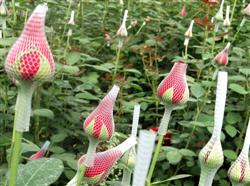
How to Grow Roses? A Complete Guide to Scientific Cultivation Methods
How to grow roses scientifically? Please provide guidance. Rose cultivation can follow the methods below: 1. Variety arrangement: Use Meilan Lipstick and Bellamy as the main summer varieties, and American Pink can serve as a companion variety for summer or autumn and winter. Cardinal and Red 90 serve as the main autumn and winter varieties. 2. Planting period and...
-
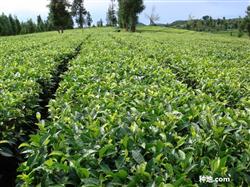
Detailed Explanation of Scientific Topdressing Methods and Technical Key Points for Tea Plants
How to scientifically topdress tea plants? Please provide guidance. Tea fertilization should, on the basis of adhering to the combination of organic fertilizers and inorganic fertilizers, control the total amount of nitrogen fertilizer, especially the amount of nitrogen fertilizer applied in the later stage, so as to improve tea quality. At the same time, pay attention to the combined application of the three major nutrients nitrogen, phosphorus and potassium and the balanced application of medium and trace elements. It is strictly prohibited to apply...
-

How to fertilize tea plants scientifically? A full breakdown of the key methods
How to fertilize tea plants scientifically? Please advise. Fertilizer is the food for tea plant growth and the material basis for increasing tea yield and improving quality. Therefore, fertilization plays an important role in the growth of tea plants and the yield and quality of tea leaves. Good fertilization techniques can maximize the yield-increasing effect of fertilization, maintain and improve...
-

What Fertilizer to Apply to Tobacco to Increase Yield? A Detailed Guide to Scientific Fertilization Methods
How to fertilize tobacco scientifically? The various nutrients needed by flue-cured tobacco throughout its entire field growth period are mainly absorbed from the soil. Judging from the soil nutrient conditions in tobacco-growing areas under various ecological conditions in China, whether in terms of nutrient quantity or the dynamic supply process, they often cannot satisfy flue-cured tobacco's requirements for yield and quality...
-
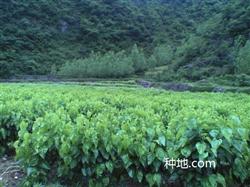
What to do about low-yielding mulberry orchards? Find the cause and improve them scientifically
The mulberry orchard has been planted for many years and the yield has never been high. How should it be renovated? Please advise. A low-yielding mulberry orchard can be renovated by the following methods: 1. Thickening and replanting 1. Layering to fill in plants 2. Filling gaps with strong seedlings: in mulberry orchards with wider row and plant spacing, healthy mulberry seedlings can be replanted between plants or rows. 2. Interplanting for renewal...
-

Scientific Management Methods and Key Care Points for Azaleas
Azaleas prefer scattered light and a cool, humid climate, and fear scorching sun exposure. Therefore, suitable conditions of light, temperature and humidity should be adjusted for scientific management. At the same time, special attention should be paid to the acidification treatment of soil and water quality. After the beginning of autumn, once the nighttime temperature drops below ten degrees Celsius, move them indoors to a sunny spot. After the beginning of winter, move them to a cooler shady place without light exposure to let them go dormant. The suitable temperature at this time is around four degrees, and there is no need to water as long as the soil is not dry. In early spring in February, move them to a spot with scattered light at a room temperature of around nine degrees. After
-
Detailed Explanation of Scientific Breeding and Cultivation Techniques for the Fragrant Rose Acacia
The fragrant rose acacia (Robinia pseudoacacia 'Idaho') is a deciduous tree in the Fabaceae (Papilionaceae) family, native to Spain. The tree reaches 10-12 cm in height and blooms twice a year, in May and July. Its flowers are brightly colored, abundant and large, hanging in long cascading clusters, with high ornamental value and a long flowering period. It is a prized choice for landscaping in cities, along roads, and in scenic areas, and is the top recommended fast-growing ornamental tree for landscaping. The fragrant rose acacia is a rare fragrant landscaping tree species. It is cold-tolerant, drought-tolerant, tolerant of poor soils and saline-alkaline conditions, with a well-developed root system, rapid growth, and wide adaptability. It can be widely used for urban and rural beautification, greening of barren hills, and more, and holds great
-
How to Fertilize Lilies: Master the Key Points of Scientific Fertilization Techniques
Lilies are perennial herbaceous plants of the Liliaceae family. They are mainly produced in Henan, Hubei, Hunan, Jiangxi, Zhejiang, Guangdong, Guangxi and other provinces (autonomous regions). The medicinal part is the bulb. Lilies prefer cool conditions and are relatively cold-tolerant; they prefer dry conditions and fear waterlogging; they are strongly shade-tolerant, but prefer light during the budding and flowering stage; they prefer deep, fertile sandy loam and have a relatively strong tolerance for fertilizer. Key points of fertilization techniques: For base fertilizer, apply 3000-4000kg of barnyard manure per 667 sq m. For topdressing, the first application at thawing time, apply 150
-
Detailed Explanation of Scientific Propagation Methods and Techniques for Lilies
Lilies can be propagated by seed sowing, scale cuttings, separating small bulbs, and separating bulbils, but separating small bulbs and scale cuttings are the main methods. ① Separating small bulbs. The primary requirement is to have enough small bulbs. Methods to increase the number of small bulbs include: a. When planting large bulbs, increase the depth appropriately. b. Before and after flowering, cut off the stems and leaves more than 40 cm above ground. c. After flowering, cut the stems with leaves into small sections with 3-4 leaves and shallowly bury them in moist sandy soil. Small bulbs planted for 2 years can then flower. ② Scale cuttings
条件筛选