-

Foliar fertilizers are effective, and scientific selection is key
After the pegging stage of autumn peanuts, drought weather and large day-night temperature differences affect pod development, causing pods to be not plump. If foliar topdressing is carried out multiple times after the pegging stage of autumn peanuts to supplement nutrients through the leaves and raise the nutritional level of the autumn peanut plants, the ability of the autumn peanut plants to resist drought and adapt to large day-night temperature differences can be enhanced, making the pods...
-
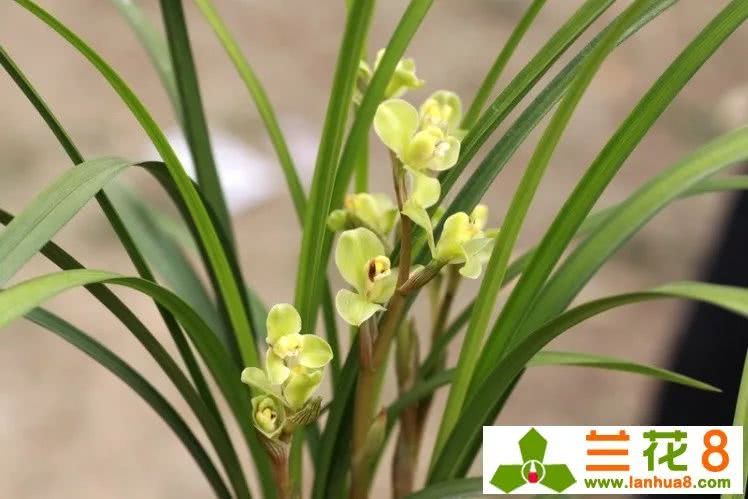
Over-fertilizing harms crops instead; a brief discussion on scientific fertilizing
Promote Chinese orchid culture, spread orchid knowledge. Many orchid growers always attach great importance to fertilizing, thinking about fertilizing their orchids almost every day. In fact, fertilizing must be done with restraint; without rationalized fertilizing, it will only bring harm to orchids, causing...
-
What are the scientific methods for using bacterial biological insecticides?
From rice sowing to the seedling stage, farmers should focus on controlling seed-borne diseases (bakanae disease, rice blast at the seedling stage, white-tip nematode disease, etc.), the small brown planthopper, and the first-generation stem borers. At the rice booting stage, the focus should be on controlling pests and diseases such as the rice planthopper, rice leaf roller, stem borers, ear blast, and rice false smut. At the rice ear stage, the rice planthopper is the main target, along with...
-
How to apply insecticides scientifically? Correct methods and techniques
To control crop pests with pesticides and achieve the best insecticidal effect, in addition to selecting the right targeted agent and applying it at the right time, you should also pay special attention to the following two issues that are easily overlooked. Different agents and different application methods should be chosen according to the part of the plant the pest damages, so that the pesticide is delivered to the right place. For example, for pests that damage...
-
Never abuse plant growth regulators; scientific use is key
The main types of plant growth regulators allowed for the production of pollution-free, Grade A green food citrus are benzyladenine, 6-benzyladenine, gibberellin, ethephon, chlormequat, and others. The technical requirements are to use them strictly according to the specified concentration and period, with use permitted once a year, and a safety interval of more than 20 days. For the production of A...
-
How to apply fertilizer scientifically in hot and dry weather
It is not advisable to apply large amounts of undecomposed cake fertilizer. Cake fertilizer has a relatively small carbon-to-nitrogen ratio and decomposes quickly, easily generating high temperatures. Applying undecomposed cake fertilizer will raise the local temperature, cause root burn and affect seed germination, and will also attract underground pests. The cake fertilizer should be crushed and soaked in human urine until it heats up before application. Compound fertilizer cannot be used alone...
-
Scientific application methods and technical key points for potash fertilizer
Potassium is one of the three essential fertilizer elements. Many vegetables often require more potassium than nitrogen and phosphorus; well-grown vegetables contain potassium at 2.5%-7% of their dry matter, higher than their nitrogen and phosphorus content. Most vegetables absorb more potassium than nitrogen; for example, the nitrogen-to-potassium ratio absorbed by cucumber is 1:(1.5-1.7), by pumpkin is 1:2.1, and by tomato is 1:...
-
Fertilizer mixing requires care; only scientific combinations boost effectiveness
Many vegetable growers are in the habit of buying a large quantity of fertilizer at one time when prices are low and storing it for use throughout the year. Although this practice is workable, it is quite unsuitable for certain chemical fertilizers. Because vegetable growers have no dedicated place to store fertilizer, storing it casually will cause some fertilizers during storage to...
-
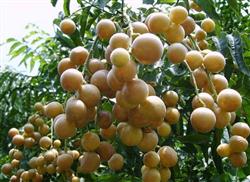
How to fertilize heart-shaped wampee? Detailed scientific fertilization methods
How to fertilize heart-shaped wampee properly? We ask netizens with wampee growing experience to help introduce it. Heart-shaped wampee is waxy yellow or brownish yellow, glossy, with large fruit; a single fruit weighs 9-14 grams; the flesh is yellow-white, sweet with a honey aroma or sweet with slight sourness, crisp and juicy; the edible rate is 47%-62%, and the soluble solids content is 14.5%, thereby... ⟧3⟧How to fertilize heart-shaped wampee properly? We ask netizens with wampee growing experience to help introduce it
-
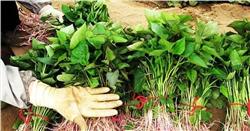
Complete collection of scientific sweet potato cultivation techniques, videos and pictures
I. Select good sweet potato varieties: Choose high-yielding varieties according to the characteristics of the sweet potato variety and the cultivation purpose. In spring sweet potato areas, it is advisable to choose medium-maturing varieties that are tolerant to fertilizer, recover quickly after transplanting, set tubers early, produce many and uniform tubers, and have a long duration of tuber enlargement. For example, in areas mainly for food use, Sushu 8, Anping 1, Xushu 34, Xushu...
条件筛选