-
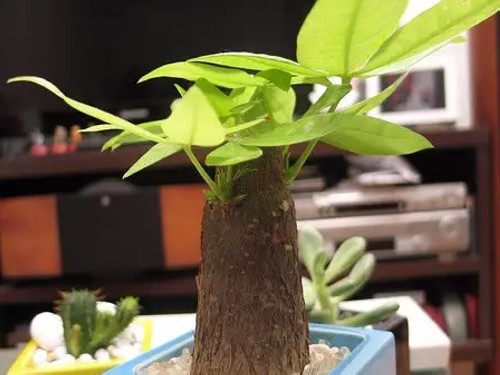
How to Rescue a Money Tree with Root Rot? Detailed Guide to Saving a Potted Plant
The money tree (Pachira aquatica) is a popular potted plant. It can be sown when temperatures reach above 20°C, and the germination rate from seed is quite high. Compared with purchased potted cuttings, a money tree grown from your own seed is easier to care for. Money trees do not like water, and overwatering can cause root rot. But the plant shows symptoms rather slowly
-
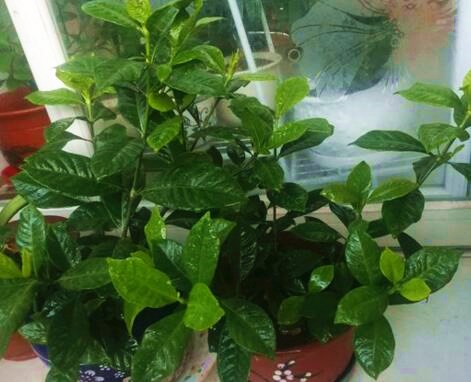
A Complete Guide to Common Pests and Diseases of Gardenia and Their Control Methods, Worth Saving
Gardenia flowers are pure white and elegant, with a rich yet refined fragrance, calm and cool, like wisps of breeze blowing through midsummer, and are deeply loved by people. So what are the common pests and diseases and their control methods in the process of growing gardenias? Gardenia leaf spot disease. 1. Symptoms. Leaf spot disease is a disease caused by fungi.
-

Detailed explanation of key techniques for high-yield hawthorn cultivation, worth saving
I believe friends who have seen "Under the Hawthorn Tree" can never forget that hawthorn tree that blooms red flowers, as if it had been planted in our hearts. At present, hawthorn trees are cultivated in many places, and its fruit, hawthorn, whether fresh or processed, is deeply loved by people. Because hawthorn not only promotes digestion
-

Detailed Explanation of High-Yield Blueberry Cultivation and Management Techniques, Worth Saving
Do you remember a few years ago when the price of blueberries was sky-high, often nearly 100 yuan per jin? But now blueberries at 30 to 40 yuan per jin are quite affordable, all thanks to large-scale domestic cultivation. So today, the editor of Tuliu.com will give a detailed introduction to high-yield blueberry cultivation and management techniques
-
The most complete vegetable planting schedule is here, with sowing time suggestions for all four seasons worth saving
No matter what you do, there is an order of priority, and vegetable planting is the same. Some vegetables should be planted in spring, some should be planted in winter, and some...
-

Guizhou and Shanghai Join Forces to Farm the Chinese Zebra Loach Artificially, Saving Guizhou's Native Fish
Jinqian Online News: A reporter learned yesterday from the Luodian Fisheries Station that at present, the fisheries departments of Guizhou and Shanghai are jointly conducting experimental research and development on the artificial domestication and breeding of the Chinese zebra loach (Botia zebra), in order to save this rare native aquatic wildlife species of Guizhou in the Pearl River system - the Chinese zebra loach. The "sesame sword" (scientific name: Chinese zebra loach) has no scales and a body shaped like a sharp sword; it gets its name from the sesame-like spots on its body, lives on the bottom of rivers, and feeds on small aquatic animals. It is mainly distributed in the Pearl River and Yuanjiang River systems, and its flesh is tender and delicious, making it an important commercial fish in its producing areas. Together with the sea bass (Japanese sea perch)
-
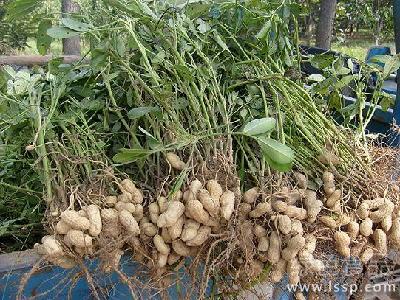
What are the key points for saving peanut seeds? Do these well for a bumper harvest and increased income next year
Ensuring a bumper harvest and increased income next year: key points for saving peanut seeds
-
Key Techniques for Water-Saving Cotton Cultivation in Semi-Arid Saline-Alkali Land
Cotton has always been an important economic crop, and continuously improving cotton yield and quality is of great significance for increasing agricultural efficiency and farmers' income. Over the years, through gradual exploration, a relatively complete set of cotton cultivation techniques for semi-arid saline-alkali land has been developed, achieving the goals of early maturity, high yield, and high quality in drought-resistant cotton planting. This has solved the problems of difficult emergence, difficult seedling retention, slow development, and late maturity when planting cotton in saline-alkali land due to lack of water resources. The cotton yield-increasing techniques for semi-arid saline-alkali land mainly include seed preparation, fertilization, chemical control, pruning, and other steps.
-
New Cotton Cultivation Technique: Saving Labor and Increasing Yield at the Same Time
This technique is based on the cotton cultivation method in which cotton is not pruned or disbudded, but only the terminal bud and side buds are removed, also called the two-time topping cultivation method. On that basis, a more labor-saving one-time topping cultivation method has been introduced. It saves at least 70% of labor, while increasing yield by more than 8%, and cotton quality is basically on par with the traditional method. Its key techniques are as follows: 1. Select good varieties and keep the sowing date moderate. It is advisable to choose large-plant types with strong mid-season growth, with seed cotton yield per mu of no less than 350 kg and high-yielding varieties exceeding 500 kg. Usually, the Hua Kang III series, Qiufeng Large Boll series, and disease-resistant
-
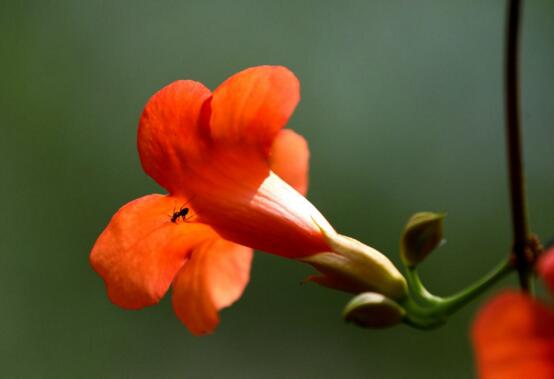
4 propagation methods for trumpet vine, master the money-saving cutting technique
Trumpet vine (Campsis), a flower with beautiful blooms and tenacious vitality, is deeply loved by gardening enthusiasts. But friends who grow trumpet vine should know that a single plant or a single pot of trumpet vine looks quite monotonous, so what to do then? To save money, gardening enthusiasts should master the propagation methods of trumpet vine. As for how trumpet vine is propagated
条件筛选