How to Rescue a Money Tree with Root Rot? Detailed Guide to Saving a Potted Plant
The money tree (Pachira aquatica) is a popular potted plant. It can be sown when temperatures reach above 20°C, and the germination rate from seed is quite high. Compared with purchased potted cuttings, a money tree grown from your own seed is easier to care for. Money trees do not like water, and overwatering can cause root rot. But the plant shows symptoms rather slowly: first the leaves turn yellow, then the above-ground parts gradually wilt, and the whole plant dies. Today we have put together the methods for treating and preventing root rot in money trees! Take a good look, it is very useful!
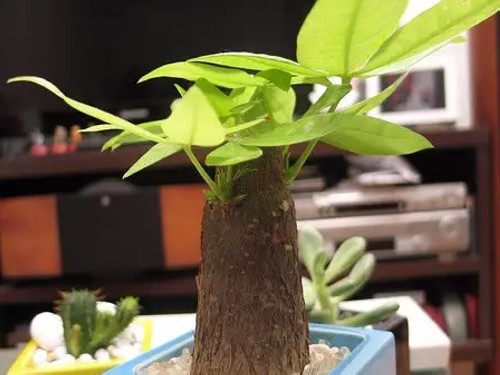
[Symptoms of root rot in money trees]
1. Leaves turning yellow and dropping
The leaves of the money tree suddenly turn yellow and begin to drop in large numbers. What is the reason? Most likely the money tree has developed root rot. When the money tree suffers from root rot, the normal transport of nutrients and water is blocked, which causes the leaves to turn yellow and even drop.
2. Bark peeling off
The saying “people need face, trees need bark” may sound crude, but it is a “truth” of the plant world.
After the money tree develops root rot, it also shows on the bark. Where the trunk is close to the roots, a sticky secretion appears, along with mold-like white fuzz; it feels soft to a light touch, and the nearby bark will peel off.
[Causes of root rot in money trees]
1. Waterlogging in the pot
Root rot in money trees is generally caused by waterlogged potting soil. When there is too much water in the pot, the roots stay in an overly wet environment for a long time, their respiration is blocked, and the roots become soft and rot.
There are two main causes of waterlogging in the pot. First, overwatering; second, poor ventilation, being too damp and stuffy.
2. Pests and diseases
When the money tree is attacked by pests and diseases, root rot can also occur. Because the water quality is poor and the potting soil is wet, pests and diseases are very likely to breed, gnaw at the roots and cause rot.
Common pests and diseases that occur on money trees include: powdery mildew, root rot disease, and root-knot nematodes parasitic in the soil.
[Solutions for root rot in money trees]
1. Root treatment
When the leaves turn yellow and the bark becomes soft, prune the roots promptly. Cut off the yellowed leaves, keeping only the bud eyes. Take out the woody stem; do not deal with the root system first, but clean the soil off the bottom. Use scissors to prune the root system and cut off the rotten parts. If the rot is severe, cut off all the tangled roots directly. If the stem also begins to rot, remove the rotten parts until it breaks into separate pieces. Put the treated roots and stems into a methyl thiophanate or potassium permanganate solution and soak for 24 hours; or spray the wounds with procymidone. Then dry them in a cool, ventilated place and replant.
2. Medication
When root rot disease appears and other Pythium fungi are active, spray with propamocarb, hymexazol, metalaxyl, or ethylicin; the effect generally lasts about two weeks. In addition, for pests on money trees, non-fumigant nematicides such as fenamiphos, thionazin, isazofos, and phorate can be used for pest control.
What should you do if a money tree has root rot?
Root rot in money trees is generally caused by waterlogged potting soil. When you find root rot in a money tree, just remove the rotten roots and repot it with fresh soil. In everyday care of money trees, pay attention to preventing waterlogging. Specifically, after discovering root rot in a money tree, you can take the following steps:
1. Ventilate promptly and keep the environment dry.
2. Disinfect the growing medium and the flower pot.
3. Remove the rotten parts of the money tree's roots, spray the wounds with procymidone, and plant after drying.
4. At the early stage of root rot in a money tree, disinfect the soil promptly and use some bactericidal drugs as auxiliary treatment, such as tebuconazole wettable powder.
5. If Pythium fungi are active, spray with propamocarb, hymexazol, ethylicin, etc. to eliminate the bacteria.
[How to prevent root rot from occurring]
1. Soil medium
To grow a healthy money tree, you need to provide it with an excellent soil medium that must have good air permeability.
You can prepare a growing medium with good aeration and drainage by mixing pond mud, river sand, and decomposed sawdust in a 5:3:2 ratio; or mix mountain soil and river sand in a 7:3 ratio.
You can also go to a flower market to buy special horticultural nutrient soil, as well as anti-rot and anti-decay root granules.
2. Water according to the soil
Watering is an important part of care and management, and when caring for a money tree you must strictly control the amount of water.
When you find the soil has turned white, water it, and water thoroughly when you do. Money trees do not need watering every day; at room temperature, water once every five or six days, and better dry than wet. Also pay attention to the hygiene of the flower pot; if the small hole at the bottom of the pot is blocked, clear it promptly.
When growing a money tree, there are requirements for the environment, potting soil, watering, fertilizing, and so on. Below, we will specifically explain the money tree care methods for these aspects:
1. Choosing the environment
The money tree is highly adaptable, likes light and tolerates shade, and can grow well in both light and shaded places. However, if the money tree grows in a dark place for a long time, its growth will weaken, and strong summer light will cause the leaf tips and leaf margins to scorch. Therefore, when growing a money tree, be sure to place it in a ventilated, bright place and avoid direct strong light.
2. Choosing the potting soil
The growing soil for a potted money tree is generally loose garden soil or leaf mold, with a small amount of compound fertilizer added. A newly purchased potted plant generally does not need repotting at first.
3. Watering the money tree
As mentioned earlier, overwatering a money tree easily leads to root rot. Therefore, during the care of a money tree, watering should be moderate: better to water less than too much. Of course, in summer you can water a little more, but be careful not to cause waterlogging.
4. Fertilizing the money tree
The money tree does not have high fertilizer requirements and generally does not need fertilizing. If you do fertilize, be sure to apply light fertilizer and never strong fertilizer. For fertilizer, you can choose some common foliage fertilizers.
5. Preventing and controlling pests and diseases
During the growth of the money tree, pests and diseases such as stem rot, anthracnose, cabbage caterpillars, inchworms, and red spider mites may appear. Pesticides can be applied according to the specific disease or pest.