Detailed Explanation of High-Yield Blueberry Cultivation and Management Techniques, Worth Saving
Do you remember a few years ago when the price of blueberries was “sky-high”, often nearly 100 yuan per jin? But now blueberries at 30 to 40 yuan per jin are quite affordable, all thanks to large-scale domestic cultivation. So today, the editor of Tuliu.com will give a detailed introduction to high-yield blueberry cultivation and management techniques, so that the majority of growers can achieve higher blueberry yields.
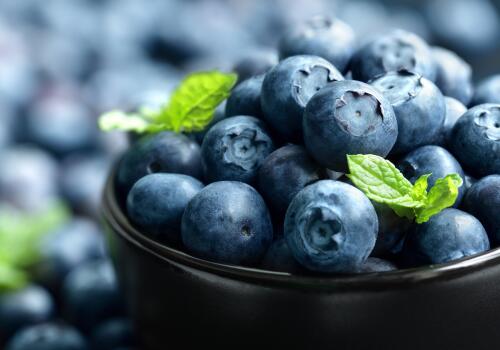
I. Basic Information About Blueberries
1. Origin and Alternative Names of Blueberries
The blueberry is a perennial shrub small berry fruit tree with blue fruit, and the origin of the translated name "blueberry" is precisely due to the blue color of the fruit. In fact, it also has other alternative names, such as dusi, dushi, dushi, dushi, dianguo, dusi yueju, and so on. Blueberries are basically distributed throughout the world, such as in North America, Europe, China, Mongolia, Russia, Japan and other regions and countries, among which blueberries produced in North America are famous worldwide for their beautiful color, delicate flesh, and sweet-and-sour taste.
2. Morphology of Blueberries
The blueberry fruit is a small berry wrapped in a layer of white bloom, with an edible rate reaching 100 percent, and besides being sweet-and-sour and tasty, it also has a refreshing aroma. Blueberries generally sprout in spring and can enter full bloom after three to four weeks; the leaves remain on the plant for two to three years, and the most common leaf shape is ovate, with most blueberry leaves also having down on the underside; blueberry roots are fine and have no root hairs, but the mycorrhizal fungi in the fine roots can benefit blueberry growth; the height of blueberry trees varies considerably, with highbush generally being 1-3 m, half-highbush 50-100 cm, and lowbush 30-50 cm.
3. Value of Blueberries
Blueberry fruit is a fruit with relatively high medicinal, edible, and nutritional health functions, among which the extremely high content of anthocyanins is an effective anti-aging component, and eating blueberries regularly also has obvious effects in preventing cancer, enhancing immunity, protecting eyesight, and so on.
II. High-Yield Blueberry Cultivation and Management Techniques
The current price of blueberries is much more affordable than before, but compared with fruits such as bananas and apples, it is still quite a bit more expensive. Besides its own value, the difficulty of cultivation and management is also one of the factors behind the high price, so let us learn below how to cultivate and manage blueberries if you want to obtain high yields.
(1) Choose Suitable Blueberry Varieties for Suitable Regions
Blueberries cannot be casually planted just anywhere, and choosing suitable varieties for cultivation is also an important condition for high yield.
1. The Northeast region should choose half-highbush blueberry group varieties and lowbush blueberry group varieties with strong cold resistance, such as Meiden and Fendi bred in Canada and Beilan and Beicun from the United States, and other varieties;
2. The North China region should choose highbush blueberry group varieties, such as the American mid-season variety Sharpblue and the early-season variety O'Neal, and so on;
3. South of the Yangtze River basin, southern highbush blueberry group varieties and rabbiteye blueberry group varieties can be chosen, such as the large-fruited early-season varieties Misty, Gardenblue, Powderblue, and other excellent varieties bred in the United States;
4. The South China region should choose rabbiteye blueberry group varieties, such as the late-season variety Baldwin, and the aforementioned Gardenblue and Powderblue are all very good choices.
(2) Choose Excellent Blueberry Seedlings
1. Generally, if you want to obtain results relatively quickly, you can choose 2-3 year old seedlings. Among the young seedlings, there must not be plants with weak growth, sparse roots, or diseases; you should choose robust seedlings.
2. If you are raising seedlings yourself, you can choose to use greenhouse seedling cultivation. During seedling cultivation, water moderately every day, observe disease and pest conditions, prevent them in time, and after the root system has filled the nutrition pot, they can be transplanted into the field.
(3) Construction of the Blueberry Orchard
1. The soil of a blueberry plantation should be loose and fertile, with good aeration, moist but not waterlogged, rich in organic matter, and slightly acidic. Before planting blueberry seedlings, deep plowing and land preparation must also be carried out in advance. If the soil conditions of the planting site do not meet the standard, improvement is also needed one year in advance, so that the blueberry seedlings planted can grow better.
2. Blueberry field planting can be carried out in spring and autumn. When planting, the planting density must be fully considered, and after field planting, the blueberries should be watered promptly with settling water.
(4) Maintenance and Management of Blueberries
1. The root system of blueberries is relatively shallow, so appropriate irrigation is very necessary. Generally, water with a pH value of about 5 should be used for irrigation, once every 3-5 days. Of course, when there is a lot of rain, irrigation is not needed, and excess water should also be drained away.
2. Clean cultivation and weed control are indispensable in the management process. Generally, the depth of clean cultivation should not be too deep; keeping it at 5-10 cm is about right. If the cost of manual weeding is too high, low-phytotoxicity and low-pollution chemical agents can be chosen.
3. Blueberry fertilization is generally carried out at early spring sprouting and before berry ripening, mainly using nitrogen-phosphorus-potassium compound fertilizer, ammonium sulfate, and so on. When fertilizing, the application amount should be determined according to the soil and growth conditions; excessive fertilizer can easily cause the death of blueberry seedlings.
4. After the second year following field planting, weak branches and diseased branches should be pruned off. For adult blueberry seedlings, tree height should be well controlled, excess branches and leaves should be cut off, and large branches and medium branches and leaves should be retained. For Hualiangda, part can be pruned during trial feeding, ensuring that each strong branch has 2-4 flower buds; if a blueberry tree has been planted for more than twenty years, all branches close to the ground can be cut off, and new branches and leaves can be allowed to sprout again from the base.
5. Generally, lowbush blueberries have a relatively uniform ripening period, and can be harvested all at once after ripening; the ripening and harvesting period of highbush blueberries can last 20-30 days, so timely picking every week is necessary to avoid birds and insects eating the blueberry fruit.
That is all for the introduction to blueberry cultivation and management techniques. I wonder if you have any insights after reading it! In addition, it should be noted that although blueberries are a newly introduced variety in China, attention should still be paid to preventing and controlling fungal diseases, bacterial diseases, nematodes, and other pests and diseases, so that high blueberry yields are more guaranteed!