-

How to Save Seeds from Angelica sinensis? Detailed Key Points of Seed-Saving Technique
Select disease-free plants or a field plot; do not dig them up in the autumn of that year. After seedlings emerge the following year, carry out normal field management. 30~40 days after bolting, that is around mid-August, when the seeds turn from red to pinkish-white, harvest the seeds. Because the seeds do not ripen uniformly, they can be harvested in batches. When harvesting, collect the seeds together with the fruit stalks, tie them into small bundles, dry them in a cool place and thresh them, then store them in a ventilated, dry place. Avoid heat and moisture.
-
Imitative wild cultivation technology for Gastrodia elata: efficient and material-saving
Terminology explained: ① From wild Gastrodia elata dug up over many years, it is not hard to find that the populations with large tubers, dense growth and high yield share a common set of features, summarized as: thick leaf-litter layer with tubers breaking through the ground (exposed above the surface), loose soil so air is not blocked, seven parts shade with little sunlight, and moisture suited to each of the four seasons. The inspiration for artificial imitative wild planting of Gastrodia is shallow beds, thin soil and thick mulch. ② High efficiency: imitative wild Gastrodia intercropped in the same bed with sweet potato gave a test result in which the total yield of Gastrodia was twice that of sweet potato, hence
-
Key Techniques and Detailed Methods for Seed Saving of Angelica sinensis
For raising seedlings and transplanting, seeds of medium maturity produced from flowering in the third year should be used. A single plant, besides the main bud, has many lateral buds. Both the main bud and the lateral buds can bolt, flower and set seed. Flowering branches that bear seeds can also grow from the axils of the main stem. Because the growth periods of the various flowering branches differ, flowering times and seed maturation occur in succession. Therefore, when collecting seeds, one must frequently observe in the field. Looking down from the top of the flowering stem, when the first umbel appears pink, the second umbel appears light red, and the third umbel appears pale yellow, it is time to harvest (generally in early to mid-August). Seeds that are over-mature, after seedling raising
-
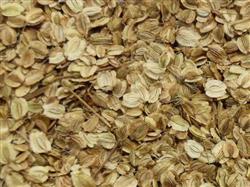
Seed-saving methods and key technical points for growing Angelica dahurica
How do you save seeds when growing Angelica dahurica? Please explain the method. Angelica dahurica is propagated by seed. Establish a high-quality seed breeding field at the Angelica dahurica production base, carry out good-variety breeding and germplasm preservation well, and ensure seed quality. When harvesting Angelica dahurica, select roots that are uniform in thickness, moderate in size, vigorous, and free of pests and diseases, and transplant them into the seed field. The seeds...
条件筛选