-
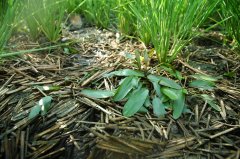
When is the flowering season of Taiwan water-fern? Reproduction methods and whether it has a dormant period
The genus name of Taiwan water-fern (family Aponogetonaceae), in Latin, refers to the plant's growing environment being swampy wetlands. Because its tubers are rich in starch, in the early era of material scarcity, farmers would remove the outer skin of the tubers, cook them with sugar as a snack, hence it is also known as "
-
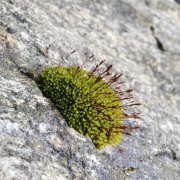
Does wall moss have leaves? A detailed explanation of its living environment, reproduction method and conducting tissue
Wall moss is a bryophyte, belonging to the family Pottiaceae among bryophytes, and is a clump-forming plant, mainly growing on soil under forests or on rocks at an altitude of about 1200 m. This moss is also very widely distributed; in China its main distribution areas are Xinjiang, the northern and southern
-
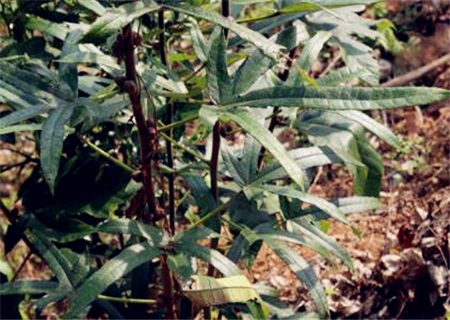
Price per jin of Wuzhimaotao and its planting prospects, production areas and planting methods
Wuzhimaotao (hairy fig, Ficus hirta) belongs to the Moraceae family and is not a peach. It is widely distributed in the mountains mainly in the Hakka areas of Meizhou, eastern Guangdong. It is named for its leaves that look like five fingers, its leaf blades that bear fine hairs, and its fruit that resembles a hairy peach when ripe. So how much does Wuzhimaotao cost per jin? ? What are its planting prospects? How is it planted? How much does Wuzhimaotao cost per jin
-

How to Stimulate Milk Production in Ewes: Practical Methods for Getting Ewes to Produce Milk
How to Stimulate Milk Production in Ewes
-

How to make a Murraya paniculata bonsai? Detailed explanation of the production method
Murraya paniculata is a shrub or small tree of the genus Murraya in the family Rutaceae. It blooms in autumn, with large but few white flowers that are extremely fragrant. The fruit is fleshy and red. Murraya paniculata likes a warm and humid climate and sunlight, and is also relatively tolerant of shade and drought, with strong sprouting ability; it tolerates pruning, and in fertile, loose, well-drained neutral or calcareous soil
-

How to make a Podocarpus bonsai? Detailed explanation of production methods and techniques
Podocarpus (Podocarpus macrophyllus) is evergreen all year round, relatively shade-tolerant, and prefers well-drained yet moist sandy soil. Its posture is graceful and dancing, deep green and richly fragrant; the seeds resemble a monk's head, and the seed receptacle looks like a monk's robe, so the whole form is like an arhat, hence the name. Varieties include: small-leaf Podocarpus, short-leaf Podocarpus, narrow-leaf Podocarpus, etc. These dwarf small-leaf Podocarpus are most suitable for making bonsai
-

Fresh oranges grown using the Japanese egg production method show no variation
Fresh oranges grown using the Japanese egg production method show no variation
-

Weekly Production Planning and Turnover Scheduling Methods for Large-Scale Pig Farms
Weekly production planning and turnover scheduling for large-scale pig farms
-

Production Method and Management Technique Highlights for Sanghuang (Phellinus linteus) Cultivation Substrate
Production and Management Techniques for Sanghuang Cultivation Substrate
-
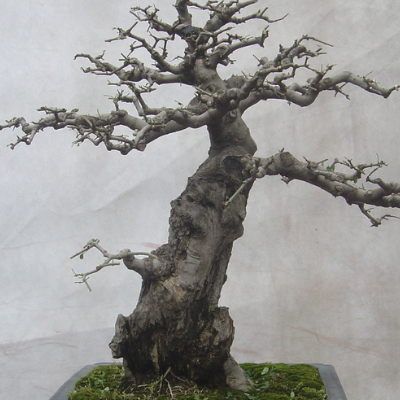
Production Methods and Price Introduction of Chinese Ash Bonsai
Chinese ash bonsai is extremely expensive and made from a rare tree species. What are the production methods of Chinese ash bonsai? What is the price of Chinese ash bonsai: Chinese ash bonsai production: (1) It is necessary to judge whether the selected Chinese ash stump can survive after transplanting.
条件筛选