-
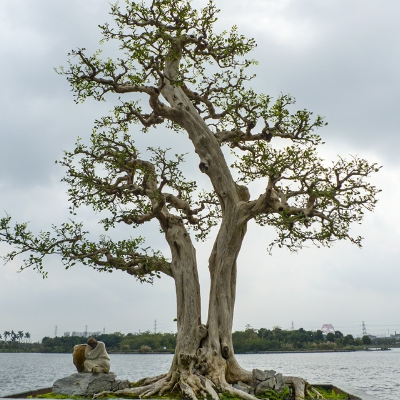
Lingnan bonsai: production methods and price introduction
Lingnan bonsai, this is a bonsai association, that is, one specializing in this area of bonsai, and many people like it
-

Detailed Explanation of the Processing and Production Method for Salted Sour Carambola (Starfruit) Brine Preserves
Carambola (starfruit) falls into two major types: one is crisp, clean and sweet, suitable for eating fresh or for processing into carambola juice, carambola in syrup canned goods, and the like. Whether eaten fresh or processed, its quality and flavor are quite good. The other type is extremely sour and astringent, mostly grown in mountainous areas without any special cultivation by people. Because of its strong sourness, this kind of sour carambola is not suitable for eating fresh, but it can serve as a raw material for sugar-preserved products. To store the raw material, it can first be made into a semi-finished salted brine preserve. There are two methods for making the salted brine preserve. One is the brine curing method: prepare a 5-8% salt solution to
-
How to Make Flaked Mashed Potatoes? A Detailed Guide to the Production Method
1. Production process: Potatoes → washing → peeling → slicing → precooking → cooling → steaming → grinding → drying → crushing → packaging → finished product. 2. Key production points (1) Raw material selection: Remove sprouted and greened potatoes as well as rotten and diseased tubers. If there is sprouting or greening, the sprouted or greened parts must be cut off, or the entire potato must be discarded before use, to ensure that the solanine glycoside content of the potato product does not exceed 0.02%; otherwise it will endanger personal safety. (2) Washing: Pour the potatoes into a water tank and stir
-
Detailed Explanation of the Processing Technology and Production Method of Chestnut Fruit Tea
(I) Overview The chestnut is a famous and high-quality dried fruit in China, rich in nutrients. The chestnut kernel has a high content of amylopectin, with a fine, powdery texture. Eaten raw or cooked, it is sweet, glutinous, fragrant and crisp, with an excellent flavor, and is deeply loved by people. The chestnut also has considerable medicinal and health-promoting effects. According to the ancient text "Dian Nan Ben Cao" (Materia Medica of Yunnan), the chestnut is sweet and warm in nature and flavor, and has the effects of benefiting qi, strengthening the stomach and intestines, tonifying the kidney, strengthening the tendons, and invigorating blood circulation. (II) Raw Materials and Formula Chestnut: 15%; carrot: 3%; granulated sugar: 4%; milk powder: 2.5%; ethyl maltol:
-
Detailed Explanation of the Production Techniques and Methods for Candied Straw Mushrooms
1. Material selection and processing. Choose straw mushrooms with plump fruiting bodies, unopened caps, and no mechanical damage. Immediately after harvest, place them in a 0.03% sodium metabisulfite solution and treat for 6-8 h (hours), then rinse clean with clear water. 2. Blanching and hardening. Put the treated straw mushrooms into boiling water and blanch for 2-3 min (minutes) to destroy enzyme activity. After blanching, immediately remove them, place them in cold water to cool, then after cooling remove them and place them in a 0.5%-1% calcium chloride solution to soak for 10-12 h (hours
-
Detailed Explanation of the Production Methods of Shrimp Paste and Its Products
Shrimp paste is one of the traditional shrimp foods of China and the coastal regions of Southeast Asia. Its rich nutrition and unique flavor are deeply favored by diners at home and abroad. (1) Raw material shrimp for shrimp paste production The shrimp used for shrimp paste are several species among the planktonic crustaceans, of which the main varieties are: (1) Acetes chinensis; (2) Acetes japonicus; (3) mysid shrimp; (4) gammarid shrimp. The salt used for shrimp paste production must be water-washed edible salt that complies with national hygiene standards. (2) Shrimp paste production process The modern fermentation method is currently the most scientific production process.
-
Detailed explanation of the production process for canned braised fish: Methods for making seasoned aquatic canned products
The processing of canned braised fish mainly adopts the braising technique characteristic of Chinese cooking. The fish pieces may first be fried and then canned with seasoning liquid poured in; or dehydrated and then canned with seasoning liquid poured in; or directly packed raw and then filled with seasoning liquid; or the fish pieces may be braised and roasted together with the seasoning liquid, then canned and an appropriate amount of seasoning liquid poured in, etc. Depending on the cooking method, the product name also differs. Examples include crispy, braised, and oil-braised. The finished product generally has a relatively large amount of broth, a deep red color, and the flavor of braised fish. Common varieties include canned braised chub mackerel, canned braised common carp, canned braised mixed fish, crispy yellow croaker,
-
How to make spiced candied carambola? Detailed production method shared
This product is made by candying fresh carambola with spices and sugar. The processing technique is as follows: 1. Raw material handling: After washing the fresh carambola, remove the ridged edges and cut it lengthwise into single segments, then slice into long petal-shaped thin pieces. 2. Hardening treatment: Use alum or calcium bisulfite as a hardening agent, soak in 3% alum or 0.2% calcium bisulfite solution for 6-8 hours, remove, drain off the water, and prepare for spiced sugar candying. 3. Spiced sugar candying: For every 50 kg of fresh carambola slices, prepare a mixed powder made from equal amounts of clove, dried tangerine peel, and licorice ground together
-
Production Methods and Multifunctional Applications of Soybean Dietary Fiber
1. Physiological Functions of Multifunctional Soybean Dietary Fiber Soybean dietary fiber mainly refers to the general term for those macromolecular carbohydrates that cannot be digested by human digestive enzymes, mainly including cellulose, pectin, xylan and mannose, etc. Although dietary fiber cannot provide the human body with any nutrients, it has important physiological functions for the human body. Dietary fiber has significant effects in lowering blood pressure and plasma cholesterol, and regulating gastrointestinal function, blood sugar and insulin levels. Multifunctional Soybean Fiber (MSF) is mainly composed of dietary fiber and protein, with contents of 67.98% (dry basis) and 19.75% respectively, making it a good protein-fiber additive. Studies have shown that adding a small amount of MSF has a good strengthening effect on medium-gluten or low-gluten flour; within a certain addition range, it can not only increase the dietary fiber and protein content of products, but is also very beneficial for improving the quality of products such as bread, noodles and biscuits. MSF may be the best-functioning of all dietary fibers, far beyond what other synthetic fibers (such as litesse, polydextrose) can match. Multifunctional soybean dietary fiber is a high-quality dietary fiber obtained from fresh okara as raw material through special heat treatment, and it has good effects in regulating blood sugar, lowering blood lipids and promoting defecation.
-
Schisandra Hybrid Seed Production Method and Key Operating Points
First, select in the mountains trees with good tree shape, large fruit yield, large clusters, large berries, and abundant overall fruiting, uniform; harvest the seeds and sow them directly for seedling raising; when they enter the full fruiting stage, go into the orchard and select by the same standards. Sow directly in spring, select during the full fruiting stage, and from these select 2 trees with outstanding performance; label them respectively as the male parent and the female parent, keep them far from the production orchard, and arrange pollinator trees in a 2:1 ratio; when the fruit ripens, go into the orchard to observe whether the overall fruiting across the whole orchard is consistent, whether the cluster ratio is standard, and whether there is any phenomenon of large and small berries; the yield per plant should be more than 5 kg, meeting the above standards.
条件筛选