Price per jin of Wuzhimaotao and its planting prospects, production areas and planting methods
Wuzhimaotao (hairy fig, Ficus hirta) belongs to the Moraceae family and is not a peach. It is widely distributed in the mountains mainly in the Hakka areas of Meizhou, eastern Guangdong. It is named for its leaves that look like five fingers, its leaf blades that bear fine hairs, and its fruit that resembles a hairy peach when ripe. So how much does Wuzhimaotao cost per jin? ? What are its planting prospects? How is it planted?
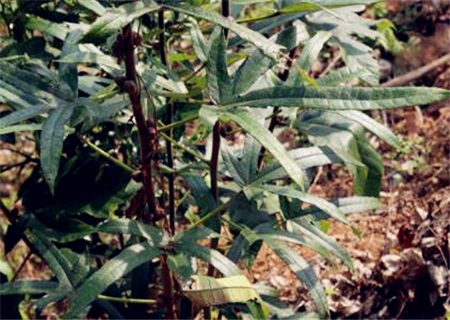
How much does Wuzhimaotao cost per jin? What are its planting prospects
In recent years, the value of Wuzhimaotao has gradually been discovered. Every year in rural areas there are many dealers buying up Wuzhimaotao. Based on general market prices, the fresh goods price of Wuzhimaotao in the past two years was around 10 yuan per jin. Of course, the valuable part of Wuzhimaotao is not its fruit, but its rhizome. The rhizome of Wuzhimaotao has very good medicinal value. According to research, Wuzhimaotao has the effects of strengthening the spleen and tonifying the lungs, promoting the flow of qi and draining dampness, and relaxing the sinews and activating the collaterals. In simple terms, it has health-preserving effects and is very valuable for the elderly.
The rhizome of Wuzhimaotao is generally used in rural areas as a seasoning, that is, used to make soup. Among the people, Wuzhimaotao can be used to stew old hens and to stew pig trotters, and it has a good tonic effect on the human body.
Wuzhimaotao planting method: mainly by sowing seeds and transplanting seedlings.
Cultivation and management
1. Selection of planting site: Choose ridge land, sloping land, dry land, marginal land, sandy loam land, or fields that drain easily, with deep, loose soil that is easy to irrigate. If the planting site is sloping land, it is best that the slope is no greater than 30 degrees. For flat land, after land preparation, build beds; for mountainous land, use horizontal strip land preparation. Before planting (best in the winter of the year before planting), carry out plowing to let it weather naturally. The plowing depth must be at least 25CM or more, then break up the soil and rake it level. According to the biological and ecological characteristics of Wuzhimaotao, combined with the soil conditions of the planting site and the degree of local intensive management, plant about 1000 plants per mu, with a spacing of 80CM×80CM, and open holes at 40CM×40CM. Apply 5 to 6 grams of compound fertilizer per hole. It is best to use decomposed farmyard manure as the base fertilizer, mix it evenly with the soil, and then plant.
2. Transplanting: Transplanting is best carried out in February to March, and can also be done in autumn. Usually choose cloudy and rainy weather or plant after the soil is thoroughly wet. Plant 1 plant per hole, set the seedling firmly, and fill and compact the soil. Immediately after transplanting, water with settling water, and afterward water according to weather conditions. Generally, within 1 week after transplanting, water once a day. The seedlings professionally cultivated by this farm are tray-grown seedlings. From the seedling stage, attention is paid to root development, with the aim of economic yield and increasing the survival rate. According to the cultivation situation at several bases, the survival rate can usually reach more than 95%.
3. Management after transplanting:
(1) Watering: After transplanting, seedlings should be protected from drought and the soil kept moist. If conditions permit, it is best to cover the bed surface with rice straw, Dicranopteris fern, or peanut stalks to reduce water evaporation and also reduce weed growth, thereby reducing the use of herbicides. (2) Replanting: Missing plants should be promptly filled in with seedlings of the same age.
(3) Cultivation and weeding: In the early stage after planting, Wuzhimaotao will have many weeds sprouting and growing, which not only consume soil moisture, affect warming, but also delay the growth cycle. When weeds grow 3 to 5 leaves, use 40 milliliters of 5% Xianchu emulsifiable concentrate per mu diluted in 30 liters of water and spray. If 2 milliliters of the synergist Texiaowang is added per 20 hao, the weed-killing efficiency can be increased by 40%. In addition, using Nongda or 6% Kecaoxing emulsifiable concentrate also gives very good results. After Wuzhimaotao grows taller, because its branches and leaves are dense, it will shade out the weeds, thereby naturally inhibiting weed growth.
(4) Fertilization: About 15 days after transplanting, during the greening stage, apply one application of light nitrogen fertilizer. Use 3 to 5 kilograms of urea per mu diluted 1000 times and apply. Apply again after 15 to 20 days, and N, P, and K fertilizers should be applied together. In order to produce high-quality Wuzhimaotao roots, you can also apply 25 kilograms of decomposed soybean bran per mu soaked in 6 to 7 times its amount of water.
(5) Topping: According to the plant's growth condition and needs, pick off the terminal buds to promote branch growth. 4. Management of young trees
(1) Trunk setting: Cut off sprouts below 30 centimeters on the main trunk, and select and retain 3 to 5 lateral buds or lateral branches growing in different directions as the main trunk branches forming a small tree canopy.
(2) Pruning: In late May or late July, cut off the sprouts that grow after the main trunk branches, and cut the retained lateral branches above the branching point short at a branch length of 20 centimeters. Combined with pruning, flowers and fruits may also be removed to reduce nutrient consumption.
(3) Soil fertilization: In mid-April, early July, and October each year, dig symmetrical holes along the outer edge of the tree canopy, with hole length 20 to 30 centimeters and hole depth 10 centimeters, and apply bio-organic fertilizer or three-element compound fertilizer. To save labor costs, a knapsack fertilizer applicator can also be used, which is more efficient and gives better fertilization results.
5. Management of mature trees
Basically the same as the management of young trees.
From the situation over six years of planting, because of its special physiological characteristics (roots, leaves, and fruits all have large amounts of hairs), Wuzhimaotao has not suffered from any diseases or insect pests. Therefore, a Wuzhimaotao orchard has a relatively safe ecological environment. This excellent environment can be used to develop a chicken-raising business. Chickens can help Wuzhimaotao remove weeds, while chicken manure promotes the growth of Wuzhimaotao, providing a guarantee for producing green food.
As a member of the Moraceae family, Wuzhimaotao has a leaf protein content reaching 13%, with comprehensive nutrition. Wuzhimaotao fruits easily. After the fruit ripens, it tastes sweet and is rich in nutrients. It can be used to make wine or, after being crushed and fermented with Wuzhimaotao leaves, used as animal feed.
Main production areas
Wuzhimaotao is distributed in Fujian, Guangdong, Hainan, Guangxi, Guizhou, Yunnan and other places, and among them Heyuan in Guangdong has the largest artificially planted area.