When is the flowering season of Taiwan water-fern? Reproduction methods and whether it has a dormant period
The genus name of Taiwan water-fern (family Aponogetonaceae), in Latin, refers to the plant's growing environment being swampy wetlands. Because its tubers are rich in starch, in the early era of material scarcity, farmers would remove the outer skin of the tubers, cook them with sugar as a snack, hence it is also known as "water taro seedling".
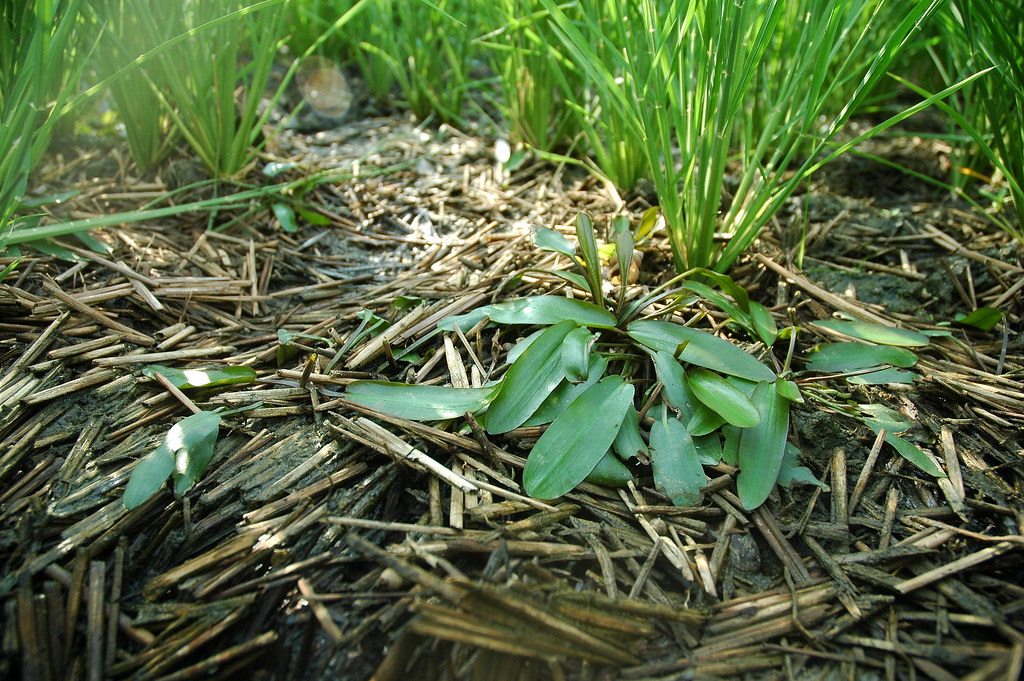
Taiwan water-fern is a perennial herbaceous plant with tubers. Leaves entire; several basal leaves, long elliptic, about 5 to 10 cm long, about 2 cm wide, apex rounded-obtuse, base cordate; with 2 lateral veins and several transverse veinlets on each side of the midrib; leaves with long petioles, about 5 to 20 cm. As for the morphological characteristics of its flowers and fruits, the flowering season is between May and October.
In terms of life history, when the rice paddies are flooded in spring each year from April to May, new leaves of Taiwan water-fern grow from the tubers, and after the leaves mature they float on the water surface; after about November in autumn the leaves gradually wither, leaving only the tubers buried in the soil, and when the next year's growing season begins new leaves grow again. Therefore in winter, Taiwan water-fern enters a dormant period, during which its traces cannot be observed or found.
Every year from April to May, Taiwan water-fern in the rice paddies grows several long elliptic floating leaves from the tubers, floating on the water surface.
Taiwan water-fern still has no record of setting seed to date, and it is unknown whether it can use sexual reproduction (seeds) to produce offspring; currently it has been observed to reproduce asexually by means of tubers or stolons. Its mechanism of reproduction using tubers is closely related to rice paddy cultivation methods: after the rice harvest, when the farming machine tills the soil, it cuts the tubers buried in the soil into several small pieces, and these cut tubers are scattered in the field, and when the next year's growing season begins they grow again, forming countless small plantlets. The tubers of Taiwan water-fern have drought-tolerant characteristics, able to endure the long dry soil environment during the dry period after the rice harvest, and can grow again once the soil becomes moist; this characteristic also allows it to adapt to the disturbed environment caused by farming.