-
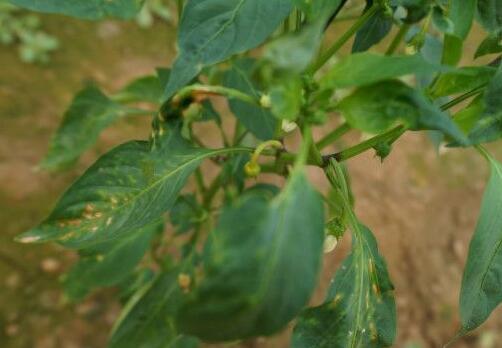
Identification of plant physiological diseases: diagnosis of diseases caused by abiotic pathogens
Identification of plant abiotic pathogens and the diseases they cause (physiological diseases)? During the process of plant growth and development, unsuitable physical factors, chemical factors, air pollution, pesticide toxicity, as well as the plant's own physiological defects or hereditary diseases in the environment can all cause plants to develop diseases caused by abiotic pathogens
-

Key Technical Points for the Control of Major Insect Pests and Physiological Diseases of Chinese Bayberry
The Chinese bayberry tree is a fruit tree native to China, and its fruit has a unique flavor and is rich in nutrients, making it highly favored by consumers. However, there are many aspects to pay attention to when growing Chinese bayberry, so what are the major insect pests and physiological diseases of Chinese bayberry? What are the key technical points for their control? What are the major insect pests and physiological diseases of Chinese bayberry?
-

Causes of the second physiological fruit drop in citrus and how to prevent and control it
What to do about the second physiological fruit drop in citrus
-
Common Physiological Diseases in Carnation Cultivation and Their Prevention Methods
The main physiological diseases in carnation cultivation include split calyx, bent flower heads and albino leaves. The first two in particular can significantly reduce cut flower quality. (1) Split calyx. Large-flowered varieties are more prone to split calyx than medium-flowered varieties, sometimes with more than 50% of flowers affected
-
Symptoms and Control Methods of Physiological Diseases in Money Tree
Diseases caused by improper management in money tree are called physiological diseases, mainly including cold injury and weak, spindly growth. Cold injury: the minimum overwintering temperature for money tree is 8°C; below 8°C, cold injury easily occurs. After being frozen, money tree tends to drop leaves, and in severe cases the whole plant dies. Branches grow weak and spindly
-
How can physiological diseases be avoided when growing Anthurium indoors?
Wild Anthurium usually grows as an epiphyte on trees or attached to rocks or the ground. Its roots absorb nutrients not only from tree bark and stones but also moisture from the humid air, so Anthurium prefers a warm environment with high air humidity and good drainage. For potted Anthurium, choose a well-draining substrate.
-
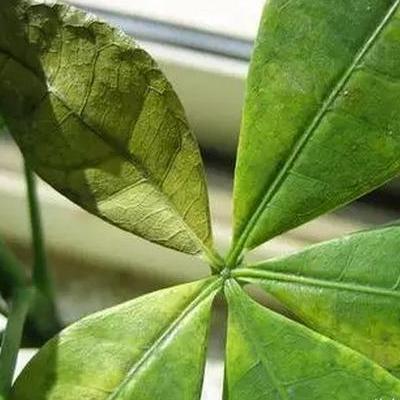
What Are the Symptoms of Physiological Diseases in Flowers and Plants and How to Treat Them
Flowers and plants are something many people love to grow, but when they get sick, it is a real headache. What are the symptoms of physiological diseases in flowers and plants? What to do about physiological diseases in flowers and plants: What are the symptoms of physiological diseases in flowers and plants: The first is leaf discoloration. The leaf color becomes lighter, or turns yellow or white
-
Rice physiological red blight can be controlled with raw gypsum powder
Rice physiological red blight often occurs in cold-waterlogged mountain valley fields and in paddy fields where organic green manure has not fully decomposed. This disease mostly occurs at the tillering stage of rice, showing as very little tillering, leaves turning yellow-brown, and tea-brown irregular spots on the first and second leaves from the base; some mistake it for leaf blast. When the rice hills are pulled up, the root system is yellow-brown, and in severe cases black; the seedlings do not grow, commonly called "fa qiu". There are three main causes of physiological red blight: first, toxic substances such as hydrogen sulfide produced during the decomposition of green manure; second, some cold-waterlogged
-
Physiological leaf roll in potatoes
[Disease diagnosis] The symptoms of physiological leaf roll and viral leaf roll share certain similarities. The main manifestation is the upward curling of the leaflets. Usually the lower leaves of the plant, or all the leaves of the whole plant, become brittle and curl upward into a tube shape. In some cases only the leaf margins curl slightly upward; in others the curling is severe, forming a spoon shape or tube shape. In severe cases, the leaves become thicker, brittle and hard, and darker and more intense in color, giving a feeling of a messy, clustered clump. The characteristic of physiological leaf roll is that the leaf rolling shown by affected plants is relatively uniform. [Cause] There are several causes of physiological leaf roll: for example, excessive one-sided application of nitrogen fertilizer,
-
What Types of Physiological Deformities Occur in Mushrooms? A Full Analysis of Common Types
Mushroom deformities are mostly triggered by temperature differences or unfavorable environmental conditions; they may also be related to the strain used. The common deformed mushrooms mainly include the following types: 1. Hollow stipe. From the outside the mushroom looks normal, but when the base is cut off, part of the stipe is found to be hollow, usually with a ring-shaped cavity around a hard core. Afterwards, the cut surface of the stipe may split and curl backward, making the mushroom poor in appearance and reducing its marketability. Cause: This is mainly caused by low air humidity during the fruiting period, rapid evaporation of water from the mushroom body, and overly dry casing soil,
条件筛选