Identification of plant physiological diseases: diagnosis of diseases caused by abiotic pathogens
Identification of plant abiotic pathogens and the diseases they cause (physiological diseases)? During the process of plant growth and development, unsuitable physical factors, chemical factors, air pollution, pesticide toxicity, as well as the plant's own physiological defects or hereditary diseases in the environment can all cause plants to develop diseases caused by abiotic pathogens. This type of disease has no infection process and cannot be transmitted to one another, so it is called non-infectious disease or physiological disease.
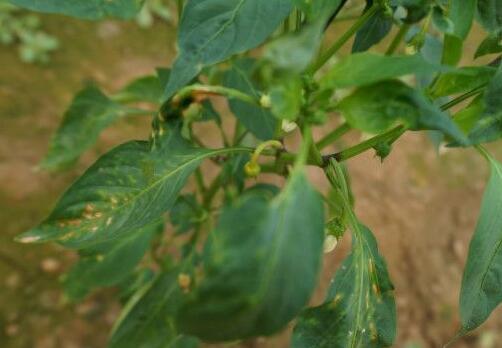
I. Nutritional disorders
Nutritional disorders include nutrient deficiency, imbalance in the proportions among various nutrients, or excessive nutrients; these factors can induce plants to show various disease symptoms. There are many reasons for plant nutrient deficiency: first, a lack of nutrient elements in the soil; second, improper proportions of nutrient elements in the soil, where antagonistic effects among elements affect plant absorption; third, unsuitable soil physical properties, such as excessively low temperature, too little water, or pH that is too high or too low, all of which affect the plant's absorption of nutrient elements. In plots where chemical fertilizers and pesticides are heavily applied, and under conditions such as frequent continuous cropping in protected cultivation, the imbalance between major elements and trace elements in the soil becomes increasingly prominent, and crops growing in such a soil environment often show symptoms of nutritional disorders. Excessive levels of certain nutrient elements in the soil are also unfavorable to plant growth and development, and can even cause serious harm.
II. Environmental pollution
Environmental pollution mainly refers to pollution of air, water sources, soil, and acid rain, among others; these pollutants cause varying degrees of harm to different plants and produce different symptoms.
III. Phytotoxicity
When chemical pesticides are applied to plants, if the type selected is inappropriate, the application method is unreasonable, the application timing is unsuitable, or the application concentration is too high, all of these can cause harm to plants.
Control methods:
1. Spray water to wash off the pesticide: if phytotoxicity is caused by spraying pesticide solution on leaves and plants, and it is discovered early, before the pesticide solution has fully penetrated or been absorbed into the plant body, the affected plants can be quickly sprayed with a large amount of clean water, repeatedly sprayed 3-4 times, to wash off the pesticide on the plant surface as much as possible. It is also possible to add 0.2% alkaline powder or 0.5% lime water to the sprayed clean water. Since most pesticides are currently acidic and decompose and lose effectiveness when encountering alkaline substances, this can accelerate the decomposition of the pesticide.
2. Drainage and irrigation to reduce pesticide residues: for phytotoxicity caused by some poisonous soils and some herbicides, appropriate irrigation and drainage or flushing irrigation to wash off the pesticide and reduce toxicity can reduce the degree of phytotoxicity.
3. Use Zhuangyuanjia at a content of 0.5%, generally diluted 500 times, add 2 liang of white sugar plus 2 liang of edible vinegar, mix with 30 jin of water, and spray on the leaves; for crops it produces the effects of: immunity, rejuvenation, disease resistance, yield increase, phytotoxicity relief, and frost damage prevention.
IV. Fertilizer damage
Untimely application of chemical fertilizers or improper application methods often lead to fertilizer damage. Dehydration-type fertilizer damage is caused by applying too much chemical fertilizer at one time, or after fertilization, insufficient soil moisture leads to an excessively high concentration of the fertilizer solution, causing reverse osmosis of water within crop cells and resulting in dehydration of the crop, mostly manifested as wilting, resembling frost or scalding by boiling water; in mild cases it affects growth and development, and in severe cases the whole plant dies. Burn-type fertilizer damage is the harm to crops caused by applying fertilizers such as ammonia water and ammonium bicarbonate at relatively high temperatures, producing large amounts of ammonia gas; in mild cases the leaf tips of the lower part of the plant turn yellow, affecting growth and development, and in severe cases the whole plant withers and dies. Seed-burning fertilizer damage is seed burning that occurs from applying too much seed fertilizer, or from mixing seeds with fertilizers such as calcium superphosphate, easily volatile ammonium bicarbonate, urea, and lime nitrogen, which can lead to missing seedlings. In addition, when performing foliar fertilization, using too high a concentration can also cause leaf burn.
Solutions:
1. Watering to reduce damage: in the early stage of fertilizer damage, immediately apply 2 buckets of Peigen by flushing with water, to promote the downward leaching of salts, fertilizers, and the like remaining in the soil plow layer, reduce their concentration in the soil gaps, and lower their continued impact on the plant root system.
2. Root drenching treatment: use biological bacterial agent Peigen 4 bottles plus Lvjian 1 bottle, 2--3 liang per plant, to stimulate root growth, quickly restore the plant's growth vigor, and alleviate root burning and seedling burning; in addition, the amino acids contained in it can be quickly absorbed and utilized by the roots, alleviating the nutrient deficiency of the plant root system caused by root burning and strengthening the plant's growth vigor.
V. Water supply disorders
When plants are subjected to long-term insufficient water supply, vegetative growth is inhibited, the volume of various organs decreases, mass decreases, and quality deteriorates, resulting in plants that are short and weak. When water shortage is severe, it can cause symptoms such as plant wilting and scorched leaf margins, leading to leaf drop, flower drop, and fruit drop, and even the entire plant withering and dying.
Excessive soil moisture affects the rise of soil temperature and soil aeration, weakening plant root activity and even causing toxicity, leading to root rot, slow plant growth, yellowing and drooping of lower leaves, flower drop, and fruit drop, and in severe cases causing the plant to wither and die. When water supply is uneven or changes drastically, it can cause cracking of root vegetables, cabbage, and tomato fruits, or cause cucumbers to form deformed fruits and tomatoes to develop blossom-end rot, among other issues.
VI. Temperature too high or too low
High temperatures can rapidly weaken photosynthesis, enhance respiration, reduce carbohydrate accumulation, and slow growth, sometimes causing plants to become dwarfed and mature early. When the temperature is too high, it often causes scorching of plant tissues such as stems, leaves, and fruits. In protected cultivation, if ventilation and heat dissipation are not timely, high-temperature damage is also often caused. High temperature and drought often cause peppers to drop a large number of leaves, flowers, and fruits.
Low temperatures are also very harmful to plants. Diseases caused by low temperatures above 0°C are called chilling injury. Some warmth-loving plants, as well as tropical, subtropical, and protected-cultivation plants, are susceptible to chilling injury; when the temperature is below 10°C, common chilling injury symptoms such as discoloration, necrosis, and surface spots appear, and on woody plants, bud blight and top blight appear. If plants encounter prolonged low temperatures during the flowering period, fruiting can also be affected. Plant diseases caused by low temperatures below 0°C are called freezing injury, mainly manifested as water-soaked dark brown lesions on young stems or young leaves, after which the tissues gradually die; in severe cases the entire plant turns black, dries up, and dies. Too-low soil temperature often leads to poor root growth of seedlings, causing seedlings of crops such as cucurbits to suffer “root drowning (using Peigen 300 times + Lvjian 300 times for root drenching has a good effect)”, making them vulnerable to infection by rhizosphere pathogens.
The impact of drastic temperature changes on plants is often greater than the impact of simple high temperature or low temperature. For example, if the temperature difference between day and night is too large, it can cause scorching or frost cracking of the branches and trunks of woody plants; this symptom is commonly seen on the sunny side of tree trunks.
VII. Unsuitable light
Insufficient light usually leads to spindly growth in plants, affects chlorophyll formation and photosynthesis, causes plant yellowing, makes plant tissues fragile, and makes them prone to lodging and infection by pathogens.
The Zhongtian brand new energy-saving plant growth lamp emits light of special wavelengths and is composed of four colors of light: red, yellow, blue, and green. These lights are exactly suitable for absorption by plants during photosynthesis. This plant growth lamp adopts mature energy-saving lamp technology, and a large number of test results prove that, under the condition of ensuring temperature in the greenhouse, it can promote plant photosynthesis and achieve the goal of increasing yield and income, so the energy-saving plant growth lamp is an indispensable supplemental lighting device in off-season cultivation.
Excessively strong light often combines with high temperature and drought, causing sunscald and leaf scorch.
Unsuitable light duration can also delay or advance the flowering and fruiting of long-day plants or short-day plants, and can even cause plants to fail to flower and fruit, causing serious losses to production.
Non-infectious diseases often cause plants to grow weakly and reduce disease resistance, and are also causes that induce infectious diseases. Infectious diseases occur because plants suffer infection by pathogens, thereby reducing the plant's stress resistance; when the environment changes drastically, non-infectious diseases are also prone to occur.