-
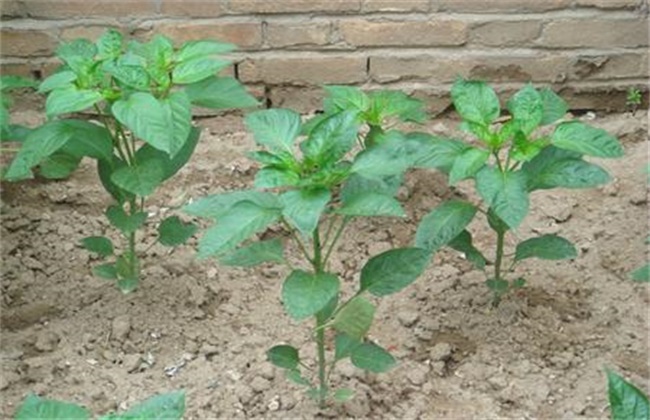
What are the control measures for common physiological diseases of vegetable seedlings?
Control measures for common physiological diseases of vegetable seedlings
-

Rice physiological red blight can be controlled with raw gypsum powder
Rice physiological red blight often occurs in cold-waterlogged mountain valley fields and in paddy fields where organic green manure has not fully decomposed. This disease mostly occurs at the tillering stage of rice, showing as very little tillering, leaves turning yellow-brown, and tea-brown irregular spots on the first and second leaves from the base; some mistake it for leaf blast. When the rice hills are pulled up, the root system is yellow-brown, and in severe cases black; the seedlings do not grow, commonly called "fa qiu". There are three main causes of physiological red blight: first, toxic substances such as hydrogen sulfide produced during the decomposition of green manure; second, some cold-waterlogged
-
Physiological leaf roll in potatoes
[Disease diagnosis] The symptoms of physiological leaf roll and viral leaf roll share certain similarities. The main manifestation is the upward curling of the leaflets. Usually the lower leaves of the plant, or all the leaves of the whole plant, become brittle and curl upward into a tube shape. In some cases only the leaf margins curl slightly upward; in others the curling is severe, forming a spoon shape or tube shape. In severe cases, the leaves become thicker, brittle and hard, and darker and more intense in color, giving a feeling of a messy, clustered clump. The characteristic of physiological leaf roll is that the leaf rolling shown by affected plants is relatively uniform. [Cause] There are several causes of physiological leaf roll: for example, excessive one-sided application of nitrogen fertilizer,
-
Identification and Prevention of Physiological Disorders in Atlantic Potato Tubers
The Atlantic potato is a high-quality raw material for processing snack foods such as potato chips and French fries. Its growth period is relatively short, and it has strict requirements for the cultivation environment: it needs cool conditions but is not tolerant of low temperatures. During cultivation, freeze protection and fertilizer and water management should be done well to avoid physiological disorders such as black heart, hollow heart, starch leakage, cracking, and deformities, and to improve tuber quality and marketable yield. I. Tuber black heart 1. Symptoms: Irregular patterns ranging from black to blue appear in the center of the tuber. When oxygen deficiency is severe, the entire tuber may turn black. Usu
-
What is the carbon dioxide toxicity physiological disorder in garlic scapes?
When garlic scapes are packaged in plastic film bags, the carbon dioxide level becomes too high in the later stage, often causing toxicity. It shows as yellow spots on the scape stalk, which gradually sink in, join together, and the tissue becomes necrotic, with water-soaked rot, ultimately causing the garlic scapes to break apart. Sometimes the scape bulbAlso becomes necrotic, giving off an alcoholic smell accompanied by a foul odor. In severe cases, the entire bag of garlic scapes rots, and this has become an important disease in garlic scape storage. In controlled atmosphere storage of garlic scapes, carbon dioxide generally should not exceed 5%, and ventilation should be carried out regularly; in the later stage, carbon dioxide exceeding 13% will cause toxicity.
-
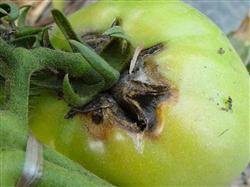
Key Technical Points for Preventing Physiological Diseases of Autumn Tomatoes
Early blight: After onset, concentric ring-patterned lesions appear on the leaf surface, dark brown, water-soaked. Before and after onset, spray with a 500-fold dilution of 70% mancozeb wettable powder, or a 400-fold dilution of 75% chlorothalonil wettable powder, once every 7 days, for 3 to 4 consecutive sprays.
-
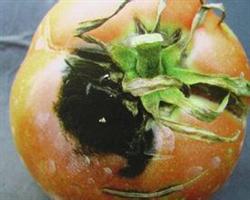
Control Methods for Physiological Disorders of Tomato
Physiological disorders often occur during tomato cultivation and greatly affect yield and quality. The most common ones include deformed fruit, hollow fruit, blossom-end rot, fruit cracking, rib vein browning, sunscald, and poor coloration. Deformed fruit. It mainly occurs during the period of flower bud differentiation and development. Under low temperature, excessive fertilizer (especially excess nitrogen nutrition...
-
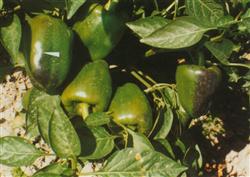
What are the common types of physiological diseases in sweet peppers?
What are the common physiological diseases of sweet peppers? Please give an introduction. The common physiological diseases of sweet peppers are: 1. Sunscald. 1. Symptoms. The cause of this disease is direct strong sunlight, and symptoms appear only on the sun-facing side of the fruit. In the early stage, the affected part fades in color, becomes slightly wrinkled, and appears grayish-white or slightly yellow. The flesh of the affected part loses water and becomes thin,...
条件筛选