-

Occurrence and Control Methods of Rust Disease in Small Spring Crops: Barley, Wheat, and Broad Bean
Rust disease is a type of plant disease caused by parasitic rust fungi. It is widely distributed and highly destructive, and is most commonly seen in cereal crops, leguminous plants, and pears. The rust diseases of many crops are worldwide in scope, and some have the characteristic of large-region epidemics, with yield losses often counted in tens of thousands of tons.
-
Occurrence Patterns and Control Methods of Viral Diseases in Solanaceous Crops
In the southern Guangxi region, the winter climate is warm with no obvious frost, making it a great place for growing winter vegetables to be shipped from the south to the north. Therefore, after harvesting the late rice, farmers grow winter vegetables to supply the market after the Spring Festival, achieving relatively high economic returns and writing a new chapter of "the plan for the year lies in autumn and winter." This has become another way for local farmers to get rich and move toward a moderately prosperous life. Among the many vegetable varieties grown, solanaceous vegetables (tomato, pepper, eggplant) are favored by local farmers for their unique planting advantages. According to statistics, the perennial planting area is around 80,000 mu, and the planting area is predicted to keep rising year by year.
-
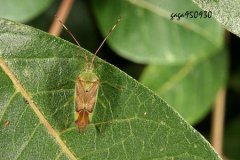
Occurrence of the bamboo mirid bug on crops and its control methods
The bamboo mirid bug is a pest you surely know about. So how do you control it and eliminate its harm to agriculture? Let's take a look below. Currently, chemical control can still effectively control the bamboo mirid bug, but because it is not suitable to apply pesticides during the continuous bamboo shoot harvesting period (April to October)
条件筛选