How can corn be managed better in the middle and late stages?
How should corn be managed well in the middle and late stages of cultivation? Please give guidance. The management of corn in the middle and late growth stages can refer to the following methods: Fertilization 1. Ear fertilizer. Generally, heavy nitrogen application is done at the large trumpet stage, accounting for about 50% of the total topdressing amount, with 30-40 kg of standard nitrogen fertilizer applied per mu. 2. Grain fertilizer. Generally accounts for about 10% of the total topdressing amount...
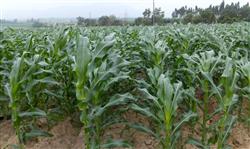
How should corn be managed well in the middle and late stages of cultivation? Please give guidance
The management of corn in the middle and late growth stages can refer to the following methods:
Fertilization 1. Ear fertilizer. Generally, heavy nitrogen application is done at the large trumpet stage, accounting for about 50% of the total topdressing amount, with 30-40 kg of standard nitrogen fertilizer applied per mu. 2. Grain fertilizer. Generally accounts for about 10% of the total topdressing amount, with 10 kg of ammonium bicarbonate applied per mu. When fertilizing, open a ditch 10-15 cm wide and 9-12 cm deep 10 cm away from the plants, apply the fertilizer in the ditch, then cover with soil, seal firmly, and water.
Pest and disease control. To control corn (2349, 8.00, 0.34%) borers at the ear stage, at the large trumpet stage, use 1.5-2 kg of 3% phoxim granules per mu plus 5-6 kg of fine sand, or use 50% phoxim emulsifiable concentrate to prepare a 0.1% toxic soil, mix well, and sprinkle it into the corn whorl. To control corn leaf spot, spray with 50% carbendazim at 500-800 times dilution; to control corn rust and brown spot, at the early stage of disease, use 75-100 ml of 20% triadimefon emulsifiable concentrate per mu, add water, and spray.
Detasseling. Detasseling corn helps increase yield. Detasseling can reduce nutrient consumption and promote ear development; lower plant height, improve ventilation and light conditions, and enhance lodging resistance; overcome the disconnect in flowering between male and female ears, help the flowering periods meet, and increase seed-setting rate; and reduce borer damage. Detasseling must be timed well. If done too early, operation is difficult, and the tassel is too tender, so it is easy to break off or pull out the whorl leaves; if too late, nutrients are consumed excessively, and the yield increase is not significant. The suitable time for detasseling is when the tassel has emerged from the whorl by about one-third to one-half. At this time, it can be gripped by hand and pulled out with slight force. It is best to operate from 9 a.m. to 4 p.m. on a sunny day, so the wound heals easily. The number of detasseled plants generally accounts for about one-third of the total number of plants in the field, and at most not more than half. Generally, detassel every other row or every other plant. The two rows near the field edge and the two plants at the field end should not be detasseled, so as not to affect pollination. Combining detasseling with supplemental pollination gives better results.
Harvest at the right time. Farmers are accustomed to harvesting when the corn husks turn yellow and the tops of the kernels harden. According to many years of practice, harvesting at this time is too early, the 1000-kernel weight is low, and yield is affected. The sign of corn maturity should be the disappearance of the milk line in the kernels. Harvesting at this time gives a high 1000-kernel weight and can increase yield by 8%-10% compared with harvesting at the traditional harvest time. On the same ear, the upper kernels form the milk line first and it disappears early; the kernels at the base of the ear form the milk line later and it disappears later. When determining the suitable harvest time, the milk line of the kernels in the lower part of the ear should be taken as the standard.
Click to get more corn planting techniques
Click to get more food crop planting techniques